Extreme heat and health: What communities need to know - University of Waterloo
This story deserves to be shared
Send it to someone who'd care, or post it on your networks.
This article is an excerpt. To read the full content, visit the original source. University of Waterloo
Related articles
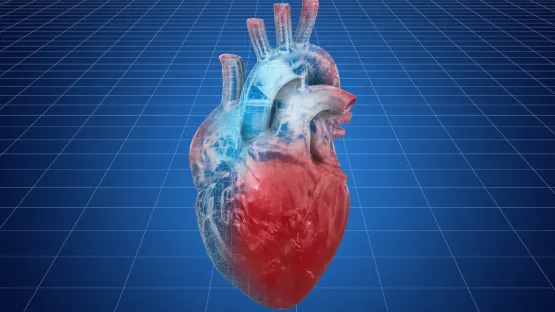
Reducing nuclei damage improves heart function and survival in mice - Cornell Chronicle
Reducing damage to the nuclei of heart muscle cells improved heart function and dramatically extended survival in mice with a form of inherited heart disease, according to a new study led by Cornell researchers. The findings point to new approaches for understanding and potentially treating LMNA-related dilated cardiomyopathy, a disease that leads to heart failure and sudden cardiac death. The study, published in Circulation Research, was directed by Jan Lammerding, a professor in the Meinig School of Biomedical Engineering in the Cornell Duffield College of Engineering and a member of the Weill Institute for Cell and Molecular Biology, and jointly led by Noam Zuela-Sopilniak and Julien L. P. Morival in his group. Co-corresponding author Iwijn De Vlaminck is also a professor in the Meinig School. LMNA-related dilated cardiomyopathy is an inherited heart disease caused by mutations in the LMNA gene, which encodes lamin A and lamin C, proteins that help maintain the structural integrity of a cell’s nucleus. Although researchers have identified a link between LMNA mutations and heart disease, they do not completely understand the cellular mechanisms that lead to heart damage.
Acceptability and delivery of an offer of access to EMDR for depression, posttraumatic stress, and burnout in healthcare workers exposed to COVID-19: a randomized controlled trial within a cohort - Nature
AcknowledgementsWe would like to express our sincere gratitude to the research team of the CIC1415 for their invaluable contributions to the recruitment and follow-up of participants during the challenging COVID-19 period, especially Amélie Legrand and Carole Le Goas and Anne Rebion for data-management. We also extend our thanks to Dr Marguerite d’Ussel, Dr Cédric Bornes, Pr Jean-Pierre Quenot and many other colleagues for their support, and to all participating EMDR therapists for their valuable collaboration.

Simple medical card game reduces preoperative anxiety in children - News-Medical
Preoperative anxiety affects about 60% of children and is linked with poorer cooperation at anesthesia induction, greater postoperative pain, and maladaptive behavioral changes. Structured play, role play, and medical-themed games can reduce anxiety and improve coping, but many proven approaches rely on digital platforms or virtual reality (VR), which can be costly and hard to implement in busy wards. Those tools may be difficult to adopt in routine practice because of cost, equipment requirements, and implementation burden, especially in busy hospital wards with limited staff and space. Given these challenges, further research is needed to evaluate scalable, low-cost, non-digital play interventions for children that can be delivered widely in routine pediatric surgical care. Researchers at Children's Hospital, Zhejiang University School of Medicine in China reported (DOI: 10.1007/s12519-026-01097-4) the trial online on 19 September 2026 in World Journal of Pediatrics. In the intervention, a trained nurse led a child-life-informed session on the evening before surgery, individually or in groups of up to three children, lasting 40 minutes.
0 comments
No comments yet. Be the first to share your thoughts!