Reducing nuclei damage improves heart function and survival in mice - Cornell Chronicle
This story deserves to be shared
Send it to someone who'd care, or post it on your networks.
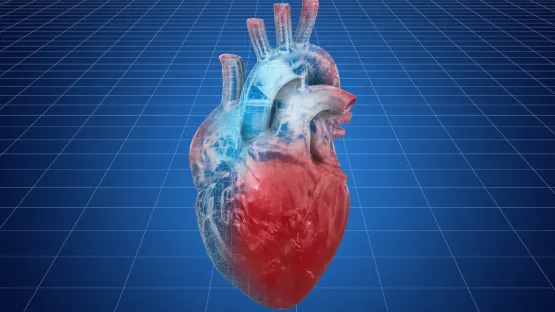
Reducing damage to the nuclei of heart muscle cells improved heart function and dramatically extended survival in mice with a form of inherited heart disease, according to a new study led by Cornell researchers. The findings point to new approaches for understanding and potentially treating LMNA-related dilated cardiomyopathy, a disease that leads to heart failure and sudden cardiac death. The study, published in Circulation Research, was directed by Jan Lammerding, a professor in the Meinig School of Biomedical Engineering in the Cornell Duffield College of Engineering and a member of the Weill Institute for Cell and Molecular Biology, and jointly led by Noam Zuela-Sopilniak and Julien L. P. Morival in his group. Co-corresponding author Iwijn De Vlaminck is also a professor in the Meinig School. LMNA-related dilated cardiomyopathy is an inherited heart disease caused by mutations in the LMNA gene, which encodes lamin A and lamin C, proteins that help maintain the structural integrity of a cell’s nucleus. Although researchers have identified a link between LMNA mutations and heart disease, they do not completely understand the cellular mechanisms that lead to heart damage.
This article is an excerpt. To read the full content, visit the original source. Cornell Chronicle
Related articles
Accelerating Atomic Nuclei Hard Enough Could Create Dark Matter From The Vacuum - ScienceAlert
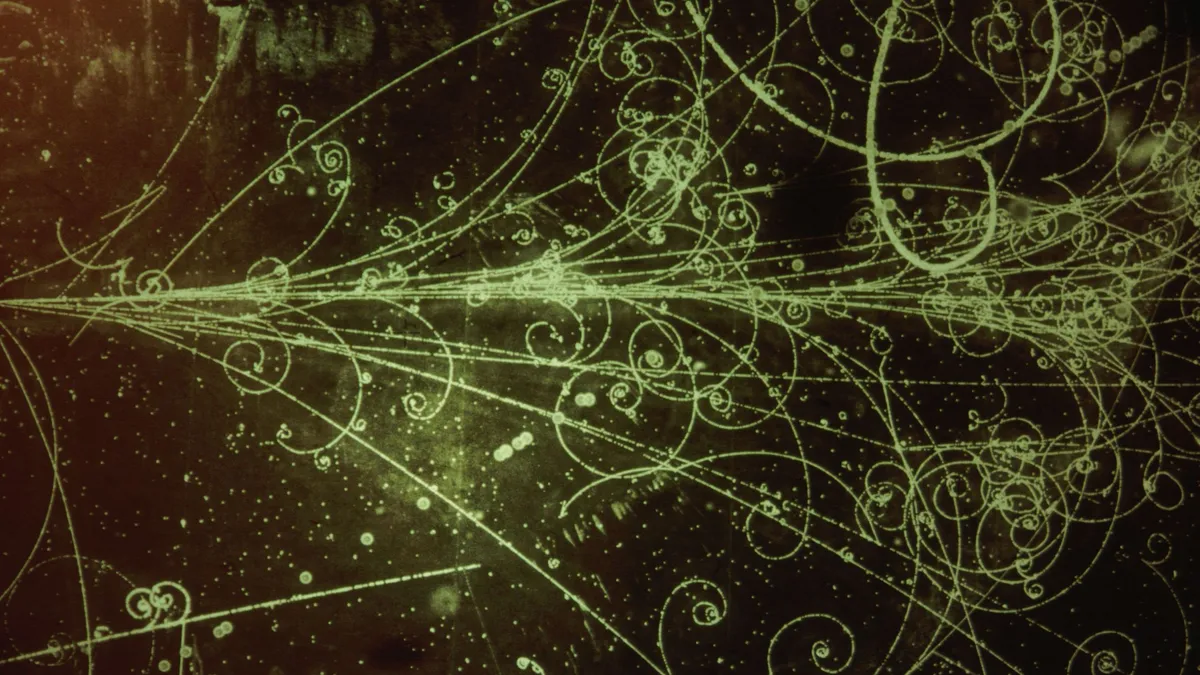
The tracks left by subatomic particles as they travel through a bubble chamber. (Kevin Fleming/The Image Bank Unreleased/Getty Images) There's something hinky about the amount of gravity in the Universe. When all the normal matter and the gravity that should come with it have been totted up, a discrepancy emerges in the final numbers. Not just a smidge, a little skimming off the top, a one here or a zero there: there's way more gravity than there is normal matter to make it. We call the unknown source of the gravity excess dark matter, and scientists estimate there's roughly five times as much of it as there is normal matter in the Universe. That means the mystery matter should be absolutely everywhere, and so it is, as far as physicists can tell. But we still don't know what it is, let alone how to make it. Now, a theoretical paper has identified a new recipe we could try. What if, ask theoretical physicists Stefan Evans and Ralf Schützhold of the Helmholtz-Zentrum Dresden-Rossendorf in Germany, we just took a bunch of atomic nuclei and gave them a good, hard shake? OK, not literally – and obviously there's a good bit more to it than a nucleus maraca.
Active Galactic Nuclei Science Collaboration - Rubin Observatory
The best foods to try during chemotherapy (According to a doctor) - American Medical Association | AMA
Featured topic and speakerChemotherapy can affect appetite, taste, smell and energy levels, making mealtimes challenging for both patients and caregivers. In this video, Nate Wood, MD, MHS, shares practical tips for supporting a loved one through cancer treatment with comfort, compassion and realistic expectations. Learn why eating can become difficult during chemotherapy, which gentle foods may be easier to tolerate, and how caregivers can offer support without adding pressure. Dr. Wood also discusses the importance of working with your physician, oncologist and dietitian to find personalized solutions during treatment. Remember: every person's experience with chemotherapy is different. Always follow the recommendations of your health care team regarding nutrition and treatment. Find out what doctors want patients to know about cancer screening and prevention. For more expert-backed fitness, health and wellness content, subscribe to our channel. Get the latest health news, trending topics, and public health information delivered to your inbox every week. Follow #AMA on social media.
0 comments
No comments yet. Be the first to share your thoughts!