Escherichia coli with a 57-codon genetic code - Science | AAAS
This story deserves to be shared
Send it to someone who'd care, or post it on your networks.
This article is an excerpt. To read the full content, visit the original source. Science | AAAS
Related articles
Bacteroides–Escherichia interactions contribute to colonization resistance against Clostridioides difficile - Nature
AcknowledgementsWe thank Julia Nelson, Animal Disease Research and Diagnostic Laboratory, South Dakota for the help with 16S sequencing, and Metabolon, Inc. for the untargeted metabolomics. Metagenome data analysis for this project was performed using the OU Supercomputing Center for Education & Research (OSCER) at the University of Oklahoma (OU). We thank Suryang Kwak and Joohee Choi for their help in providing further details on their dataset:54. FundingThis project has received funding from the United States National Institutes of Health (contract no: G- 202306-70697), Walter R. Sitlington Endowment (grant no: 5- 153200), European Research Council (ERC) under the European Union’s Horizon 2020 research and innovation programme (grant no. 866028) and from the UK Medical Research Council (project no. MC_UU_00025/11).
Your next sunscreen could be made from E. coli - Popular Science

The Largest Canyon in the Solar System is Still Tectonically Active - Universe Today
For many decades, scientists assumed that Mars was geologically inactive. While its surface is covered in features that attest to its volcanic past, all evidence seemed to indicate that Mars was geologically dead. This is consistent with the fact that Mars' crust has no tectonic plates and instead consists of a single plate, making it a "Stagnant Lid" planet. However, with the arrival of NASA's InSight (Interior Exploration using Seismic Investigations, Geodesy and Heat Transport) lander, indications that the planet was still "alive" began to accumulate. Beyond "marsquakes" caused by impactors, InSight detected evidence of tectonic activity from within. In a recent study, scientists at Imperial College London and Columbia University presented seismic evidence that a marsquake originated beneath Valles Marineris. According to InSight's data, the event (S0976a) was caused by rocks slipping along fault lines deep within the crust. These findings suggest that faults formed billions of years ago, when Mars was much more active, are unstable enough to rupture under stress.
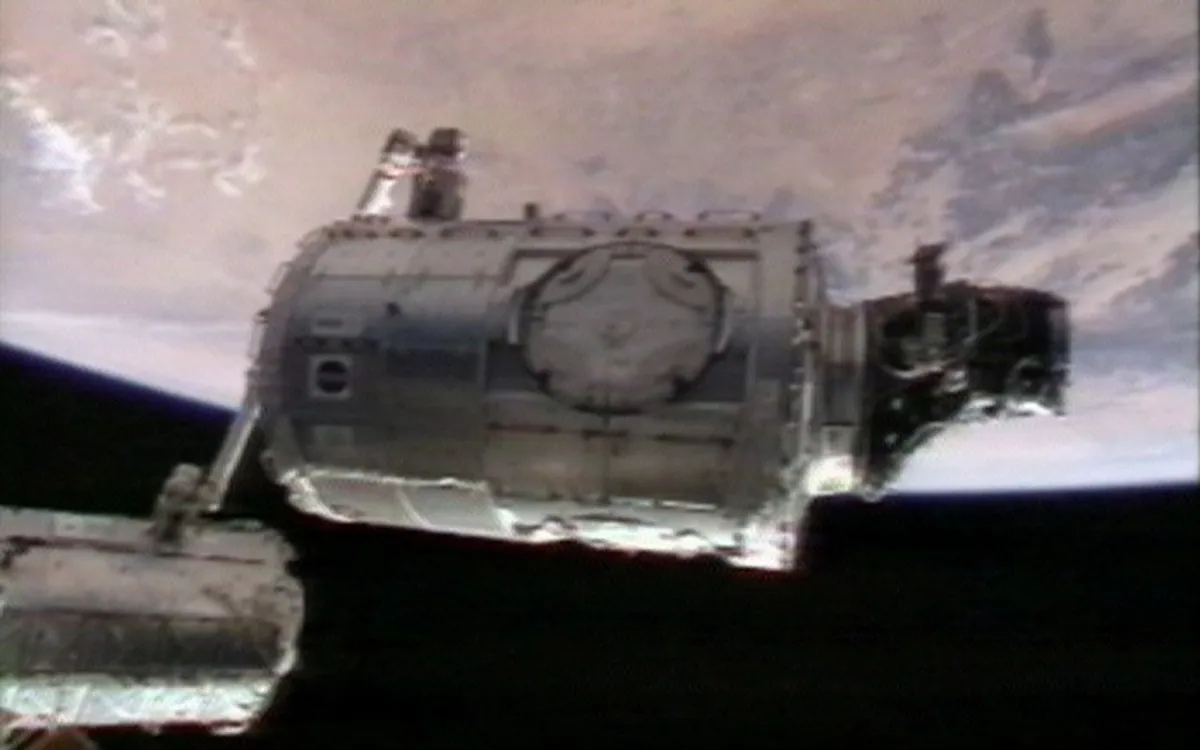
On this day in space! Oct. 23, 2007: NASA launches Harmony module to ISS on STS-120 space shuttle mission - Space
Once Harmony was installed, the space station grew into something more like a five-bedroom house.
NASA's Freeze-Resistant Moon Battery Could Eventually Reach EVs - Crude Oil Prices Today | OilPrice.com
Haley Zaremba is an energy journalist and researcher with more than a decade of professional experience covering global energy systems, land and natural resources, and… Prototype solid-state cells from NASA's SPEARS project survived minus 274 degrees Fahrenheit without damage and ran, at reduced performance, down to minus 112 degrees.
0 comments
No comments yet. Be the first to share your thoughts!