Bacteroides–Escherichia interactions contribute to colonization resistance against Clostridioides difficile - Nature
This story deserves to be shared
Send it to someone who'd care, or post it on your networks.
AcknowledgementsWe thank Julia Nelson, Animal Disease Research and Diagnostic Laboratory, South Dakota for the help with 16S sequencing, and Metabolon, Inc. for the untargeted metabolomics. Metagenome data analysis for this project was performed using the OU Supercomputing Center for Education & Research (OSCER) at the University of Oklahoma (OU). We thank Suryang Kwak and Joohee Choi for their help in providing further details on their dataset:54. FundingThis project has received funding from the United States National Institutes of Health (contract no: G- 202306-70697), Walter R. Sitlington Endowment (grant no: 5- 153200), European Research Council (ERC) under the European Union’s Horizon 2020 research and innovation programme (grant no. 866028) and from the UK Medical Research Council (project no. MC_UU_00025/11).
This article is an excerpt. To read the full content, visit the original source. Nature
Related articles
Scientists map key protein interactions linked with profound autism - North Country Public Radio
Teaching Empathy in AI Interactions - Association for Psychological Science
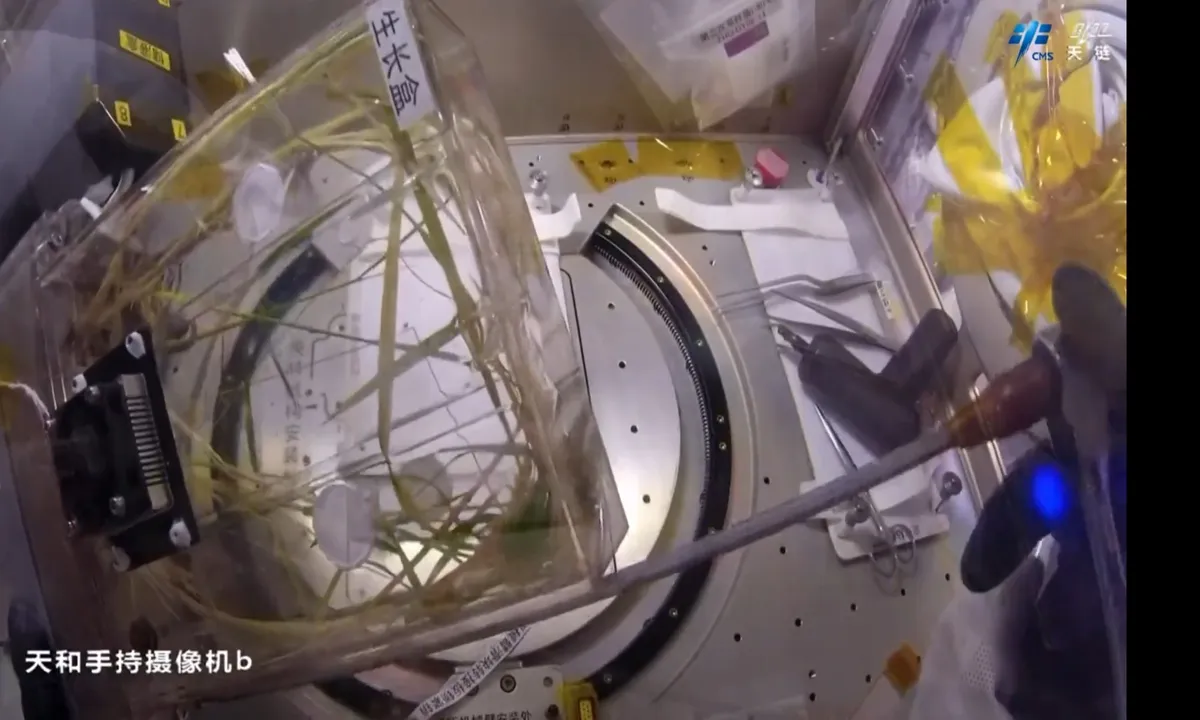
China's space station marks new ‘harvest season,’ aims to grow two generations of rice in orbit for first time - Global Times
Picture of China's space station rice experiment. Photo: China Central TelevisionChina's space station has welcomed a new "autumn harvest," with astronauts collecting, sowing and storing a new batch of rice experiment samples last week, marking further progress in research on rice cultivation in space, CCTV News reported on Sunday. The research project, which focuses on the molecular mechanisms regulating multigenerational genetic stability and environmental adaptability of rice in space, is progressing smoothly, according to the media report. The latest experiment is expected to grow two generations of rice in orbit for the first time, helping researchers understand the mechanisms through which prolonged exposure to microgravity affects the genetic stability of rice. In addition to the rice experiment, the astronauts conducted touch-interaction tests with Xiaohang, their robotic companion aboard the space station. The tests collected data on the robot's movements in response to different types of physical contact, providing data to improve its motion planning for future operations in orbit.
0 comments
No comments yet. Be the first to share your thoughts!