Effusive sedimentary volcanism experimentally reproduced under Martian-like conditions - Nature
This story deserves to be shared
Send it to someone who'd care, or post it on your networks.
We’re sharing this article early to provide faster access to peer-reviewed, accepted research. It is citable and carries a permanent DOI. This version is subject to further edits and will be replaced automatically by the final Version of Record. All legal disclaimers apply.
AbstractRapid boiling, cooling, and freezing are commonly assumed to rapidly quench metastable liquid eruptions exposed to near-vacuum planetary environments, influencing both sedimentary volcanism on Mars and cryovolcanism on icy worlds. However, how these coupled phase transitions govern eruptive processes remains largely unknown. Here we show experimentally that boiling instead sustains coupled ballistic-effusive mud eruptions under Martian-like pressure conditions (~4.5 mbar). Using an ice-sealed metastable reservoir, we reproduced subsurface-driven eruptions initiated by internally generated boiling-induced overpressure. Eruptions evolved systematically from short-lived ballistic fountains toward episodic effusive emplacement accompanied by coherent mud-flow formation.
This article is an excerpt. To read the full content, visit the original source. Nature
Related articles

Genomes of 20 eastern Finnish species provide unique insights into species' adaptations to local conditions - Phys.org
The Finnish forest reindeer genome comes from an animal born at Korkeasaari Zoo in Helsinki. Credit: University of Eastern Finland In recent years, researchers at the University of Eastern Finland have been both leading and contributing to collaborative genome projects. These efforts have produced reference-quality genome assemblies for the Finnish brown hare and the mountain hare, as well as the Saimaa ringed seal, in collaboration with research partners.

Parents and nongamers struggle to identify video game loot boxes - Phys.org
New research has found parents, guardians and nongamers may struggle to recognize video game loot boxes, their defining features and the digital receipts linked to purchases. The work is published in the journal Royal Society Open Science.
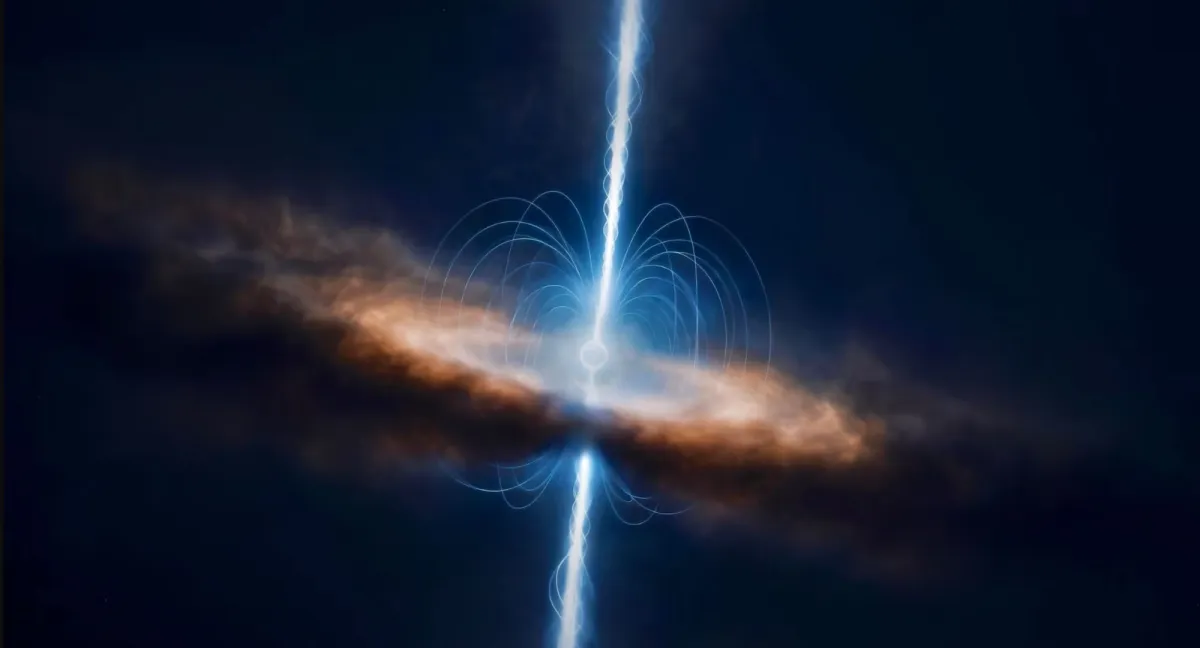
Astronomers discover rare evidence of Einstein’s relativity playing out in a cosmic explosion - The Brighter Side of News
Accelerating brightness pulses in SN 2024afav support a model involving a newborn magnetar and a wobbling disk. The proposed explanation uses relativistic frame-dragging to connect the changing pulse timing with the hidden central engine. Companion spectroscopy also indicates interaction with surrounding gas, which could contribute to the explosion’s light. The fading light of SN 2024afav carried an unexpected rhythm. After the stellar explosion reached its brightest phase, its glow rose and fell through a sequence of bumps. The intervals between them grew shorter, creating an optical pattern astronomers describe as a chirp. That accelerating rhythm points to a rapidly spinning magnetar concealed inside the expanding debris. A study published in Nature interprets the pattern as evidence that a tilted disk around the newborn neutron star was wobbling under the influence of general relativity. The research, led by Joseph Farah while at UC Santa Barbara and Las Cumbres Observatory, offers a way to investigate an otherwise hidden power source.
0 comments
No comments yet. Be the first to share your thoughts!