Dr. Brown: Before celebrating supposed Alzheimer’s treatment, a word of caution - Niagara Now
This story deserves to be shared
Send it to someone who'd care, or post it on your networks.

Every once in a while, some oddball treatment for difficult to treat diseases emerges. In my career, one example was the Zamboni treatment for multiple sclerosis, which took the MS world of patients, caregivers and some governments by storm, especially in Canada in 2009.
Paolo Zamboni was an Italian vascular surgeon who proposed the radical idea that MS was caused by obstructions of draining views from the brain and spinal cord, for which he proposed opening the veins by balloon catheters inserted into the affected veins and then inflating them.
This article is an excerpt. To read the full content, visit the original source. Niagara Now
Related articles
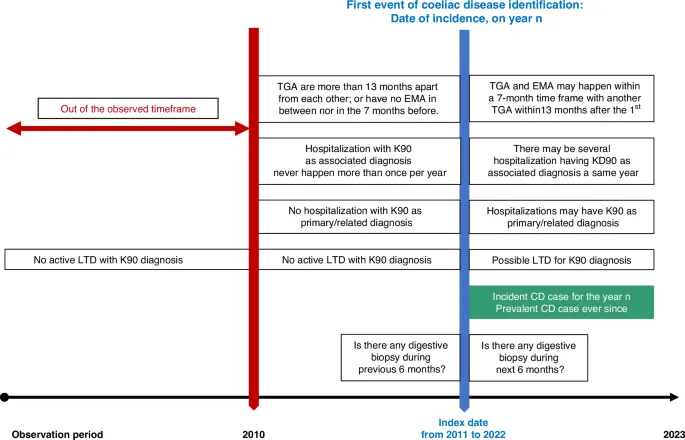
Low prevalence of celiac disease in French children, a nationwide study - Nature
ORCID: orcid.org/0000-0001-5425-73521,3,5 AbstractBackgroundThere are differences in prevalence and incidence across Europe without updated data for France. The aim of this study was to fill this gap obtaining epidemiological data of French children with celiac disease (CD). MethodsWe used the French Health Data System (SNDS) to identify <18-year-old patients with CD between 2011 and 22. CD identification: 1/hospitalization stay for CD, or 2/ status of CD as long-term disease, or 3/serological diagnosis (two tests for transglutaminase antibodies (TGA) within 13 months and one endomysium antibodies (EMA) test within seven months after a TGA test). Results41690 children with CD were identified over 2011–2022. The male-to-female sex ratio was 0.88. In 2022, the national prevalence was 0.15% among children, ranging from 0.08% in the North-West to 0.25% in the South-East of France. The incidence rate ranged from 12.4 in 2020 to 17.4 per 100000 children in 2012, with a median age increasing from six in 2011 to seven in 2015. Comorbidities included thyroid disease (1.7%), and type 1 diabetes (9.7%).
Western University - Marginalized patients have increased risk of early death from newly diagnosed metastatic breast cancer, study finds - Education News Canada
People who are marginalized or lack access to a primary care provider are at greater risk of early death from newly diagnosed metastatic breast cancer, according to research in CMAJ (Canadian Medical Association Journal). The Ontario study found nearly one-quarter of people with stage four metastasized breast cancer that has already spread to other sites in the body when it is found - also known as de novo breast cancer - died within six months of diagnosis.

Africa faces record-spread Ebola outbreak as DR Congo cases near 10,000 - chinadailyhk
A health care worker reacts while receiving a dose of the Ervebo vaccine against the Ebola virus in Beni, North Kivu province, Democratic Republic of the Congo, Oct 16, 2026. (PHOTO/AP)KINSHASA – Africa is grappling with "the most geographically widespread Ebola outbreak in history", according to the Africa Centres for Disease Control and Prevention (Africa CDC), as infections in the Democratic Republic of the Congo (DRC) approach 10,000 and newly reported cases in Kenya and Nigeria raise concerns over the virus's spread across borders. Africa CDC Director-General Jean Kaseya warned Tuesday that the outbreak had already affected multiple countries across three regions of Africa, calling for urgent international support to contain further transmission. Nearly five months after the outbreak was declared in the DRC, the epidemic has claimed more than 4,600 lives in the country and spread to eight of its 26 provinces, while imported infections have exposed vulnerabilities in cross-border disease surveillance.

Global study aims to map brain changes across eight psychiatric disorders - News-Medical
Researchers from the Mark and Mary Stevens Neuroimaging and Informatics Institute (Stevens INI) at the Keck School of Medicine of USC will lead a worldwide effort to map how eight common psychiatric disorders affect brain function, supported by a five-year, $3.2 million grant from the National Institutes of Health. The Global Initiative for Harmonized Functional MRI in Psychiatry will analyze over 94,000 brain scans collected at 257 research sites in 27 countries, from participants ages 4 to 95. The project covers schizophrenia, bipolar disorder, major depressive disorder, post-traumatic stress disorder (PTSD), obsessive-compulsive disorder (OCD), attention-deficit/hyperactivity disorder (ADHD), autism spectrum disorder, and anorexia nervosa. The investigators say it will be the largest functional MRI study ever conducted, both in the number of people scanned and the number of labs taking part.
0 comments
No comments yet. Be the first to share your thoughts!