Africa faces record-spread Ebola outbreak as DR Congo cases near 10,000 - chinadailyhk
This story deserves to be shared
Send it to someone who'd care, or post it on your networks.
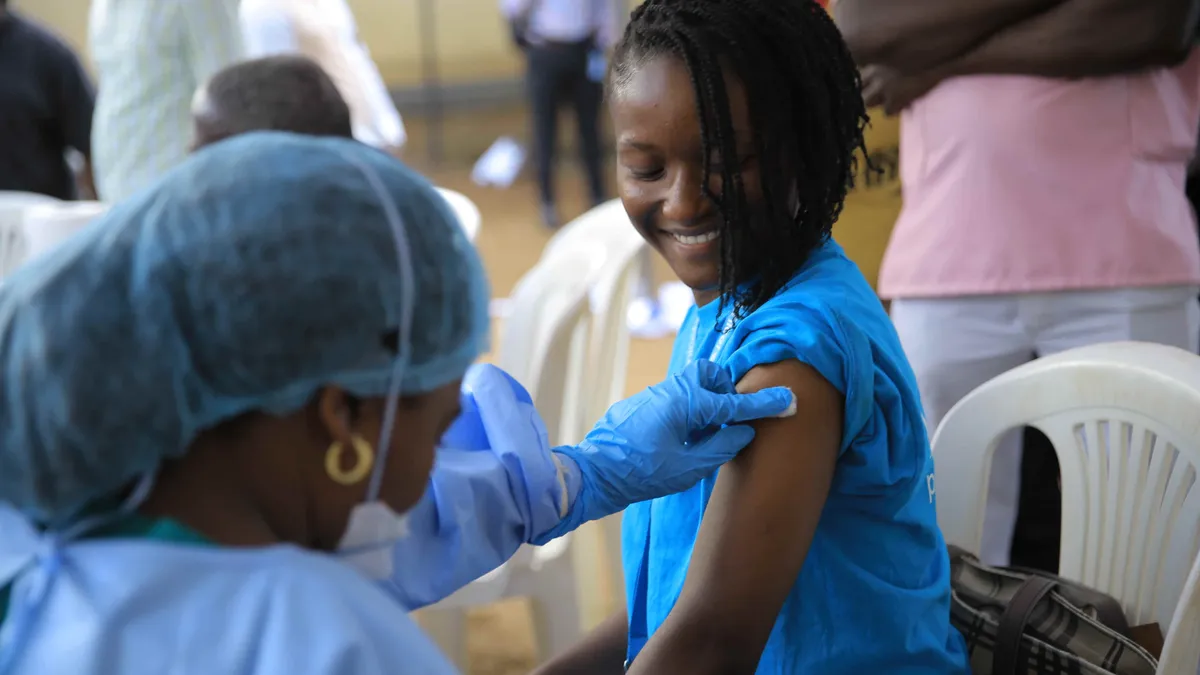
A health care worker reacts while receiving a dose of the Ervebo vaccine against the Ebola virus in Beni, North Kivu province, Democratic Republic of the Congo, Oct 16, 2026. (PHOTO/AP)KINSHASA – Africa is grappling with "the most geographically widespread Ebola outbreak in history", according to the Africa Centres for Disease Control and Prevention (Africa CDC), as infections in the Democratic Republic of the Congo (DRC) approach 10,000 and newly reported cases in Kenya and Nigeria raise concerns over the virus's spread across borders. Africa CDC Director-General Jean Kaseya warned Tuesday that the outbreak had already affected multiple countries across three regions of Africa, calling for urgent international support to contain further transmission. Nearly five months after the outbreak was declared in the DRC, the epidemic has claimed more than 4,600 lives in the country and spread to eight of its 26 provinces, while imported infections have exposed vulnerabilities in cross-border disease surveillance.
This article is an excerpt. To read the full content, visit the original source. chinadailyhk
Related articles

Making severe RSV uncommon: Experts map the prevention playbook - Contemporary Pediatrics
News|Articles|October 22, 2026 A Contemporary Pediatrics Peer Exchange panel reviews RSV risk, testing, maternal vaccination, and long-acting monoclonal antibodies, and where infants still slip through the cracks. Respiratory syncytial virus (RSV) has long been a fixture of the winter pediatric ward. With maternal vaccination and 2 long-acting monoclonal antibodies now available, a panel of pediatric infectious disease specialists says severe RSV in infants can become uncommon, if practices close the gaps in delivery. The discussion was moderated by Flor M. Munoz, MD, MSc, of Baylor College of Medicine in Houston, Texas. Panelists were C. Buddy Creech, MD, MPH, of Vanderbilt University Medical Center in Nashville, Tennessee; Eric Simões, MD, of the University of Colorado Anschutz in Aurora; and Tina Tan, MD, FAAP, FIDSA, FPIDS, of Northwestern University Feinberg School of Medicine in Chicago, Illinois, and editor-in-chief of Contemporary Pediatrics. Every infant is at riskRSV typically circulates in the US from October to April, but seasons start earlier and last longer in the Southeast, beginning as early as June in Florida, Tan said.

Making severe RSV uncommon: Experts map the prevention playbook - Contemporary Pediatrics
News|Articles|October 22, 2026 A Contemporary Pediatrics Peer Exchange panel reviews RSV risk, testing, maternal vaccination, and long-acting monoclonal antibodies, and where infants still slip through the cracks. Respiratory syncytial virus (RSV) has long been a fixture of the winter pediatric ward. With maternal vaccination and 2 long-acting monoclonal antibodies now available, a panel of pediatric infectious disease specialists says severe RSV in infants can become uncommon, if practices close the gaps in delivery. The discussion was moderated by Flor M. Munoz, MD, MSc, of Baylor College of Medicine in Houston, Texas. Panelists were C. Buddy Creech, MD, MPH, of Vanderbilt University Medical Center in Nashville, Tennessee; Eric Simões, MD, of the University of Colorado Anschutz in Aurora; and Tina Tan, MD, FAAP, FIDSA, FPIDS, of Northwestern University Feinberg School of Medicine in Chicago, Illinois, and editor-in-chief of Contemporary Pediatrics. Every infant is at riskRSV typically circulates in the US from October to April, but seasons start earlier and last longer in the Southeast, beginning as early as June in Florida, Tan said.

Saskatchewan expands breast cancer screening and diagnostic services - MooseJawToday.com
Saskatchewan has expanded breast cancer screening eligibility to women 40 and older and invested more than $15 million in breast health services since 2023-24.

Alberta’s flu cases off to an early start while vaccinations lag behind - CTV News
AtlanticNova ScotiaNew BrunswickPrince Edward Island Newfoundland and LabradorCalgaryLethbridgeKitchenerGuelphNorthern OntarioSudburyNorth BaySault Ste. MarieTimminsOttawaKingstonBrockvillePembrokeReginaYorktonSaskatoonPrince AlbertTorontoWatchWeatherPeelHamiltonDurhamYorkHaltonNiagaraQueen's ParkToronto City HallIn PicturesVancouverVancouver IslandCanadaLocal SpotlightRoyal FamilyPoliticsNanosPower PlayQuestion PeriodFederal Election 2025WorldMideast ConflictRussia-Ukraine WarWatchLatestCaptured on CameraPoliticsLifestyleConsumerHealthExplainedEntertainmentTechnologyDeception DecodedAutosEnvironmentBusinessInflationReal EstateAutos

Ultraprocessed Food Linked to Vascular Brain Injury in Midlife - European Medical Journal
Higher ultraprocessed food (UPF) intake has been linked to greater adiposity and higher odds of vascular brain injury (VBI) in middle-aged adults in Canada, although it has not been associated with cognitive performance, according to a new cross-sectional study. Ultraprocessed foods, defined by the NOVA classification, account for a substantial and increasing proportion of dietary intake in Canada. Although UPFs have been consistently associated with adiposity and cardiometabolic disease, their associations with subclinical VBI and cognitive performance in midlife have been unclear.
0 comments
No comments yet. Be the first to share your thoughts!