De novo-designed pMHC binders facilitate T cell–mediated cytotoxicity toward cancer cells - Science | AAAS
This story deserves to be shared
Send it to someone who'd care, or post it on your networks.
This article is an excerpt. To read the full content, visit the original source. Science | AAAS
Related articles
PARG inhibition elicits cytotoxicity by sequestering XRCC1 and other PAR-binding proteins into PAR-dependent nuclear condensates - Nature
AcknowledgementsWe thank Drs. Li Lan, Keith Caldecott, and John A. Tainer for sharing critical reagents, cell lines, and chemicals for the studies. We greatly appreciate Dr. Junjie Chen and his team at the MD. Anderson Cancer Center for generously sharing the PARG KO human cells during the revision, Drs. Pierre Åman and Anders Ståhlberg, and their student –Ms. Malin Lindén at the Sahlgrenska Center for Cancer Research in Sweden for providing the GFP-FUS plasmid used during revision. We also greatly appreciate Dr. Anthony Leung from Johns Hopkins University and Dr. Mark T. Bedford from MD. Anderson Cancer Center for providing additional GFP-tagged PAR-binding proteins they have published. We greatly appreciate discussions and suggestions from Drs. Junjie Chen, John Pascal, Hanwen Zhang, and the other members of the Zha lab. FundingThe work is supported by NIH CA226852, CA271595, CA174653, CA293675, and CA275184 to SZ and R37-CA286908 to P. V. The quantitative live cell imaging experiments were performed at the cell biology shared resource at HICCC with support from NIH P30CA013696.
Genomes from Coleus comosus and an interspecific hybrid facilitate taxonomic classification - Nature
We’re sharing this article early to provide faster access to peer-reviewed, accepted research. It is citable and carries a permanent DOI. This version is subject to further edits and will be replaced automatically by the final Version of Record. All legal disclaimers apply. AbstractColeus comosus Hochst. ex Gürke is an East African semi-succulent herb widely cultivated for remedial uses and ornamental landscaping. The rich specialised metabolite contents of C. comosus and closely related Coleus species have attracted considerable biochemical interest, but difficulties with accurate identification of species within the genus have hindered the systematic investigation and accurate identification of bioactive constituents. We provide two genome assemblies: a contig-level C. comosus genome assembly and a pseudochromosome-level genome assembly of an interspecific hybrid Coleus accession (Coleus comosus x Coleus neochilus). The C. comosus genome assembly spans 1.57 Gb with a contig N50 of 96.52 Mb. The hybrid Coleus genome is fully phased to 30 pseudochromosomes which sum up to 2.60 Gb, with its scaffold N50 reaching 86.9 Mb.
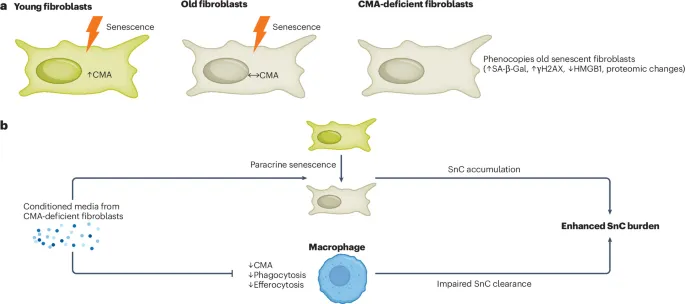
Chaperone-mediated autophagy curbs senescence - Nature
Sereda and colleagues show that chaperone-mediated autophagy declines with aging, which leads to enhanced senescent cell burden that is driven, in part, by failed macrophage-mediated immunosurveillance that can promote tissue dysfunction and systemic aging. This is a preview of subscription content, access via your institution
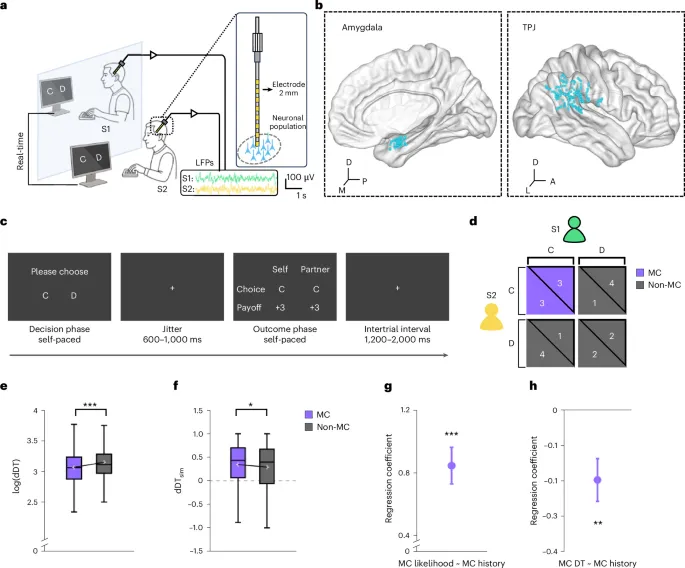
An amygdala-mediated simulation-to-decision cascade aligns interbrain dynamics to solve social dilemmas - Nature
Data availabilityThe raw magnetic resonance imaging and iEEG data that contain patients’ personal information are protected and have restricted access for ethical and privacy reasons. Access can be obtained from the corresponding author upon reasonable request. Preprocessed data used to generate the figures and perform statistical tests are available in the following repository: https://osf.io/gy829. Code availability Analysis codes are available in the following repository: https://osf.io/gy829.
How Insertion Sequence-Mediated Gene Amplification Helps Acinetobacter baumannii Adapt to the Host - 24-7PressRelease.com
How Insertion Sequence-Mediated Gene Amplification Helps Acinetobacter baumannii Adapt to the Host KNOXVILLE, TN, October 18, 2026 /24-7PressRelease/ -- Acinetobacter baumannii is a major nosocomial pathogen with a remarkable capacity to adapt to both hospital and host environments. In this study, the researchers identified ISAba1-mediated amplification of the crp-osmC gene cluster as a previously unrecognized mechanism promoting host-associated fitness. Increased crp-osmC copy number enhanced bacterial growth, competitive fitness, serum survival, and colonization in mouse models. Transcriptomic analyses further linked this amplification to changes in metabolic flexibility and nutrient acquisition. Interestingly, the fitness advantage was accompanied by reduced biofilm formation and increased susceptibility to several antibiotics, revealing a potential evolutionary trade-off between host adaptation and antibiotic resistance in A. baumannii. This study was led by Yuqin Song and Jie Feng from the Institute of Microbiology, Chinese Academy of Sciences.
0 comments
No comments yet. Be the first to share your thoughts!