Concurrent Thyroid Storm and Diabetic Ketoacidosis Associated With Evolving Autoimmune Diabetes in a Patient With Untreated Hyperthyroidism - Cureus
This story deserves to be shared
Send it to someone who'd care, or post it on your networks.
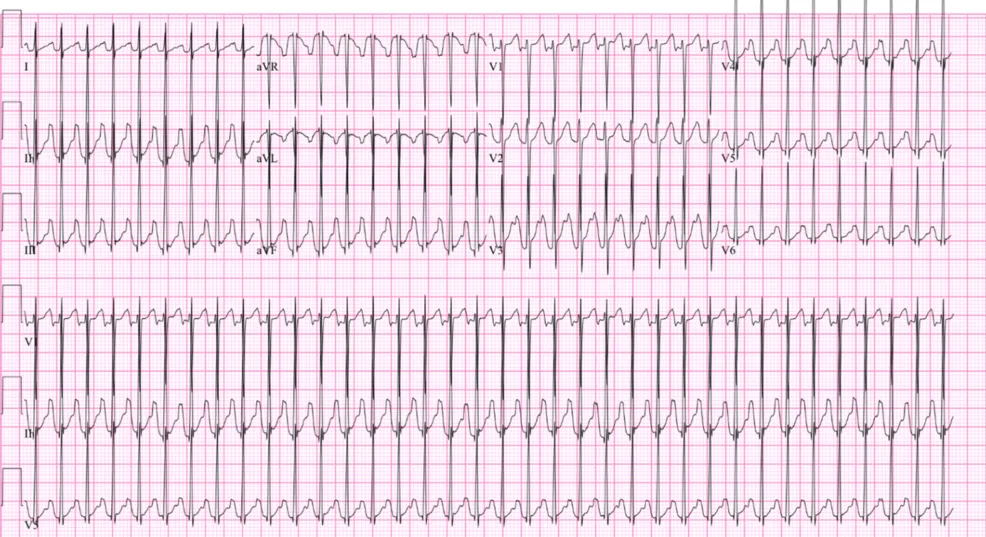
Thyroid storm and diabetic ketoacidosis (DKA) are life-threatening endocrine emergencies that rarely occur concurrently. Their coexistence presents significant diagnostic and management challenges, particularly when associated with new-onset autoimmune diabetes. We report the case of a 26-year-old female with untreated hyperthyroidism who presented with altered mental status, severe tachycardia, dehydration, and generalized weakness. Laboratory evaluation demonstrated thyroid storm with undetectable thyroid-stimulating hormone (TSH) and markedly elevated thyroid hormone levels. Concurrent findings were consistent with severe DKA, including hyperglycemia (828 mg/dL), high anion gap metabolic acidosis, ketonemia, and ketonuria. Hemoglobin A1c was elevated to 9.5% from 5.4% less than three months earlier, suggesting rapid progression to insulin deficiency. Low C-peptide levels of 0.4 further support evolving autoimmune diabetes. The patient additionally demonstrated severe hyperosmolar hypernatremia, acute kidney injury, supraventricular tachycardia, and elevated cardiac biomarkers likely secondary to metabolic stress. She was treated in the intensive care unit (ICU) with aggressive i
This article is an excerpt. To read the full content, visit the original source. Cureus
Related articles
Scientists identify novel autoimmune driver behind DNA repair breakdown in childhood cancer - News-Medical
Researchers have found the first evidence for a previously unsuspected cause of pediatric cancer. They showed that children with such cancers were more likely than their healthy peers to produce ‘auto-antibodies’ targeting six proteins necessary for normal DNA repair. Likewise, they showed that young adults with cancer had greater amounts of these circulating antibodies already years before diagnosis. Tests confirmed that such antibodies can enter the cell during division, where they seem to locate to the TIGER domain implicated in translation and bind their antigens there. The latter result immediately suggests a likely mechanism for the etiology of cancer through the immobilization of DNA repair proteins. A team of scientists in Norway has found evidence for a new, previously unknown mechanism for the development of cancer in children: they seem to produce an unusual amount of aberrant antibodies against the building blocks that make up the DNA repair machinery, a diverse set of hundreds of proteins which identify and correct damage or errors in the genome.

Women ‘more likely to be told autoimmune conditions are psychological’ | Women's health - The Guardian
Women with autoimmune conditions are up to 74% more likely than men to be told their symptoms are psychological or psychosomatic, and face much longer waits for a diagnosis and treatment, a study suggests. Hundreds of millions of people – about one in 10 globally – are affected by autoimmune conditions, which can cause a range of health issues including fatigue, muscle pain and rashes. But research by the University of Cambridge and University of East Anglia suggests a stark gender divide when it comes to how signs of the conditions are handled by doctors. Women are more likely to have their conditions wrongly attributed to psychiatric causes, more likely to have symptoms misdiagnosed as psychosomatic, and more likely to experience delays in getting a diagnosis, according to the study. The lead author, Melanie Sloan, said: “The damage caused to women by these types of misdiagnosis can be very long lasting in terms of trusting doctors and their own self-esteem.”Sloan, a researcher in the department of public health and primary care at Cambridge and UEA, said some women were forced to wait years before finally getting a diagnosis, causing long delays to treatment for their condition.

Examining the Oral Steroid Burden in Asthma and COPD - HCPLive
Patients with asthma and chronic obstructive pulmonary disease (COPD) often receive systemic corticosteroids from multiple specialties, and that cumulative exposure is rarely tracked in 1 place. At the same time, the options for reducing reliance on oral steroids have grown, with approvals of dupilumab and mepolizumab for eosinophilic COPD and of depemokimab, a twice-yearly anti-interleukin (IL)-5 agent, for severe asthma.1-4 Clinicians outside pulmonology increasingly manage these patients when specialty access is limited. On October 6, 2026, Mollie Chartoff, FNP-BC, a nurse practitioner on the advanced COPD team at Vanderbilt Lung Institute in Nashville, Tennessee, moderated a virtual clinical forum for advanced practice providers on asthma and COPD. Participants included nurse practitioners and physician assistants in pulmonology, allergy and asthma, dermatology, oncology, and interventional pain practices in Tennessee, Texas, Missouri, and North Carolina. The discussion covered biomarkers, oral corticosteroid (OCS) exposure, biologic selection, and access barriers.
0 comments
No comments yet. Be the first to share your thoughts!