Climate change affects the quality of one of the world's most important staple foods - Phys.org
This story deserves to be shared
Send it to someone who'd care, or post it on your networks.

Depending on the cultivar, higher concentrations of carbon dioxide (CO₂) in the atmosphere can significantly alter the protein composition of wheat. This affects not only baking quality but potentially also the tolerability of wheat products. This is the conclusion of a new study led by the Leibniz Institute for Food Systems Biology at the Technical University of Munich. According to the study, the adaptation of crops to climate change should in the future focus not only on high yields but also on quality characteristics such as protein composition. The research is published in the journal Food Chemistry.
As a result of climate change, the global CO₂ concentration in the atmosphere has risen from around 340 ppm in 1980 to about 425 ppm in 2024. Depending on future socioeconomic developments, it could rise to around 600 ppm by 2050. Wheat, one of the world's most important staple foods, will also grow under significantly higher CO₂ concentrations in the future.
This article is an excerpt. To read the full content, visit the original source. Phys.org
Related articles
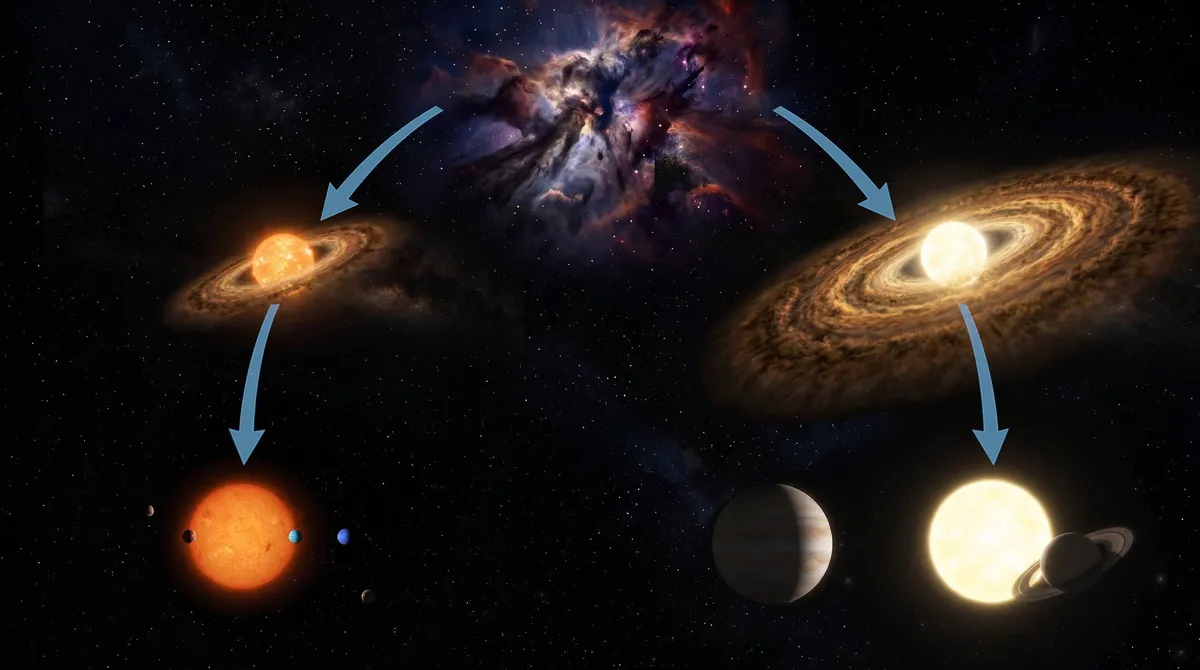
Some Planetary Systems Are Born for Chaos. Astronomers Think They Know Why - ZME Science
Illustration of the genetic link between stellar properties and planetary system architectures. Credit: INAF / Universitat de València / image generation. For most of human history, planetary systems were a sample size of one. Ours. Then people learned about Mercury, Venus, Mars, Jupiter, and Saturn since antiquity, tracking their movements for generations. Uranus joined the planetary roster in 1781 thanks to the telescope, followed by Neptune in 1846, but every planet we discovered still belonged to the same family orbiting our Sun.
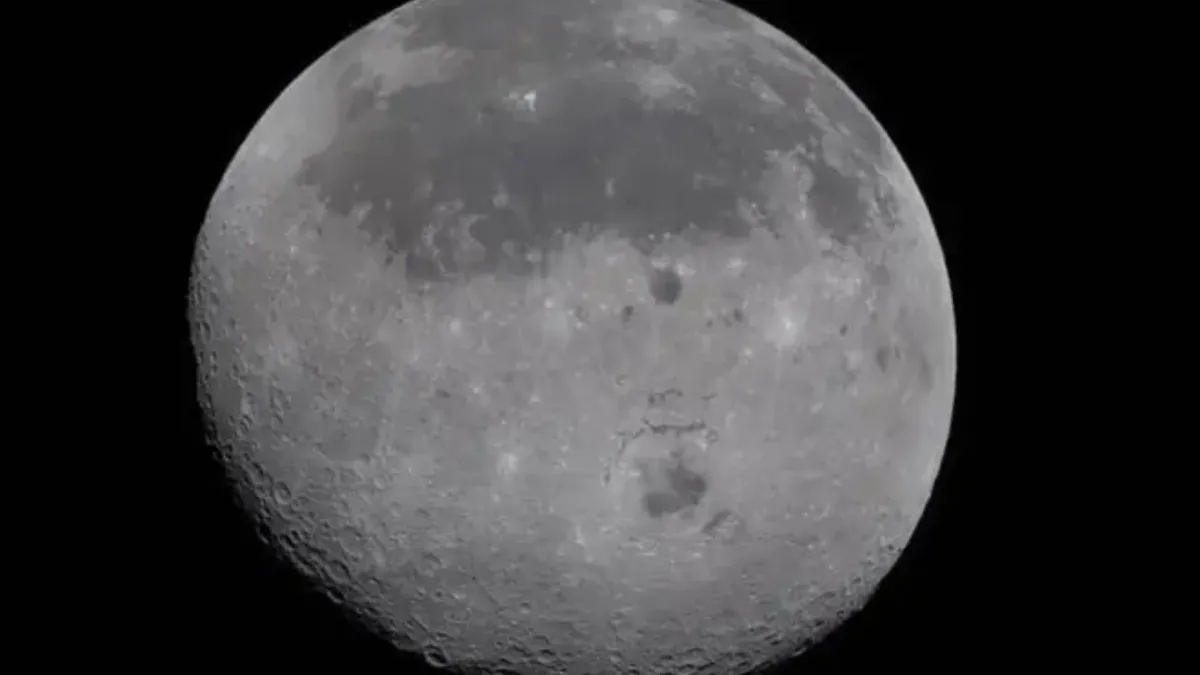
NASA confirms it: the Moon is now smaller - MARCA
08:02CDTA study funded by NASA, and published in The Planetary Science Journal, has determined that the Moon's radius has decreased by about 45 meters. The scientists' analysis concluded that this reduction occurred over the last 400 to 800 million years. Every million years, according to the report's estimates, the Earth’s satellite’s radius would shrink by between 6 and 11 centimeters. In other words, 0.1 micrometers (0.0001 millimeters) per year. Aside from this fact, the research funded by the U. S. space agency has identified more than 10,000 faults on the Moon as a result of studying images from the Lunar Reconnaissance Orbiter, in orbit since 2009. This finding could pose a setback for exploration of the satellite: NASA is considering establishing a lunar base with basic infrastructure in 2032. Until then, efforts are focused on determining possible locations for the installation. The large number of faults detected goes beyond mere scientific curiosity, as it could pose a setback for future crewed missions. The reason is that, unlike the Earth, with 15 major tectonic plates, the Moon has a single plate.
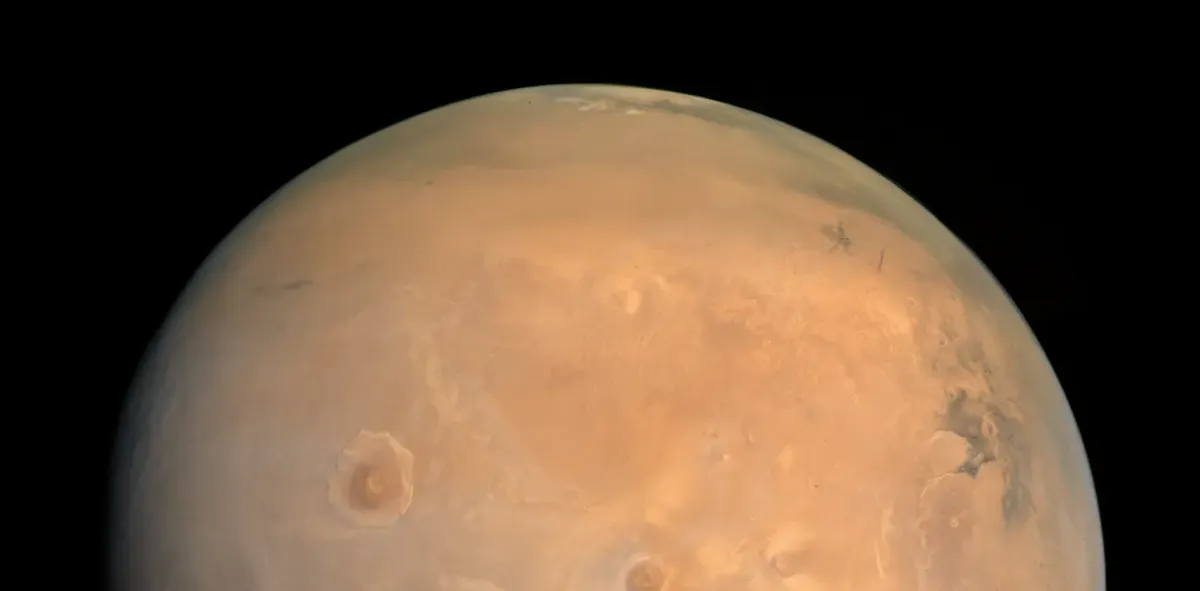
NASA’s Mars orbiter fleet is getting old – here’s how that could affect future exploration - The Conversation
Currently, about 16,000 satellites are orbiting Earth, providing everything from GPS service and weather reports to phone service in remote locations to people across the globe. In contrast, the highest-ever number of active satellites in orbit around Mars, one of the best-explored other planets in our solar system, is eight.
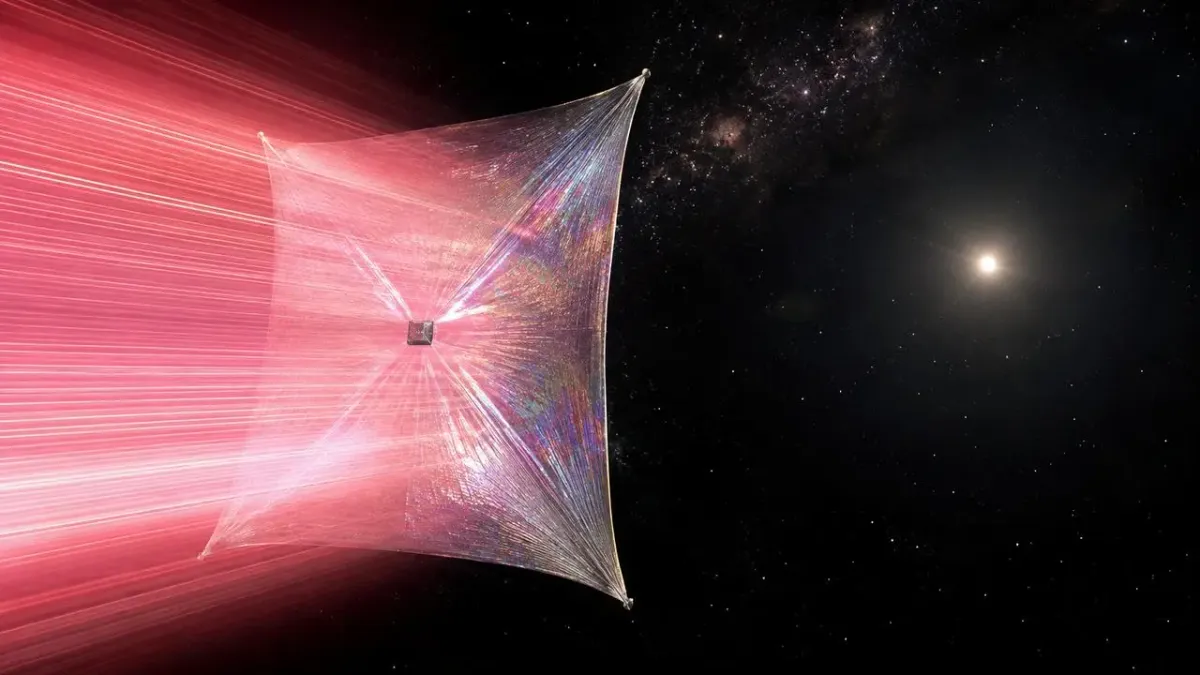
Light-Powered Probes: The Daring New Plan to Reach Distant Stars Faster - Futura, le média qui explore le monde
The only thing we can be sure of about the future is that it will be absolutely fantastic. If what I say seems reasonable to you, then I have failed completely, declared Arthur C. Clarke back in 1964 on the BBC. In the legendary BBC Horizon documentaries more than 60 years ago, Clarke made several predictions—including some about the Internet that proved uncannily accurate.
Surprisingly high redundancy in electronic structure data across materials explained by low intrinsic dimensionality - Nature
AcknowledgementsThe authors thank UCLA's Institute for Digital Research and Education (IDRE), Michigan Technological University's MRI computing clusters, and the National Energy Research Scientific Computing Center (NERSC) for providing computational resources. The authors thank Abhishek Keripale for assistance with the development of later versions of the CrFeCoNi machine-learning models. The authors used GPT-5 (OpenAI) for language editing and proofreading and subsequently reviewed and edited all content. FundingThis work was primarily supported by the U. S. Department of Energy (DOE), Office of Science, Basic Energy Sciences (BES), under Award DE-SC0023432, which provided primary support for the overall project conception and integrated KS-DFT–ML investigations. The University of California National Laboratory Fees Research Program under Grant L25CR9003 supported data generation and post-processing at UCLA (ASB). The National Science Foundation under Award 2442313 supported data-pruning and dimensionality analyses at Michigan Technological University (SG, SH). This research also used resources of the National Energy Research Scientific Computing Center (NERSC), a U. S.
Pervasive electronic nematicity across the doping-tuned phase diagram of Kagome superconductors - Nature
We’re sharing this article early to provide faster access to peer-reviewed, accepted research. It is citable and carries a permanent DOI. This version is subject to further edits and will be replaced automatically by the final Version of Record. All legal disclaimers apply. AbstractKagome superconductors AV3Sb5 (A = Cs, K, Rb) host intertwined orders arising from electronic correlations and lattice geometry, but the nature of the high-temperature electronic state from which these phases emerge remains poorly understood. Although numerous experiments have reported rotational symmetry breaking, it is still intensely debated whether this may be a simple consequence of the symmetry of the underlying 2 × 2 charge density wave (CDW) or an entirely different mechanism. Here we use spectroscopic imaging scanning tunneling microscopy to track the evolution of electronic structure in CsV3Sb5 as the CDW is intentionally suppressed through two distinct chemical substitution routes—Sn on the Sb site and Ti on the V site.
0 comments
No comments yet. Be the first to share your thoughts!