China has planted so many trees around the Taklamakan Desert that it's turned this 'biological void' into a carbon sink - Live Science
This story deserves to be shared
Send it to someone who'd care, or post it on your networks.
This article is an excerpt. To read the full content, visit the original source. Live Science
Related articles

As Alberta referendum nears, seeds to dispute results planted online: report - Global News
Just days after Ukrainian President Volodymyr Zelenskyy said strikes on Russian bot farms halted some of that traffic online, social media researchers at McGill University say they’ve found no significant change in “inauthentic” online discourse connected to the Alberta referendum. However, they’re warning that significant narrative groundwork has been laid to contest the validity of the next week’s vote. Researchers are McGill’s Media Ecosystem Observatory (MEO) have been keeping tabs on the online discourse around the province’s referendum which will ask, among other questions, if Albertans want a binding provincial vote on independence from Canada. With widespread concerns about foreign interference in the vote, a narrative began circulating last week that Ukrainian strikes on Russian data centres had led to a drop in online separatist accounts — suggesting those accounts were inauthentic “bots.”The McGill researchers found no evidence the purported changes in Russian traffic had any effect on either pro- or anti-separatism voices online. But Aengus Bridgman, one of the researchers, said the viral claims provide a window into the fraught nature of the debate.
How enzymes locally block cell wall repair, allowing cells to fuse in an irreversible manner - Phys.org
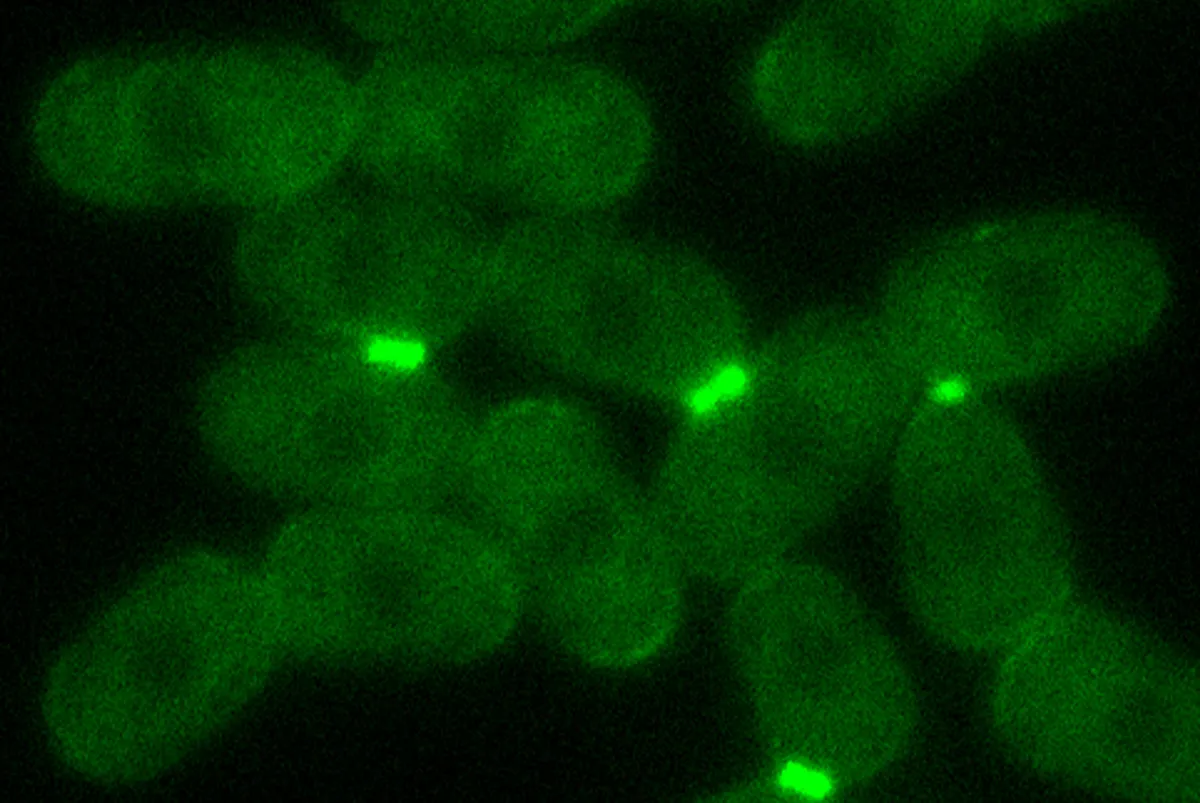
Yeast cells undergoing sexual reproduction, observed by fluorescence microscopy; the green signal reveals a cell wall damage sensor at the site of fusion. Credit: J. Coronas-Serna, UNIGE The fusion of two cells is a decisive event in the sexual reproduction of many organisms. In fungi, cells must not only bring their membranes together and merge them, but also locally open their protective cell wall.
Cosmic 'hamburger' offers rare edge-on view of where giant planets may take shape - Phys.org
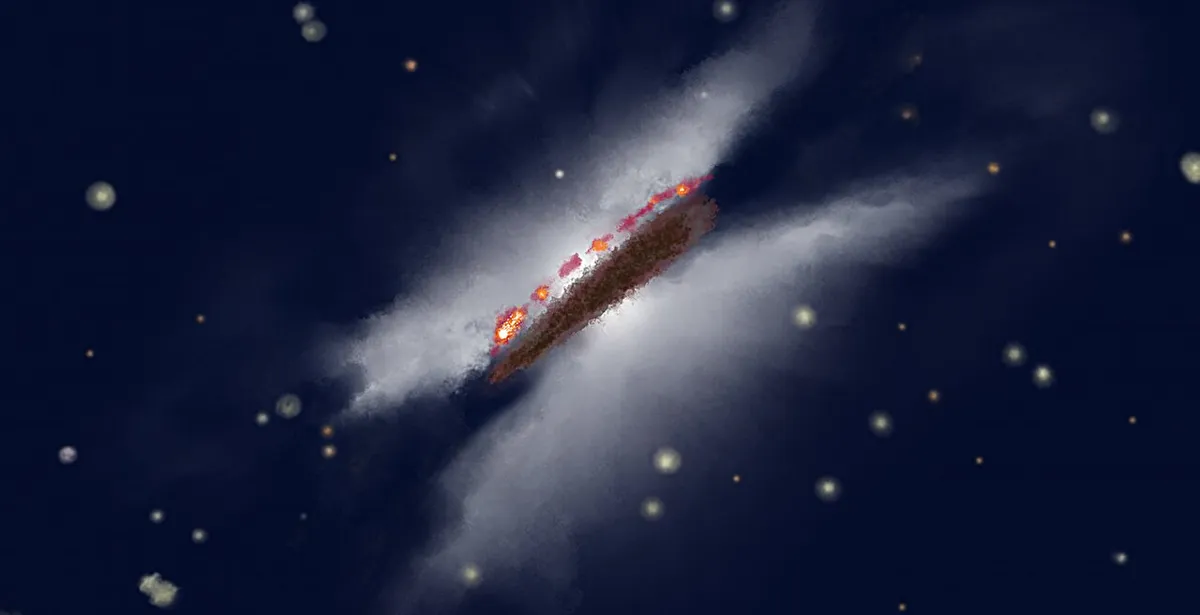
Gomez's Hamburger System. This artist's impression of the Gomez's Hamburger system shows the stacked layers of gas and dust as they rotate around a young star. ALMA observations reveal a direct view of its vertical structure at millimeter wavelengths, allowing astronomers to map the location of the millimeter-sized dust grains and several different gas-phase molecules, which have arranged themselves into distinct levels. Credit: NSF/AUI/NSF NRAO/P. Vosteen. Astronomers using the Atacama Large Millimeter/submillimeter Array (ALMA) were surprised to discover the earliest phases of giant planet formation between the dense layers of gas and dust in the "Gomez's Hamburger" system, referred to as GoHam.
The ESA's Euclid Space Telescope Has Discovered A New Comet - Universe Today
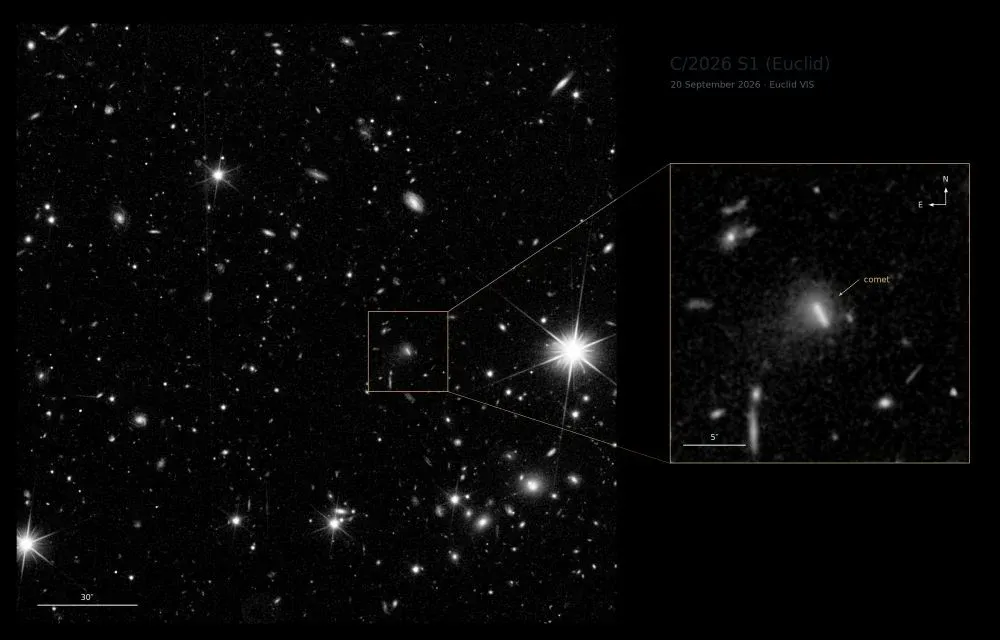
The ESA's Euclid Space Telescope has discovered its first comet, a result that's not part of its primary mission. The telescope was launched at the beginning of July, 2023, and its mission is to observe about 1.5 billion galaxies out to redshift z=2, which corresponds to seeing around 10 billion years into the past. The goal is to measure the redshift of a massive amount of galaxies, to shed light on the expansion history of the Universe and the force that drives it, dark energy. The space telescope has observed other comets, but this is the first time it's discovered one. The comet was found in multiple images captured between September 16th and 24th, 2026. For a telescope built to take deep images of distant galaxies, discovering a rapidly moving comet in the Milky Way is a surprising bonus.
0 comments
No comments yet. Be the first to share your thoughts!