ChatGPT can now create interactive visuals to help you understand math and science concepts - TechCrunch
This story deserves to be shared
Send it to someone who'd care, or post it on your networks.
This article is an excerpt. To read the full content, visit the original source. TechCrunch
Related articles
Using comics to bring tricky microbiology concepts to life - The University of British Columbia

Tenebris Somnia Blends 2D Visuals With Live-Action Horror Scenes, And It’s Already On Sale At Launch
Horror games live or die by their scares and tension. If the player isn’t uncomfortable guiding a character through dreadful situations, well, you may as well be playing an action-adventure game (don’t mention the first Uncharted’s final act, please). Tenebris Somnia blends the discomfort of retro horror with live-action sequences that will make your goosebumps bump, and you can get it cheaper than ever right now. As the best horror games continue to push for more realistic visuals and immersive experiences, Tenebris Somnia’s twist on the genre combines old-school cool with movie-like cutscenes. It’s both jarring and original, and that’s exactly what makes for excellent horror. I want to be constantly surprised, and Tenebris Somnia makes its pixelated 2D threats even more menacing when you see live-action versions of the monsters. Inspired by classics that scared us silly, like Resident Evil and Silent Hill, Tenebris Somnia has a deceptively simple premise. You play as Julia, who finds herself in a parallel universe while visiting her ex-boyfriend and is relentlessly hunted by nightmares that, well, aren’t exactly figments of her imagination. (To be honest, visiting an ex sounds li
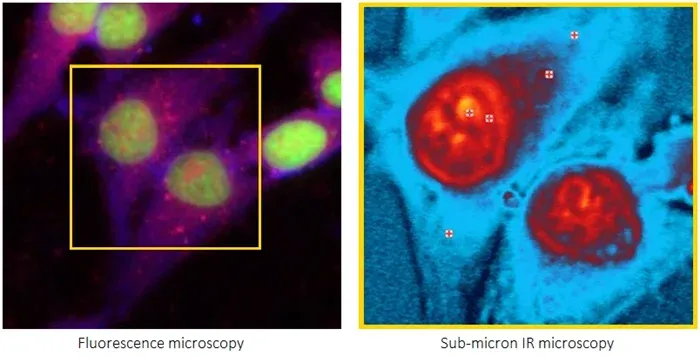
Sub-micron IR spectroscopic imaging for cellular and biomolecular research - News-Medical
Submicron IR microscopy is opening new opportunities in biological sciences with the development of a new technique: optical photothermal infrared (O-PTIR) spectroscopy. Developments in life sciences research are playing an increasingly important role in global health, and advancements in technology have the potential to offer new and improved approaches to support the health and wellbeing of people worldwide.
A comprehensive transcriptome and metabolome dataset for Erigeron breviscapus (Asteraceae) response to different light intensities - Nature
We’re sharing this article early to provide faster access to peer-reviewed, accepted research. It is citable and carries a permanent DOI. This version is subject to further edits and will be replaced automatically by the final Version of Record. All legal disclaimers apply. AbstractErigeron breviscapus is a widely utilized medicinal herb in traditional Chinese medicine, characterized by high annual demand and notable pharmacological activities. Light intensity is a critical environmental factor influencing secondary metabolism in medicinal plants. However, the effects of light intensity on the accumulation of active ingredients in E. breviscapus remain largely unexplored. In this study, we examined the transcriptomic and metabolomic responses of E. breviscapus to five levels of light intensity (50, 100, 200, 400, 800 μmol·m−2·s−1). The results revealed that higher light intensity (EB-L800) significantly increased the accumulation of scutellarin, chlorogenic acid, isochlorogenic acid A, and isochlorogenic acid C. A total of 1,334 metabolites were detected, and 127.10 Gb of high-quality clean data were generated through transcriptomic sequencing.

Cells Block Repair System to Fuse Together - Mirage News
The fusion of two cells is a decisive event in the sexual reproduction of many organisms. In fungi, cells must not only bring their membranes together and merge them, but also locally open their protective cell wall. A study conducted at the University of Geneva (UNIGE) shows how a mechanism that prevents cells from repairing their wall at the fusion site makes this process irreversible. Published in the journal Current Biology, these findings provide new insights into how cells coordinate fusion and repair mechanisms and could ultimately open new avenues for targeting the cell wall of pathogenic fungi. Unlike animal cells, fungal cells are surrounded by a rigid cell wall. This structure protects them and allows them to withstand the internal pressure exerted by their cellular contents. When two cells fuse, notably during sexual reproduction, this wall must be locally degraded to allow the membranes of the two cells to merge. Once this step has been completed, fusion normally proceeds until a single cell is formed.
0 comments
No comments yet. Be the first to share your thoughts!