ccRCC kidney cancer: PET/CT imaging approach improves lesion detection - healthcare-in-europe.com
This story deserves to be shared
Send it to someone who'd care, or post it on your networks.
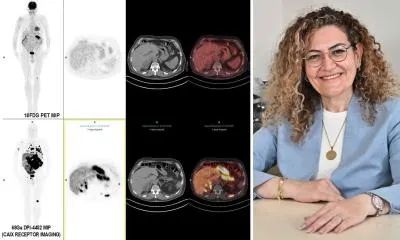
Case: In a patient diagnosed with metastatic clear cell RCC, foci observed at very low levels on 18F-FDG PET/CT, and some that were not detectable at all, were seen as dramatically dense on [68Ga]Ga-DPI-4452-PET/CT (carbonic anhydrase IX receptor) imaging. Image courtesy of Prof. Arslan
Research was presented at the 39th Annual Congress of the European Association of Nuclear Medicine (EANM’26)
This article is an excerpt. To read the full content, visit the original source. healthcare-in-europe.com
Related articles
New AI model detects hidden diseases in routine CT scans - News-Medical
When analyzed by a new artificial intelligence model developed at Penn Medicine, CT scans reveal much about a patient's health beyond the specific condition they were originally ordered for, according to a new study published in NPJ Digital Medicine. The AI model, dubbed Percival, can uncover nearly hidden patterns in disease and potential future health risks that might have otherwise gone unnoticed by human eyes. While other models may need to be directed to find certain health conditions or outcomes, Percival can effectively run in the background to pick up what is unseen. Our teams have developed something that learns broadly from imaging data and uncovers connections between scans, lab values, people's physiology, and clinical outcomes to potentially give more accurate assessments of health, or even ring alarm bells early. This is work that points toward a future in which medical imaging becomes a foundation for more personalized and proactive healthcare. "
Fatty acids in the tumor microenvironment reprogram neutrophils to induce adenosine-mediated immunosuppression in mice - Nature
AcknowledgementsThe authors thank Arcus Biosciences for providing AB680 and AB928 for the experiments. This research was supported [in part] by the Intramural Research Program of the National Institutes of Health (NIH), National Cancer Institute, CCR, CIL. The contributions of the NIH authors (S. T., C. I. K. C., F. J. G.) were made as part of their official duties as NIH federal employees, are in compliance with agency policy requirements, and are considered Works of the United States Government. However, the findings and conclusions presented in this paper are those of the authors and do not necessarily reflect the views of the NIH or the U. S. Department of Health and Human Services. Schematic diagrams (Figs. 1A, E, 2A, E, 5D, 6A, D and 7A, G) were created with BioRender.com. FundingThis work was funded by NIH grants R01CA148828, R01CA245546, R01DK095201, and UMCCC Core Grant P30CA046592 (Y. M. S.). R01AI152517 to C. A. P. R01CA248160 to C. A. L. R. S. was supported by a Postdoctoral Fellowship (032650) from the American Physiological Society and a Research Fellow Award (1003279) from the Crohn’s and Colitis Foundation. N. W. Z.

RSV Linked to Severe Complications After Lung Transplant - EMJ
RSV IN lung transplant recipients was associated with respiratory failure, declining lung function, and mortality in hospitalized patients. An international multicenter study of 155 adult lung transplant recipients hospitalized with respiratory syncytial virus (RSV) infection identified clinical predictors of severe complications, highlighting the importance of early assessment and continued monitoring in this vulnerable population.
0 comments
No comments yet. Be the first to share your thoughts!