Canada-France-Hawaiʻi Telescope discovers more than 2,100 previously unknown galaxies - Maui Now
This story deserves to be shared
Send it to someone who'd care, or post it on your networks.
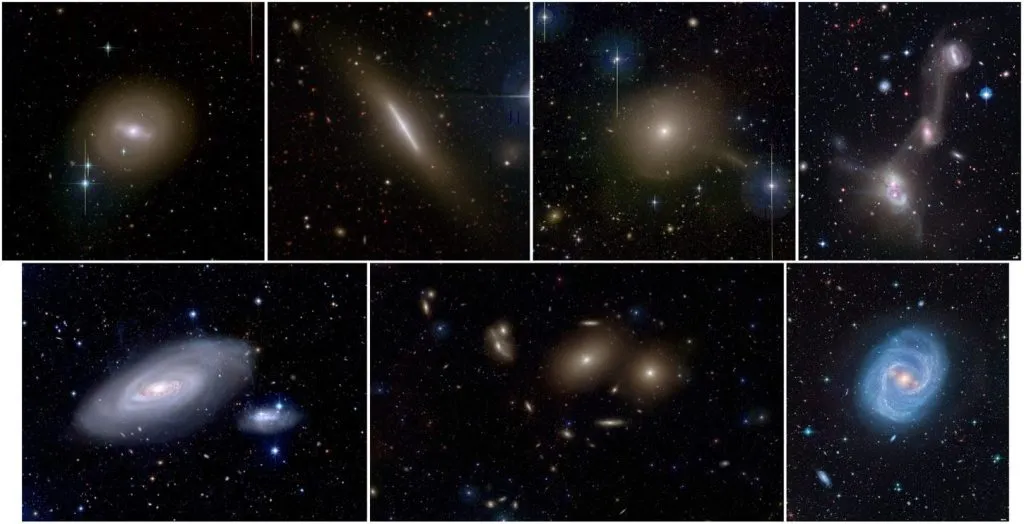
Virgo Cluster galaxies captured by the Next Generation Virgo Cluster Survey. Images: NGVS Team, CFHT, Jean-Charles Cuillandre and Giovanni Anselmi (Coelum).
Astronomers using the Canada-France-Hawaiʻi Telescope have identified more than 2,100 previously unknown galaxies in the Virgo Cluster, more than doubling its known galaxy population.
This article is an excerpt. To read the full content, visit the original source. Maui Now
Related articles
Unpublished Schrödinger Manuscript Reveals His Challenge to Quantum Randomness Claims - The Quantum Insider
A new study analyzes an unpublished Schrödinger manuscript that challenged claims that hidden information could not explain apparently random quantum outcomes. Schrödinger’s model reproduced the expected results of polarization measurements, serving as a mathematical counterexample rather than a complete theory of quantum physics.
Bacteria discovered to be synthesising metal–organic frameworks with ‘extraordinary conductivity’ - Chemistry World
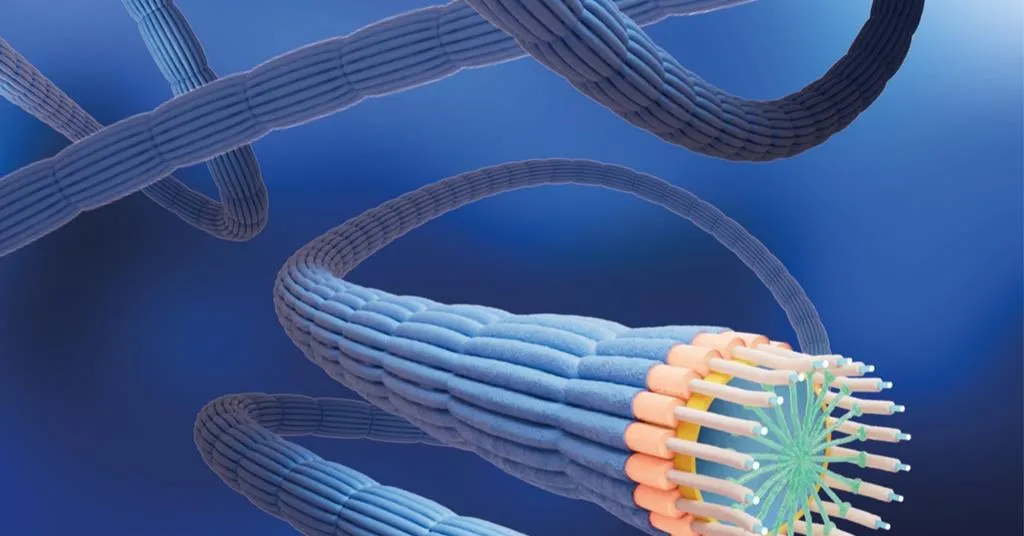
For the first time, researchers have discovered a microorganism that has made metal–organic frameworks (MOFs) and it appears to have been making them for millions of years. These supramolecular structures also have excellent conductivity and can transport electrons over distances spanning several centimetres, helping the bacteria survive the harsh environment on the seafloor. ‘It is a whole new type of [bio]molecular structure,’ says lead author Filip Meysman from the University of Antwerp, Belgium. The basic building blocks the bacterium Candidatus Electrothrix gigas needs to make MOFs are strikingly similar to those used by chemists. However, while the metal core and connecting linkers remain the same, ‘the resulting supramolecular structure is very unique and novel’, says Meysman. These bacteria build bundles of intertwined MOF nanoribbons that are ‘unseen in human-made materials’. Such an architecture creates an excellent electronic environment for electrical conductivity, with conjugation and delocalisation to ‘enable electron transport over extremely long distances’, he adds.
Field testing the influence of settlement recesses and nighttime feeding lights on coral recruitment - Nature
Hendrikje Jorissen1, Jessica Reichert1, Shannon L. Dixon2, Esme M. Madin1, Charlotte A. Madin1, Mollie Asbury1, Allison D. Nims1, Marina E. Rottmueller1,3, Lomani H. Rova1, The R3D Consortium, Andréa G. Grottoli2 & … Joshua S. Madin We’re sharing this article early to provide faster access to peer-reviewed, accepted research. It is citable and carries a permanent DOI. This version is subject to further edits and will be replaced automatically by the final Version of Record. All legal disclaimers apply.
PITX1 safeguards epithelial identity and restrains EMT plasticity - Nature
We’re sharing this article early to provide faster access to peer-reviewed, accepted research. It is citable and carries a permanent DOI. This version is subject to further edits and will be replaced automatically by the final Version of Record. All legal disclaimers apply. AbstractEpithelial cell identity is maintained by coordinated transcriptional and epigenetic programs that preserve tissue integrity and restrain epithelial–mesenchymal transition (EMT)–driven plasticity. Through integrative transcriptomic and chromatin accessibility analyses of human mammary epithelial cells, we identify the homeobox transcription factor PITX1 as a master regulator of epithelial fate and a potent suppressor of EMT. Loss of PITX1 alone is sufficient to induce transcriptional reprogramming, cytoskeletal remodeling, and morphological shifts characteristic of EMT, comparable to those elicited by TGF-β stimulation. Conversely, restoration of PITX1 in aggressive breast cancer cells markedly reduces their migratory capacity. In patient tumors, PITX1 is enriched in epithelial compartments and EMT‑low subtypes, but downregulated in mesenchymal‑like cancers.
Earth's gravity and magnetism have unexpected effects on the human genome and mitochondria - Physics World
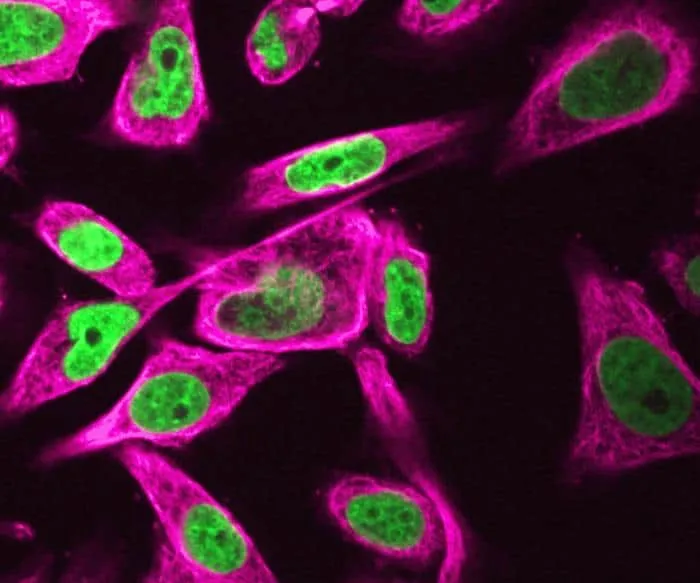
Going with the flow: Human cells with fluorescently labelled chromatin (green) and microtubules (magenta) appear elongated after 24-hour exposure to flows. (Courtesy: Nikitas Kanellakopoulos and Alexandra Zidovska, Department of Physics, New York University) The human genome doesn’t seem to mind being in zero-gravity environments, and in some cases, the mitochondria that produce energy for our cells actually benefit from spending time outside the Earth’s magnetic field. These two findings – which come from separate research groups in the US and the UK – could have important implications for space travel, while the latter hints at a new pathway for treating neurodegenerative conditions such as Parkinson’s disease.
Discussions with the gene editor - Nature
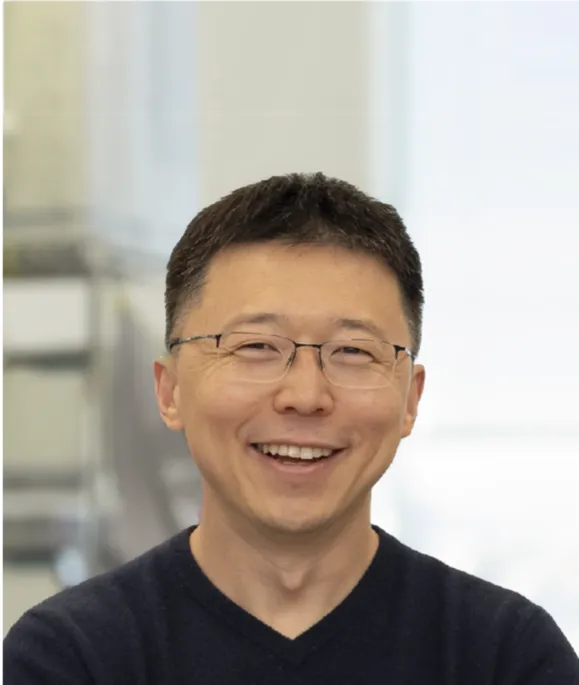
Ahead of his 45th birthday, Feng Zhang, James and Patricia Poitras Professor of Neuroscience at the Massachusetts Institute of Technology, discussed his life in science. This is a preview of subscription content, access via your institution
0 comments
No comments yet. Be the first to share your thoughts!