Astronomers spot a black hole tearing apart a star 3,500 light-years off-center - Interesting Engineering
This story deserves to be shared
Send it to someone who'd care, or post it on your networks.
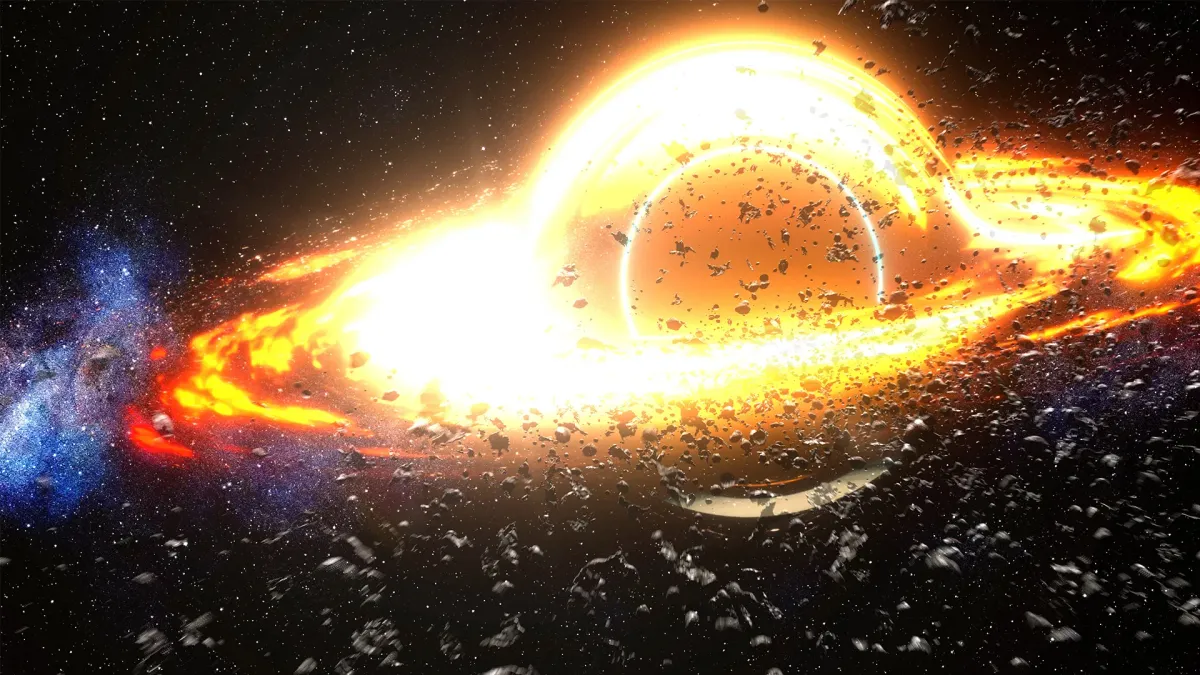
Can a dying star reveal the location of a black hole that has otherwise gone unnoticed? Turns out, it can.
Astronomers have now traced a stellar destruction event to a massive black hole about 3,500 light-years from the center of its host galaxy. This discovery offers a rare look at a so-called wandering black hole and raises a further question: how did it end up so far from home?
This article is an excerpt. To read the full content, visit the original source. Interesting Engineering
Related articles

Earth Tearing Apart Beneath Pacific Northwest - تسنیم
The discovery, reported in Science Advances, shows a subduction zone actively breaking into pieces. Subduction zones form where one tectonic plate is forced beneath another and pushed deep into Earth. They are responsible for some of the planet's largest earthquakes, powerful volcanic eruptions, and long-term changes to continents and ocean basins. Until now, however, scientists have had few opportunities to see clearly how one of these enormous systems reaches the end of its life.
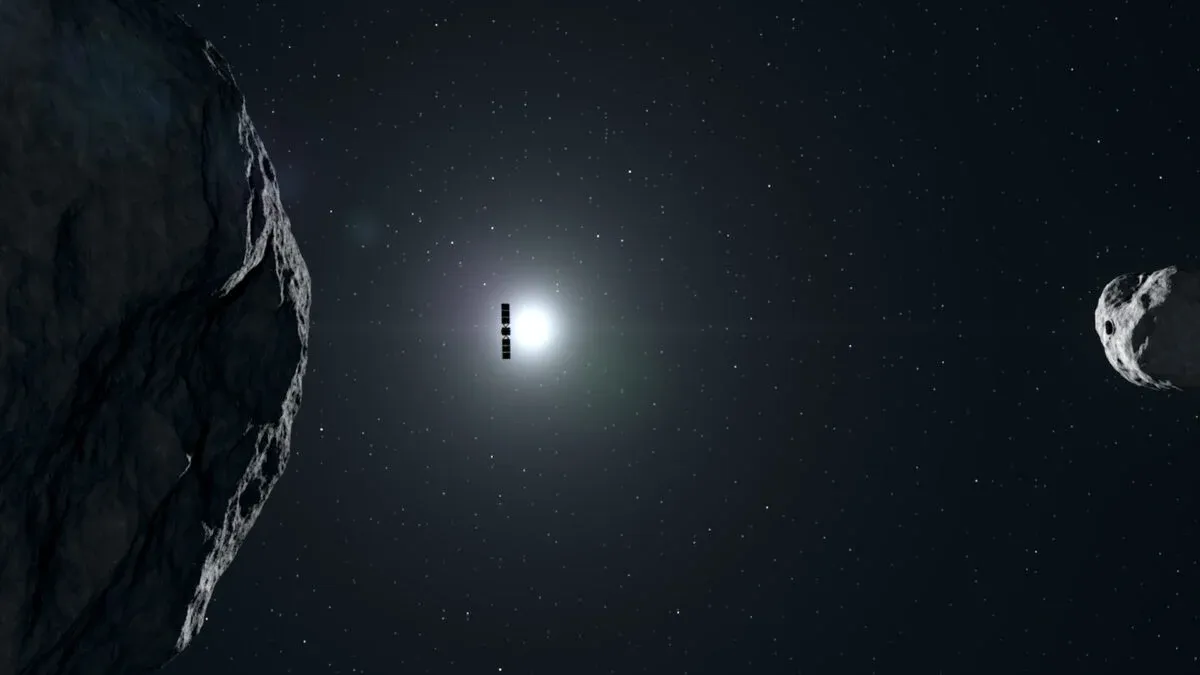
Hera Closes In on Asteroid Pair to Study the Impact Damage of NASA’s DART Strike - Gizmodo
In September 2022, a NASA spacecraft violently smashed into a tiny asteroid as a test of planetary defense. Now, a new probe is ready to check out the wreckage by rendezvousing with the space rock for a closer look. The European Space Agency (ESA) launched its Hera mission on October 7, 2024, as a crucial follow-up to NASA’s DART (Double Asteroid Redirection Test), a first-of-its-kind attempt to redirect the orbit of an asteroid. The small, car-sized spacecraft recently pulled off a braking maneuver to slow it down as it approaches the binary asteroid system before it makes its first close flyby in early November. Hera is set to perform a detailed, post-impact survey with the aim of turning a one-time, space experiment into a well-understood planetary defense mechanism. The mission could also help scientists learn more about how asteroids form. Collision ahead For the DART test, NASA sent a 1,340-pound spacecraft (607 kilograms) and smashed it into Dimorphos, a 558-foot-wide (170-meter) space rock that orbits its larger 2,625-foot-wide (800-meter) companion, Didymos.

A Solar Storm Supposedly Delayed a Train in 1841. But the Railway Didn’t Exist Yet - ZME Science
For more than 150 years, scientists believed it was the earliest documented example of a solar storm interfering with human technology. There was just one glaring problem. The Victorian railway hadn’t even been built yet. The story appeared in the prestigious scientific journal Nature in 1871. According to the account, an intense magnetic storm on October 18, 1841, scrambled telegraph signals along the South Devon Railway. Unable to confirm that the tracks ahead were clear, railway officials held the 10:05 p.m. express at Exeter for 16 minutes.
0 comments
No comments yet. Be the first to share your thoughts!