A Solar Storm Supposedly Delayed a Train in 1841. But the Railway Didn’t Exist Yet - ZME Science
This story deserves to be shared
Send it to someone who'd care, or post it on your networks.

For more than 150 years, scientists believed it was the earliest documented example of a solar storm interfering with human technology. There was just one glaring problem. The Victorian railway hadn’t even been built yet.
The story appeared in the prestigious scientific journal Nature in 1871. According to the account, an intense magnetic storm on October 18, 1841, scrambled telegraph signals along the South Devon Railway. Unable to confirm that the tracks ahead were clear, railway officials held the 10:05 p.m. express at Exeter for 16 minutes.
This article is an excerpt. To read the full content, visit the original source. ZME Science
Related articles
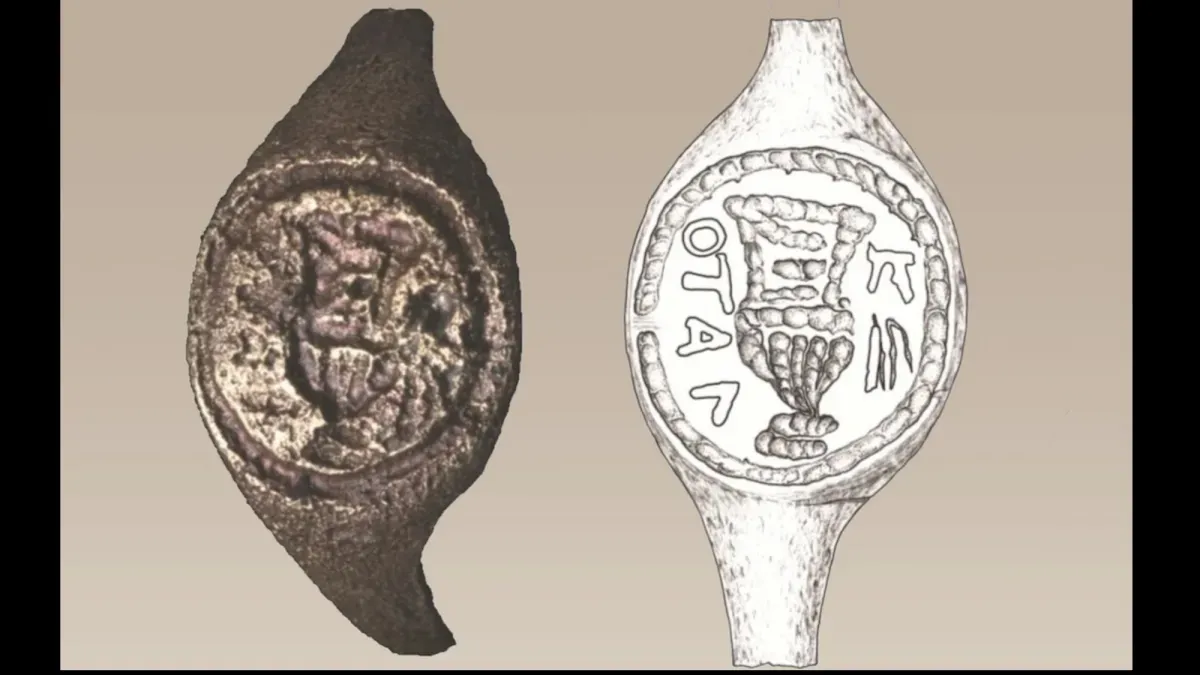
Ancient ring supposedly tied to Pontius Pilate may include a typo - Popular Science
Photo (left) and drawing of the 2,000-year-old copper alloy ring excavated in the 1960s. Research by UCLA’s Catherine Bonesho’s suggests it may have belong to an enslaved or formerly enslaved person who participated in the administrative work of Roman Judea under Pontius Pilate. The story of a 2,000-year-old ring potentially tied to one of the Christian Bible’s most impactful figures has yet another hypothesis. In a study recently published in the journal Palestine Exploration Quarterly, historian Catherine Bonesho argues that the letters on a ring often associated with the Roman governor Pontius Pilate refer to somebody named Pilate, and not necessarily the official who sentenced Jesus to death. The reason behind the mix-up? A common Roman translation error.
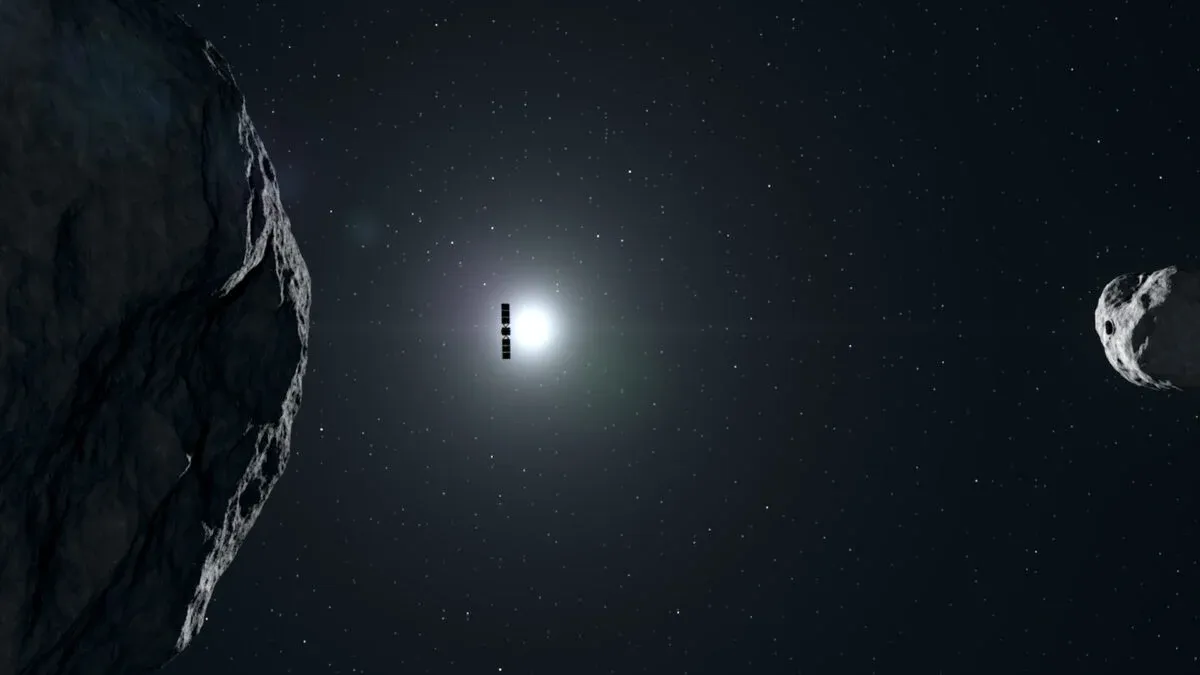
Hera Closes In on Asteroid Pair to Study the Impact Damage of NASA’s DART Strike - Gizmodo
In September 2022, a NASA spacecraft violently smashed into a tiny asteroid as a test of planetary defense. Now, a new probe is ready to check out the wreckage by rendezvousing with the space rock for a closer look. The European Space Agency (ESA) launched its Hera mission on October 7, 2024, as a crucial follow-up to NASA’s DART (Double Asteroid Redirection Test), a first-of-its-kind attempt to redirect the orbit of an asteroid. The small, car-sized spacecraft recently pulled off a braking maneuver to slow it down as it approaches the binary asteroid system before it makes its first close flyby in early November. Hera is set to perform a detailed, post-impact survey with the aim of turning a one-time, space experiment into a well-understood planetary defense mechanism. The mission could also help scientists learn more about how asteroids form. Collision ahead For the DART test, NASA sent a 1,340-pound spacecraft (607 kilograms) and smashed it into Dimorphos, a 558-foot-wide (170-meter) space rock that orbits its larger 2,625-foot-wide (800-meter) companion, Didymos.

Brief self-care meditation boosts body confidence - Medical Xpress
Australian adults who completed the self-compassion meditation training reported significantly increased body appreciation, positive well-being and lower self-judgment. The benefits were still evident six weeks after the program concluded, and frequency of practice alone did not drive the size of change. The randomized controlled trial, published in the journal Mindfulness, involved 227 people aged 18 to 39 years. Participants in the intervention group undertook 20 minutes of daily self-compassion, while those in the control group remained on the waitlist.
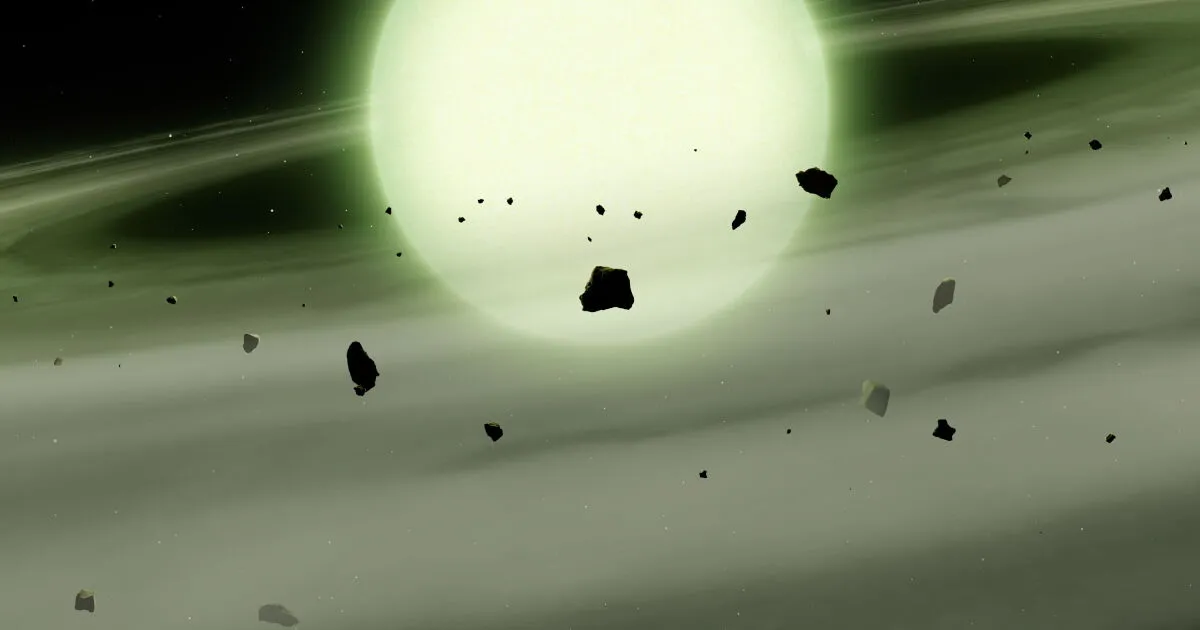
Astronomers say they’ve discovered the first green star - Scripps News
Astronomers analyzing white dwarf stars have for the first time found a star that would appear green to human eyes, according to a new study. While for most stars, color is temperature-dependent and limited to a few hues, white dwarfs, which are the dense remnants of sun-like stars that have died, can glow in an incredible range of colors, said lead study author Mark Hollands, an astrophysicist at the University of Warwick, England, on Thursday. “The colors that normal stars can have are pretty much only orange, white or blue,” Hollands told CNN. “What we found is, for most white dwarfs, that’s the same as well. But there are some special cases where the physics in the outer layers of these stars are sufficiently strange that it causes actually quite big deviations in terms of their spectrum,” he said. These deviations are due to the interaction between the helium in their atmosphere and traces of other elements, which vary between white dwarfs, depending on what material has interacted with the star over the course of its lifetime.
0 comments
No comments yet. Be the first to share your thoughts!