Antarctica's Doomsday Glacier is melting twice as fast as we previously thought - The Weather Network
This story deserves to be shared
Send it to someone who'd care, or post it on your networks.
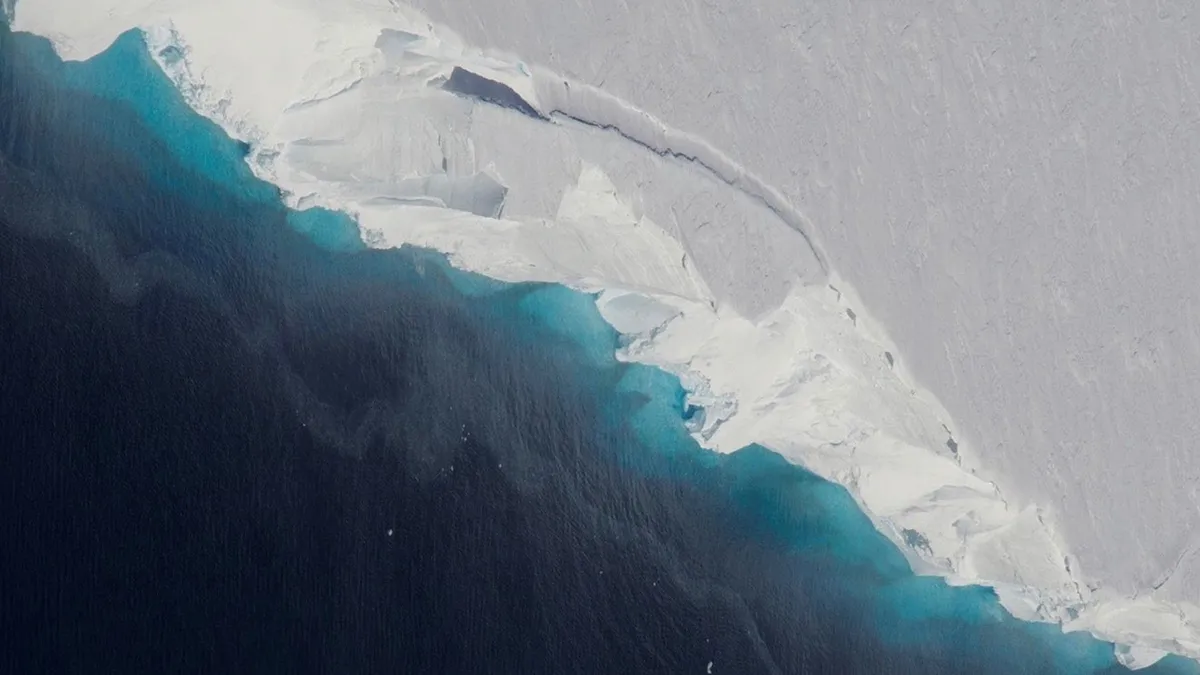
The collapse of Antarctica's Thwaites Glacier is already a major concern as the world continues to warm, but new research has revealed that ocean water is eating away at the underside of the glacier far faster than we previously thought. Along Antarctica's west coast, there are a number of glaciers that extend as ice shelves out over the Southern Ocean. Due to its size, one of the most important is Thwaites. At 120 kilometres across, it is the widest glacier in the world, with a total area close to 200,000 square kilometres. That's big enough to cover all of Nova Scotia, plus the islands of Newfoundland and Prince Edward Island, along with a quarter of New Brunswick, in kilometre-thick ice. Thwaites, itself, contains so much ice that, in the unlikely event of it completely collapsing into the ocean, global sea levels would rise by around 65 centimetres. Add to this the fact that Thwaites holds back a substantial chunk of the main West Antarctic ice sheet, enough to add another 2.4 metres to ocean levels, and it's easy to see why it has been nicknamed the Doomsday Glacier.
This article is an excerpt. To read the full content, visit the original source. The Weather Network
Related articles

New Evidence Links Electron Spin Fluctuations to High-Temperature Superconducting States - AZoM
Superconductivity has many important practical applications, including creating powerful magnets used in high-resolution medical scans, transporting electricity efficiently, and building ultra-sensitive measuring devices. Until now, understanding exactly what lay behind this unique phenomenon at high temperatures has eluded scientists over many decades. But pioneering research, led by physicists at the University of Bristol and published this week in the journal Nature Physics, has identified the vital mechanism which explains how electrons in these copper-oxide high-temperature superconductors combine to transmit power with no loss of energy - the 'superconductive' state of infinite electrical conduction.
In China, scientists found a nearly 5-pound fungus so unique it required a new family - Yahoo
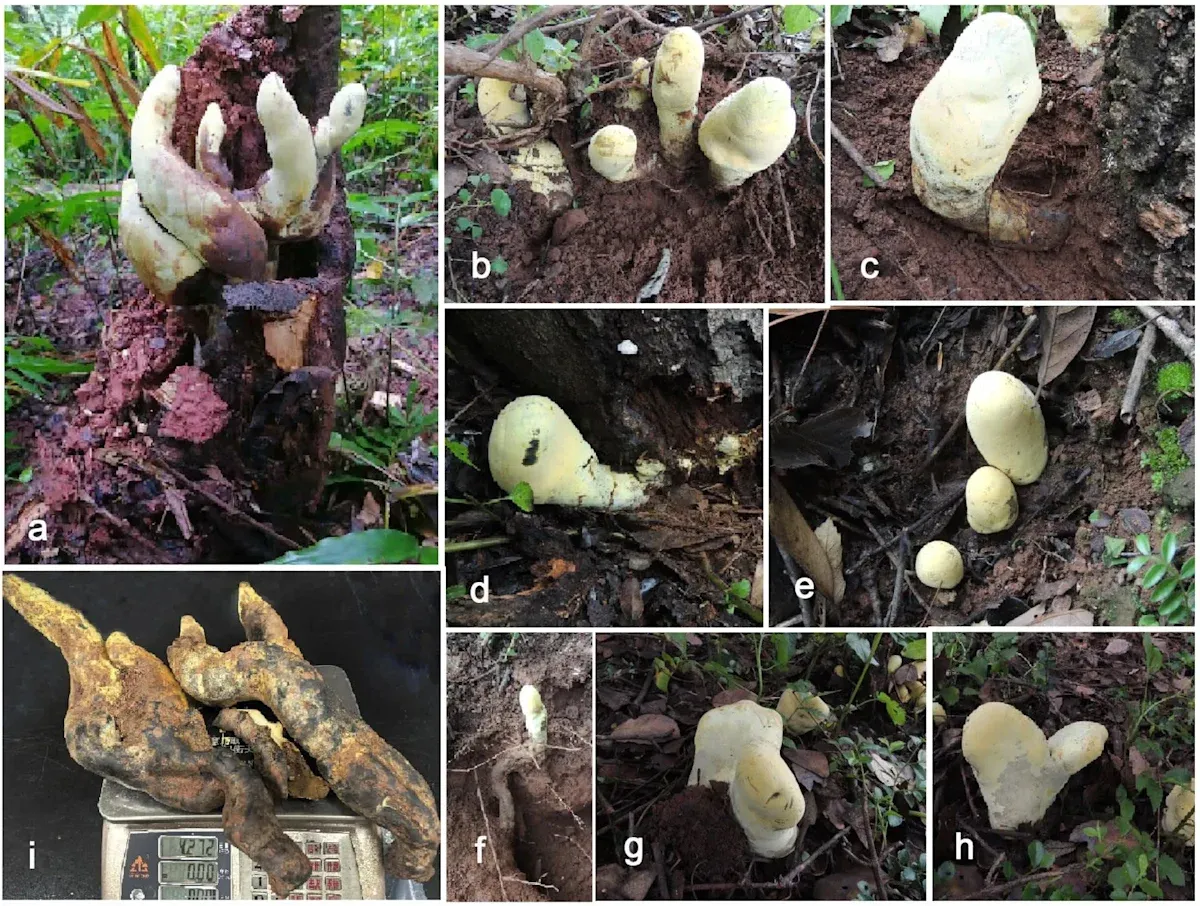
Under trees in China, researchers found a towering yellow fungus so distinct that it became the basis for a newly established fungal family. The largest specimens of Dianjunus rex weighed about 4.9 pounds and measured roughly 20 inches from the buried stalk to the tip. Here's what to knowIn a study published in Frontiers in Fungal Biology, Jing Song and Zhuyue Yan of the Kunming Institute of Botany drew on five specimens collected at three sites in Yunnan, concluding the organism was both a new species and the only known member of a newly named family, according to Earth.com. Only part of D. rex is visible above the soil: It forms stout, pale yellow columns about eight inches tall, while a long black stalk remains buried underground and accounts for much of the fruiting body's full size. With age, the pale, rounded tops become darker and split into narrow, finger-shaped branches that release spores. Genetic evidence showed that the fungus doesn't fit neatly with known relatives. After analyzing hundreds of genes, the researchers concluded that it belongs on its own branch of the fungal tree of life, distinct enough to justify the creation of a new family. Indunil C.

Magnetic Probes Enable Detailed Analysis of Covalent Organic Framework Pores - AZoM
Tiny Magnetic Probes Can Be Used to Investigate the Chemical Forces at Work Inside the Pores of Molecular Framework Compounds. Until Now, This Had Only Been Possible to a Limited Degree. Developed by a Team at Martin Luther University Halle-Wittenberg (MLU), the Method Could Help to Better Understand the Properties of These Materials and Control These Properties in the Future. The Study Was Published in the Journal Small. Related StoriesCovalent Launches "Covalent Connect," Unlocking Seamless Access to the World's Most Advanced Materials Characterization CapabilitiesSimulation of Local Microstructure of Amorphous Alloys CoxB100-xUsing Variable Temperature and Low Pressure Diffuse Reflectance UV-Vis-NIR Spectroscopy to Study the Reactivity of Ni2+ in an Air Sensitive Metal Organic Framework (MOFs)Covalent organic frameworks (COFs) are regarded as promising materials for a range of applications. Essentially, they are porous, crystalline compounds. Their regular, tiny pores are what make them special. "These pores make COFs suitable for a range of applications.
Encoding Information to Direct Precise Three-Dimensional Synthetic Molecular Helix Formation - AZoM
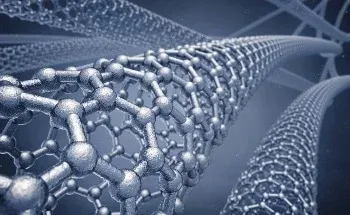
Related StoriesResearchers Successfully Reveal the Dynamic Interaction of Molecular Shuttles Using Molecular-Dynamic SimulationsMeasuring Molecular Weight, Size and Branching of PolymersDiallyl Phthalate - DAP Mineral and Synthetic Fibre Filled Researchers at the University of Jyväskylä, Finland, have developed a new strategy for programming synthetic molecules to self-assemble into precisely defined three-dimensional structures. The study brings scientists a step closer to achieving the sophisticated molecular organization found in nature and could eventually open new possibilities for the development of advanced functional materials. In living organisms, molecules such as proteins reliably fold into specific shapes according to information encoded in their molecular sequences. Replicating this level of structural control in synthetic systems has remained a major challenge.

Exploring the Atomic Mysteries of Water in Extreme Cosmic Environments Researchers Discover Water Changes Its Atomic Structure Under High Pressure - AZoM
Related StoriesAccelerating New Material Development with Particle Atomic Layer Deposition ProcessThe Significance of Selecting the Right Pressure ControlAcrylonitrile Butadiene Styrene - ABS High Impact High HeatWater isn't always as it seems. Under extreme conditions, such as those found on other planets, it has been discovered to change its atomic structure, giving it the means to alter its appearance and other properties. A new UNLV study published in Communications Chemistry, a Nature Portfolio journal, shows that as pressure is applied to water, it becomes a lower-symmetry version of its previous self.
Targeting a particular gene may improve tea plants' flavor and cold tolerance - Phys.org
Research in New Phytologist reveals a gene that regulates tea plants' flavor and cold tolerance, providing insights on how to expand the potential for better-tasting tea to be grown in a wider variety of locations.
0 comments
No comments yet. Be the first to share your thoughts!