A Raspberry Pi Pico Halloween - Raspberry Pi
This story deserves to be shared
Send it to someone who'd care, or post it on your networks.
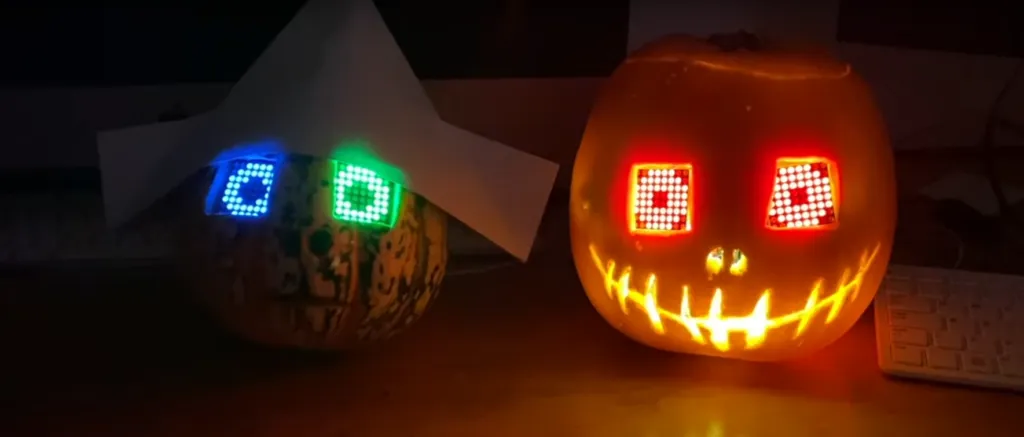
Welcome, foolish mortals, to another year of haunted hacks from Raspberry Pi Official Magazine. These brutal builds are sure to send a chill down your spine and ‘liven up’ even the putrid parties of the undead.
This year we’re focusing on the tiny Raspberry Pi Pico as the dark driver of your foul festivities – don’t be fooled by its small stature, though; it too can produce supernatural spooks to scare your gruesome guests. So start practising your programming sorcery – the witching hour awaits…
This article is an excerpt. To read the full content, visit the original source. Raspberry Pi
Related articles

2 children fatally shot in attempted murder-suicide in Pico-Union
Los Angeles police say two children, ages 4 and 10, were shot Sunday afternoon in Pico-Union by a man believed to be their father. (Raul Roa / Los Angeles Times) Staff Writer Oct. 11, 2026 7:26 PM PT Click here to listen to this article See more from the L. A. Times in Google Search. Set us as preferred Two children were shot and killed by a man believed to be their father in Pico-Union on Sunday afternoon, according to the Los Angeles Police Department. The man then shot himself. The children were thought to be 4 and 10 years old, police said. The shooting occurred around 12:40 p.m. near Catalina Street and Venice Boulevard. According to TV station KTLA, a witness riding an L. A. Metro bus said she saw the drama unfold in broad daylight. Police could not confirm those details, but video from local news stations showed L. A. Fire Department and police vehicles gathered at a site on a sidewalk, and a street was blocked off by yellow police tape. The children and the man were transported to a hospital, where the children were pronounced dead. The man, whose condition was not immediately clear, remains in custody at the hospital.

University of Vienna Team Reconstructs Internal Magnetism From External Field - AZoM
To build faster and more energy-efficient computers, researchers need to understand nanoscale magnetic materials. But looking inside these tiny magnets is surprisingly difficult: modern microscopes only measure the magnetic field outside the material, not the magnetic pattern inside. Because many different internal patterns can produce the exact same field, working backwards has long been a challenge. Physicists at the University of Vienna, together with colleagues in Dresden, Singapore, and Ulsan, have now solved this problem by building the laws of physics directly into modern machine learning methods. Their method reveals the realistic magnetic structure and even determines the precise distance between the sensor and the sample. The study is published in Physical Review Letters, and the software is freely available as open source. Magnetic materials only a few atomic layers thick could play a key role in future data storage and Energy efficient electronics. To develop them, scientists use advanced instruments like diamond Quantum sensors or magnetic force microscopes to scan their surfaces. Yet these tools cannot see the magnet directly.
0 comments
No comments yet. Be the first to share your thoughts!