A hawk highway just opened overhead this October cold front
This story deserves to be shared
Send it to someone who'd care, or post it on your networks.
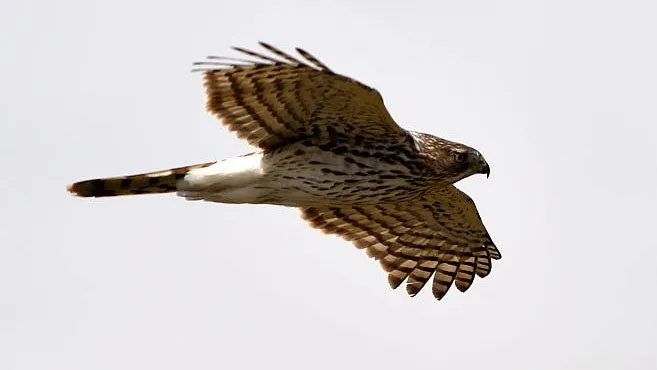
A Cooper's Hawk passing along the Dinosaur Ridge, counted as a local by a volunteer with Hawk Watch.(Denver Post via Getty Images)A hawk highway just opened overhead. Fall is migratory season for raptors, but the exact timing of their movement is determined most by the forecast. That's why when you see a cold front coming through in October, you can know they're on the move more now than ever. Here's your guide to October hawk watching if you want to catch these beautiful birds gliding through the sky. What birds are in flight? While weather influences exactly when most of these birds move, the phases in which each species moves are dictated a bit more by diet. Species that feed on insects during migration move the earliest. The broad-winged hawk is one example. Its movement is timed to follow when late-summer insects are most abundant, with its migration primarily happening in mid-September. But several other species all move around the same time in October. Get More of Our News on GoogleSet The Weather Company as a 'Preferred Source' to get quicker access to the news you value. Sharp-shinned hawks and Cooper's hawks feed primarily on other birds, moving along with their prey.
This article is an excerpt. To read the full content, visit the original source. The Weather Channel
Related articles
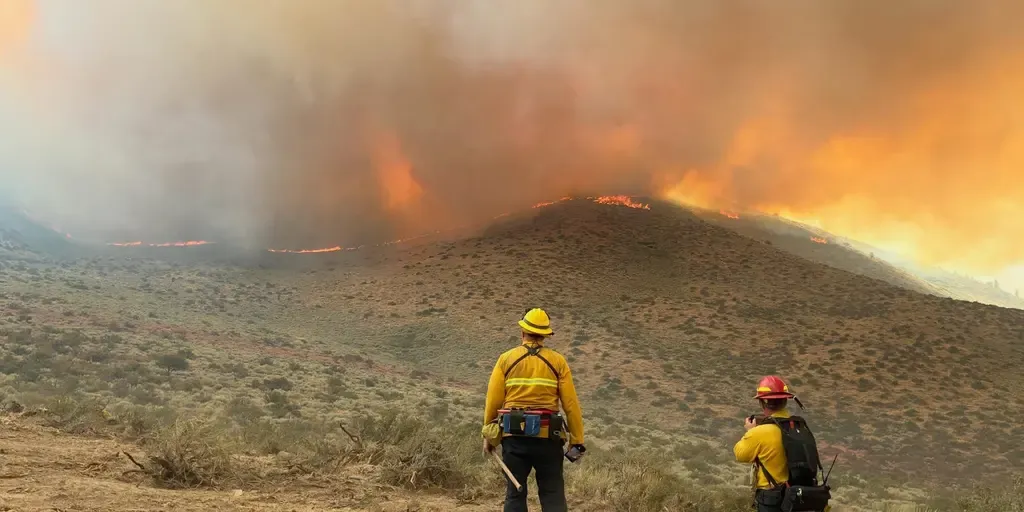
Crews race to contain damaging Nevada Hawk Fire as dangerous fire weather conditions linger over area
THE TAKEAWAYSome evacuation orders have been lifted as containment reaches 85%. At least 7 people have been injured as the Hawk Fire rapidly spreads. The Hawk Fire has now burned over 15,000 acres, causing nearly 90,000 residents to evacuate. RENO, Nev. — The Hawk Fire has burned more than 15,000 acres near Reno, forcing widespread evacuations and a state of emergency, with tens of thousands of residents being asked or ordered to leave their homes. Evacuation orders have since been scaled back following critical gains made on Tuesday, bringing containment to 85%. That breakthrough brings significant relief compared to Monday, when approximately 23,000 people were under mandatory "go now" evacuation orders and another 40,000 residents were under "get set" warnings. Still, crews remain on high alert as dangerous fire conditions are expected to return through Thursday. EVACUATIONS UNDERWAY AS FAST-GROWING TEXAS ROSS FIRE EXPLODES TO 50,000 ACRESOfficials announced Sunday that the fire was human-caused. Seven injuries have been reported, four civilians and three firefighters, with no deaths reported. next RENO, NEVADA - AUGUST 23: Firefighters pack their truck after responding to a
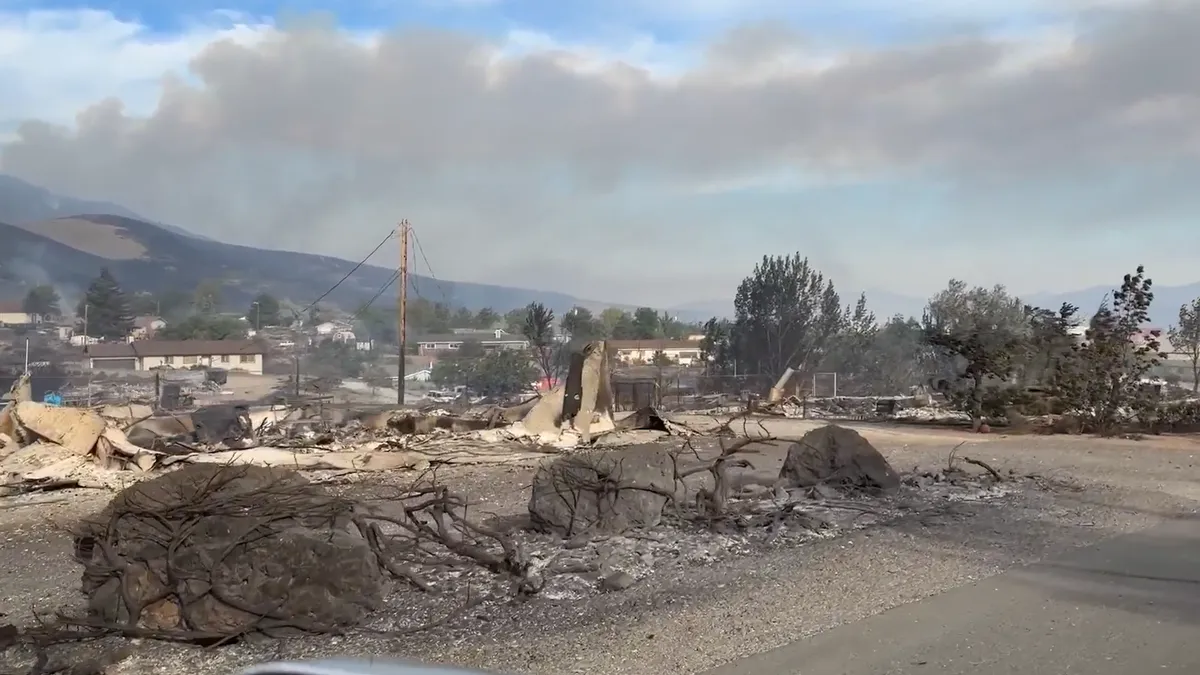
Nevada's Hawk Fire prompts more than 90,000 evacuations
Thousands evacuate as Reno’s Hawk wildfire destroys homesA wildfire that mushroomed over the weekend in the Sierra Nevada foothills spread perilously close to neighborhoods in Reno, Nevada, forcing authorities to urge more than 90,000 residents to leave their homes. The out-of-control fire has already burned some homes, but there's concern that winds could push the flames into newly developed and densely packed neighborhoods in Nevada's largest city outside of metro Las Vegas. Schools across Washoe County were closed Monday because of the evacuations and to keep roads clear for emergency crews. Nevada's governor declared a state of emergency in the county and mobilized the National Guard to help with aerial firefighting and protecting evacuated neighborhoods northwest of downtown Reno. At one roadblock, residents expressed frustration Monday that they could not get back into their homes. "There’s no fire here! Why are the National Guard here?” a driver yelled.

How overhead projectors took over your classroom - The Verge
David Pierce is editor-at-large and Vergecast co-host with over a decade of experience covering consumer tech. Previously, at Protocol, The Wall Street Journal, and Wired. It used to be so easy to get away with things in school. The teacher, after all, was always turned around writing at the chalkboard! But then came a bit of technology, previously mostly used for military purposes, called the overhead projector. It would change far more than just the disciplinary record of students everywhere. In this episode of Version History, we tell the story of the overhead projector. David Pierce is joined by The Verge’s Jake Kastrenakes and Stanford professor Antero Garcia to discuss how overhead projectors were developed, how they made their way into classrooms, and how they changed so much about the way kids learn. They also try to figure out why overhead projectors have mostly gone away, and whether the things that replaced them — from PowerPoint presentations to computer screens to those new-fangled smart boards — actually improved on the OHP. This is the final episode of the fifth season of Version History, all about the most iconic school tech.

Error Mitigation Cuts Sampling Overhead For Quantum Circuits - Quantum Zeitgeist
Researchers at Google Quantum AI and Cornell University have demonstrated a new error mitigation technique that surpasses existing methods by operating entirely in classical post-processing. Their work introduces virtual error cancellation, a method that reduces sampling overhead by using only syndrome records from quantum circuits, bypassing the need for prior noise characterization and modified circuits. Numerical simulations using a distance-7 rotated surface code show the full-stack dual-decoder algorithm achieves more than three orders of magnitude of suppression in error rate compared to standard decoding. This approach operates entirely through classical post-processing, offering a streamlined pathway to more reliable computation. The core of this advancement lies in the ability to avoid the typical requirements of noise learning and circuit alterations, both of which add complexity and overhead to quantum error mitigation.
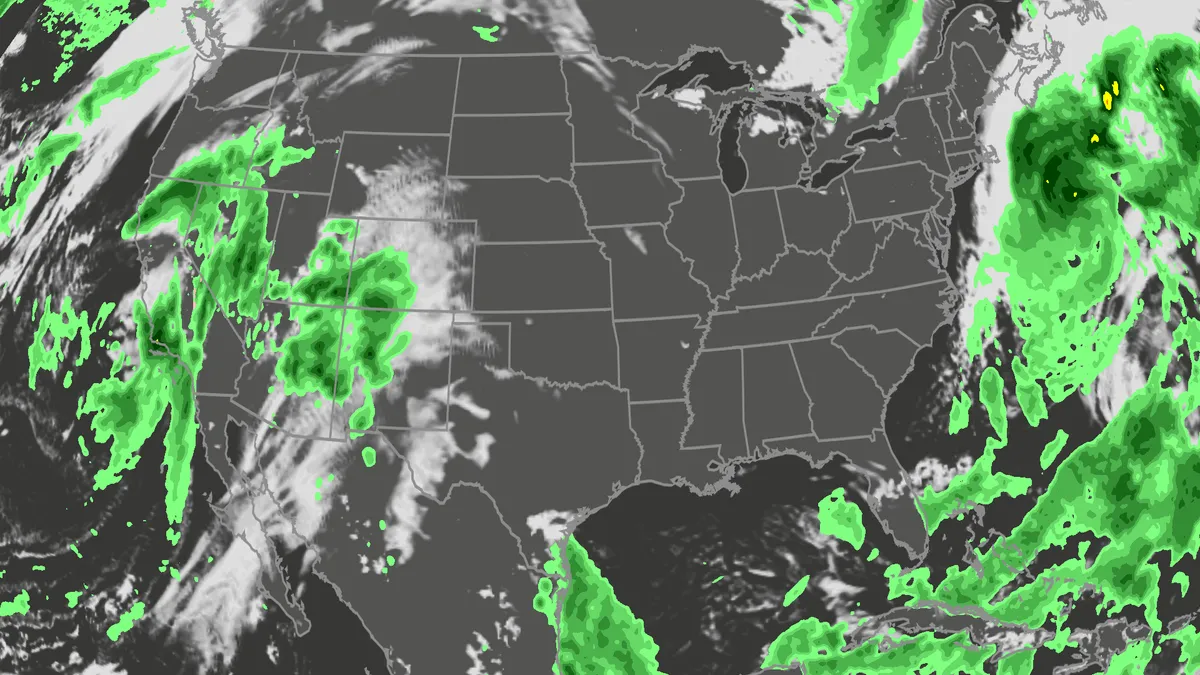
Orionid meteor shower 2026: cloud cover forecast by region
A meteor streaks across the sky over a desert in China during the Orionid meteor shower on Oct. 22, 2023.(VCG/VCG via Getty Images)The Orionid meteor shower is peaking this week, and it promises to be one of the most dazzling displays of the year. And while some of you will have clear skies, rain and clouds could impact the view for others. Here's what you need to know about the Orionids and your forecast:Fast factsPeak day: The meteor shower peaks Wednesday night, Oct. 21, into the early hours of Thursday morning, Oct. 22. Peak time: From midnight to dawn are the best hours to catch the meteors streaking through the sky, so plan on a late night or really early morning. What the Orionids are known for: The Orionid meteors are known for their brightness and their speed. As they streak across the sky at around 41 miles per second, the meteors leave behind a glowing "train" that can last several seconds to minutes. While you can make the perfect plan to catch the Orionids, the key to stellar viewing is still in Mother Nature's hands. The good news is that many of you should have good meteor shower-watching conditions. Much of the central and eastern U. S.
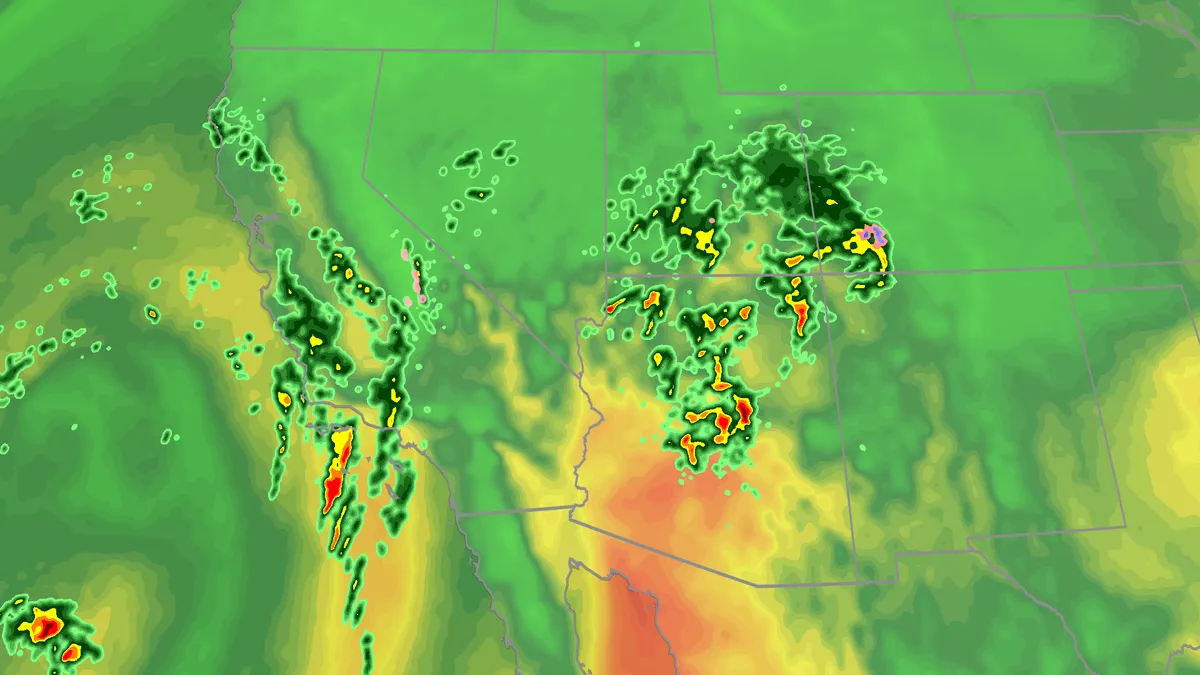
Flood risk, severe storms threat from California to Colorado
Hurricane Trudy will bring flood threat to the Southwest USTropical moisture and favorable atmospheric conditions will fuel a multiday flood risk this week across seven states from California to Colorado. Severe storms are also likely, especially across Arizona. Days of rain will bring a threat of debris flows and landslides, especially across burn scars. Timing out this week’s rainfallWednesday: The highest risk of flooding on Wednesday covers much of Arizona and New Mexico, and portions of Colorado and Utah, as well as Southern California. There will be an abundance of moisture available to support heavy downpours and training storms. This means storms will produce heavy rain over the same areas for long periods of time. The Weather Prediction Center is forecasting rainfall rates as high as 2 inches per hour. Some of the biggest concerns will be the possibility of mudslides over recent burn scar areas as well as slot canyons and arroyos. If you have plans to visit any of the national parks in the West this week, make sure you check the forecast daily and pay attention to any warnings or advisories issued.
0 comments
No comments yet. Be the first to share your thoughts!