Categories
Science
16584 articles
Science
A Protein 2,000 Times Sweeter Than Sugar Halved Ice Cream's Blood Sugar Response - ScienceAlert
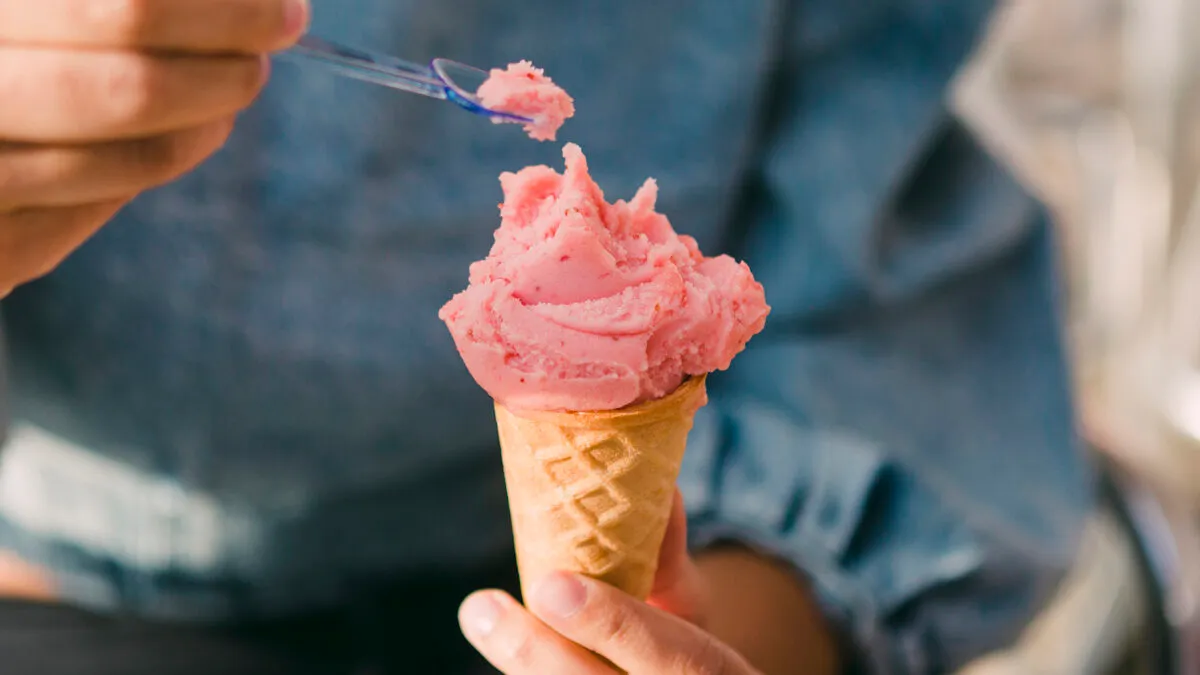
Scientists are continuing to look for ways to replace sugar in our diets. As great as it makes food taste, we know it's not great for our health, and questions have been raised over the impacts of artificial sweeteners too. According to a new study published in Clinical Nutrition ESPEN, a protein called brazzein could be the answer. Originally found in a West African fruit and now mostly made by engineered fungi, it's processed naturally and easily by the body and is up to 2,000 times sweeter than sugar, weight for weight. Researchers from the Federal Research Center of Nutrition, Biotechnology and Food Safety in Russia ran tests with 101 adults diagnosed with metabolic dysfunction-associated steatotic liver disease (MASLD), a condition often accompanied by obesity and diabetes, where fat builds up in the liver. The study, a randomized controlled double-blind crossover trial, focused on ice cream, one of the most tempting types of sugary foods. Each participant consumed a standard 100-gram (3.5-ounce) serving of vanilla ice cream on three separate days: one using sugar, one sweetened with brazzein, and one with brazzein and the dietary fiber inulin.
ScienceAlert·

Science
From birdwatchers to scientists - BirdLife International
Conservation isn’t only the work of scientists and decision makers. Across the world, a vast network of passionate volunteers collect data on wildlife, weather, water quality, and historical documents. In ornithology, this usually means recording bird observations – a practice known as “citizen science”.
BirdLife International·

Science
Meet the Islander who created technology that's in space right now - Yahoo News Canada
Skip to mainFri, October 9, 2026 at 9:00 p.m. UTCDexter Stewart has gone from Three Oaks Senior High in Summerside to acclaim in spacecraft engineering. CBC News: Compass host Louise Martin spoke with the Islander, who recently took first place for his research at an international conference.
Yahoo News Canada·

Science
SciComm Voices: Luca Kreuzer - The University of Maryland, Baltimore
The physicist and science communicator answers five questions about making science relatable, why visibility matters, and communicating beyond the scientific bubble. "SciComm Voices" is part of the Science Communication certificate program's monthly newsletter "SciComm Spotlight" (subscribe via our website).
The University of Maryland, Baltimore·
Science
Comparative study on large model training methods based on distributed parallel and memory-saving mechanisms - EurekAlert!
image: Overview of memory-efficient training techniques for transformers The integration of deep learning—particularly Transformer-based models—has profoundly reshaped scientific research paradigms. In domains such as drug discovery, weather forecasting, and protein structure prediction, these models enable the extraction of complex patterns from large-scale data. However, as model resolution and parameter counts continue to grow, GPU memory consumption increases rapidly, creating a “memory wall” that confines large-scale training to costly, high-end hardware and limits broader adoption in scientific research.
EurekAlert!·

Science
'Modern-day Thomas Edison': Trump awards Elon Musk top US science medal - Yahoo News Canada
EuronewsFri, October 9, 2026 at 6:16 a.m. UTCDespite the president's glowing words at the award ceremony, Trump and Musk have navigated a rather volatile relationship in recent years.
Yahoo News Canada·

Science
Your favorite music could help reduce the pain of small medical procedures - Frontiers
A doctor examines a patient with a cannula in placeMusic is thought to help relieve the pain of minor medical procedures — but what kind of music works best? New results suggest that it may be your favorite. Patients receiving an intravenous cannula — a brief, minor procedure which can cause some pain — before an MRI listened to either their favorite music, music for relaxation, or a piece of Mozart that has been reported to help people with pain, anxiety, or stress in other experiments. The group who listened to their favorite music experienced the biggest reduction in pain overall, while Mozart helped people who were already in pain before the cannulation. Unexpectedly, relaxation music didn’t help at all. If you hate needles, music might make you feel better during a cannula insertion… but it has to be the right kind of music. Although different musical interventions have repeatedly been reported to help with pain and stress, the evidence varies widely for different types of music and it’s hard to figure out what works best.
Frontiers·