A plant's roots do much of their work out of sight, pulling in water and nutrients and holding the plant in place. That makes it hard to see how plants respond when conditions underground change, and how a warming climate affects them. New Dartmouth-led studies look at the strategies plants use below the surface to adapt and survive.
Tumors possess myriad mechanisms to ensure their survival even at the peril of the host. Now scientists are delving deeper into how cancer cells alter the metabolism of specific amino acids to support the malignancy's growth while simultaneously evading the antitumor activity of the host's immune system.
Sustainable packaging is only the beginning. What a medicine is made from—and how its ingredients are produced—matters just as much. Yet the synthesis of compounds for pharmaceutical research can still depend on fossil feedstocks, high temperatures, strong oxidants and metals that raise costs and complicate purification. Two recently published studies from Colmenares' group at IPC PAS demonstrate that cleaner chemistry can begin at the level of a single chemical bond. The studies are published in the journal Ultrasonics Sonochemistry and Chemistry—A European Journal.
A lung affected by deadly forms of COVID-19 not only loses essential cells for breathing but also undergoes profound changes in its internal organization and the way its cells communicate with each other. A study involving the Sant Pau Research Institute (IR Sant Pau), published in Nature Communications, has created a spatial map of this transformation and identified some of the molecular mechanisms that accompany the progression of lung damage and fibrosis.
THE TAKEAWAYScientists found "space tsunamis" forming along the edge of Earth's magnetic shield. The waves shift location depending on the direction of the solar wind. The discovery could help scientists better understand and predict space weather threats to satellites, communications and power grids. Scientists say "space waves" rolling along the edge of Earth's magnetic shield could help researchers better understand where solar storms transfer energy into near-Earth space. The waves, known as Kelvin–Helmholtz waves, form where the fast-moving solar wind brushes past the outer boundary of Earth's magnetosphere. Northern lights are seen in Rudno, Poland on January 20, 2026. A new study led by researchers at the University of Oulu in Finland found that the waves do not form evenly around Earth. Instead, their strength and location depend on how the solar wind's magnetic field drapes around Earth's own magnetic field. Archaeologists In Turkey May Have Found The World's Oldest ShipwreckSimilar wave patterns can be seen in clouds and other cosmic environments, including the Sun's atmosphere and around other planets.
From the hairs on our arms to the microscopic sensory structures of the inner ear, many tissues in the body are built with a clear sense of direction. To build these structures throughout development, individual cells must establish which way they are facing—and coordinate that orientation with cells around them. If they get this wrong, tissues may fail to form, form improperly or fail to function.
FibroScan-aspartate aminotransferase (FAST) demonstrated the highest sensitivity for ruling out at-risk metabolic dysfunction-associated steatohepatitis (MASH), according to a study published in the October issue of the American Journal of Gastroenterology.
A new study has found that adaptive molecular convergence—the process by which distantly related or unrelated species evolve the same genomic changes—is not as rare as previously thought.
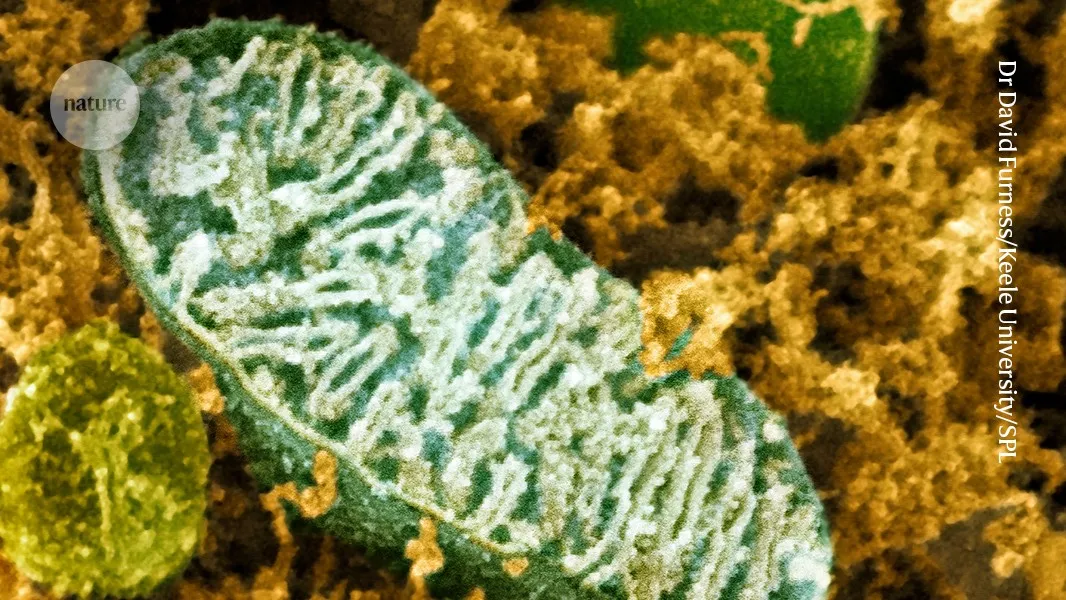
The protein catalogue gives a dynamic picture of the mitochondria, beyond what was known from humans and yeast. Credit: Dr David Furness/Keele University/SPLScientists have mapped in unprecedented detail the proteins that make up the mitochondria in six organisms — five single-celled parasites and one plant — spanning the eukaryotic tree of life. The findings, described in nine papers published in Cell, Cell Press Blue, Molecular Cell and Current Biology on 1 October1–9, reveal dozens of proteins that are not found in humans but are shared among parasites, including some that cause malaria or sleeping sickness. The findings might help scientists to devise new treatments for these illnesses. The work has also stirred a long-running debate about the origin of the mitochondrion. Cells are swapping their mitochondria. What does this mean for our health? Best known as the powerhouse of the eukaryotic cell because it produces energy, the mitochondrion has its own tiny DNA, which is distinct from that of the cell’s nucleus. But both mitochondrial and nuclear DNA encode the proteins that make up this organelle.