Unprecedented atlas explores mitochondria across the tree of life - Nature
This story deserves to be shared
Send it to someone who'd care, or post it on your networks.
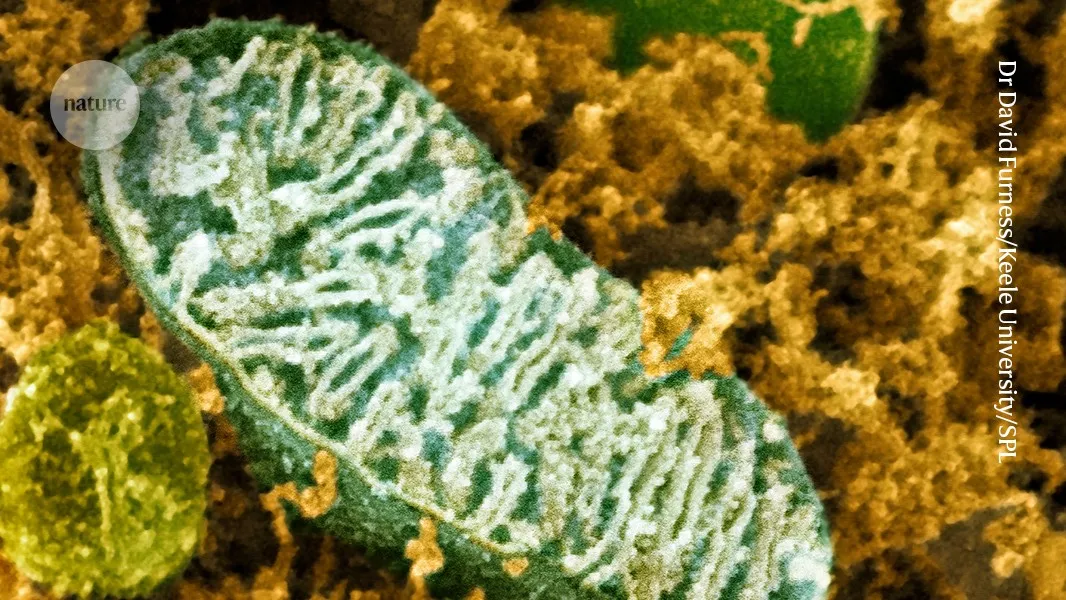
The protein catalogue gives a dynamic picture of the mitochondria, beyond what was known from humans and yeast. Credit: Dr David Furness/Keele University/SPLScientists have mapped in unprecedented detail the proteins that make up the mitochondria in six organisms — five single-celled parasites and one plant — spanning the eukaryotic tree of life. The findings, described in nine papers published in Cell, Cell Press Blue, Molecular Cell and Current Biology on 1 October1–9, reveal dozens of proteins that are not found in humans but are shared among parasites, including some that cause malaria or sleeping sickness. The findings might help scientists to devise new treatments for these illnesses. The work has also stirred a long-running debate about the origin of the mitochondrion. Cells are swapping their mitochondria. What does this mean for our health? Best known as the powerhouse of the eukaryotic cell because it produces energy, the mitochondrion has its own tiny DNA, which is distinct from that of the cell’s nucleus. But both mitochondrial and nuclear DNA encode the proteins that make up this organelle.
This article is an excerpt. To read the full content, visit the original source. Nature
Related articles
76,000 lighthouses shine in interactive atlas - Popular Science
ATLAS publishes first paper on Public Engagement with Science - ATLAS Experiment at CERN

A Black Hole 12,000 Light-Years Away Is Firing a Plasma Jet Toward Earth - Gadget Review
Milky Way’s first microblazar candidate sits 12,000 light-years away, offering a rare ground-level lab for studying relativistic jetsA black hole 12,000 light-years away is firing a jet of plasma almost directly toward Earth. At that distance, no known or expected danger to Earth has been identified by the researchers or the institutions involved. What astronomers have actually found is rarer and more interesting than a threat. Researchers have identified IRAS 18293-0941 as a compelling candidate for the Milky Way’s first microblazar, a class of object that gives astrophysicists a close-up laboratory for studying some of the most violent physics in the galaxy. What Astronomers FoundThe discovery centers on a binary system whose black hole expels plasma jets at close to three-quarters the speed of light, pointed almost directly toward Earth. The system pairs a hot, massive star with a black hole that completes a full orbit roughly every 11.38 days. Material drawn from the companion star feeds the black hole, and some of that matter gets expelled outward as opposing jets traveling at approximately three-quarters the speed of light. Terminology matters here.
0 comments
No comments yet. Be the first to share your thoughts!