BBlogFlow

Categories

Science

5400 articles

Science

Physicists Simulated What Might Happen When Two Wormholes Collide, And Things Got Weird - ScienceAlert

An artist's impression of two black holes colliding. Interacting wormholes could produce a similar gravitational wave signature. (Mark Garlick/Science Photo Library RF/Getty Images) Like the surface of an ocean, the fabric of the Universe is constantly rippling with an infinitude of gravitational waves, propagating outward across the cosmos. We can count, in triple digits, the number of these ripples we've detected to date – and most of them have been linked to collisions between black holes, the densest objects in the Universe. But how do we know that every collision attributed to black holes is what it looks like? And what of the gravitational wave signatures we are yet to detect? What if there's something else out there that can make the Universe sing? What if colliding wormholes can make a similar splash – and how would we recognize it when we find it? For one particular kind of wormhole, at least, new simulations suggest collisions would be profoundly strange – and could leave distinctive signatures in the fabric of spacetime. According to a preprint authored by physicist Nikita M.
ScienceAlert·
Science

Senegal-sized Antarctic glacier melting faster than thought: Why it matters - Al Jazeera

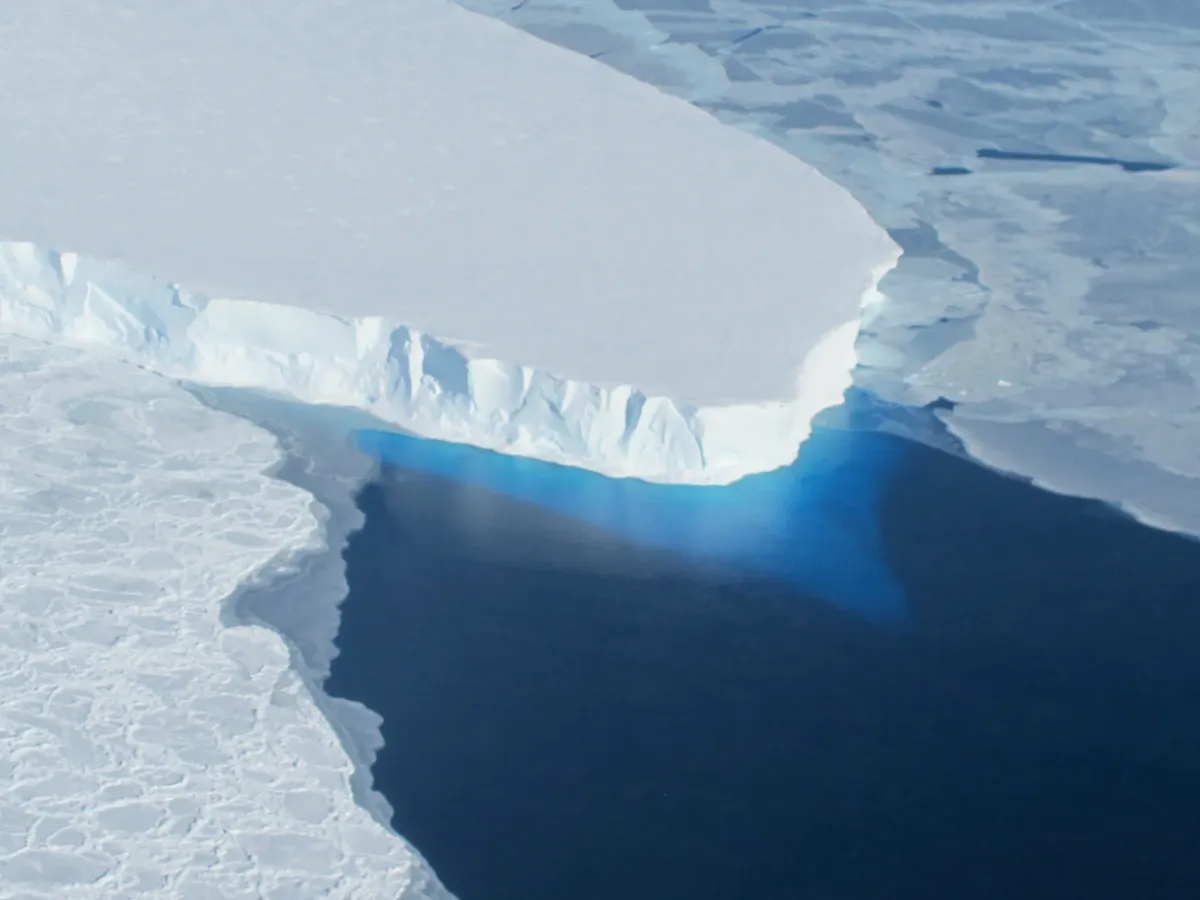
The world’s largest glacier is melting much faster and could add twice as much to global sea levels as previously expected over the next century. New research published this week by a team of glaciologists has found that the Thwaites glacier in West Antarctica is losing mass rapidly because warm seawater is pushing underneath it and melting its core. This could add 1.2 inches (30mm) to water levels even if global warming does not accelerate as predicted. Recommended Stories list of 4 itemslist 1 of 4The Nepal floods question: When the Himalayas collapse, who gets warned?list 2 of 4India to supply Nepal electricity after floods wrecked hydropower projectslist 3 of 4El Nino reaches super status: Where will it bring rain, drought and heat?list 4 of 4‘The drought has left its mark’: Slovenia’s potato lovers lament low yieldsend of listThe findings, published in the journal Nature Communications, add to a growing body of evidence that shows that the glacier, which has been receding for decades, is now losing mass even faster than scientists thought. Researchers at the University of California in the United States collaborated with NASA’s Jet Propulsion Laboratory for the study.

Al Jazeera·
Science

Coupled analytical and finite element investigation of dynamic and cyclic response in cracked functionally graded beams - Nature

We’re sharing this article early to provide faster access to peer-reviewed, accepted research. It is citable and carries a permanent DOI. This version is subject to further edits and will be replaced automatically by the final Version of Record. All legal disclaimers apply. AbstractOffshore and marine structures increasingly utilise Functionally Graded Materials (FGMs) because of their superior stiffness and enhanced resistance to damage under combined vibration and cyclic loading induced by waves, wind and operational conditions. This study presents a combined analytical and finite element investigation into the dynamic behaviour of a cracked FGM cantilever beam compared with eight conventional offshore structural steels. A fracture-mechanics-based analytical model, incorporating crack-induced flexibility and stiffness degradation under cyclic loading within a continuum damage mechanics framework, was developed to predict the beam’s natural frequencies and validated against finite element results, with deviations below 2%. The postulated cracks were represented by predefined notches to simulate pre-existing structural damage or defects, with crack depth ratios of a/h = 0.233, 0.

Nature·
Science

A robust and reliable method for malware classification using hybrid features and gradient boosting - Nature

We’re sharing this article early to provide faster access to peer-reviewed, accepted research. It is citable and carries a permanent DOI. This version is subject to further edits and will be replaced automatically by the final Version of Record. All legal disclaimers apply. AbstractThe most significant problem facing software security firms in the current cybersecurity system is the fact that new strains of malware keep on appearing. The achievement of successful detection of malicious software based on both static and dynamic data remains unmet despite the further realization of different approaches to deep learning and machine learning. Defects in encryption, packaging, and distribution, the discrepancies between the distribution of malware samples in families, make this issue even worse. To do actual malware research that utilizes deep learning methods, you will require data scientists of appropriate competence, large amounts of computer power (particularly GPUs) and time. In order to overcome such issues, this approach involves a hybrid approach to feature extraction that integrates wavelet and other statistical features based on benchmarked malware image sets.

Nature·
Science

Performance-based evaluation of hyperbolic and parabolic vertical curves for highway geometric design - Nature

We’re sharing this article early to provide faster access to peer-reviewed, accepted research. It is citable and carries a permanent DOI. This version is subject to further edits and will be replaced automatically by the final Version of Record. All legal disclaimers apply. AbstractVertical curves play a fundamental role in highway geometric design by influencing vehicle dynamics, ride comfort, and safety. Although parabolic curves are widely adopted in current practice, alternative curve formulations may exhibit different dynamic-performance characteristics. To the authors’ knowledge, limited research has examined the vehicle-dynamics implications of hyperbolic vertical curves using multi-body simulation under standard highway-design constraints. Therefore, this study compares the dynamic performance of hyperbolic and parabolic vertical curves using a CarSim-based vehicle model. The analysis covered crest and sag curves designed according to stopping sight distance (SSD) and passing sight distance (PSD) criteria under identical geometric boundary conditions.

Nature·
Science

Directional magnetic field detection with zero-bias surface acoustic wave sensors - Nature

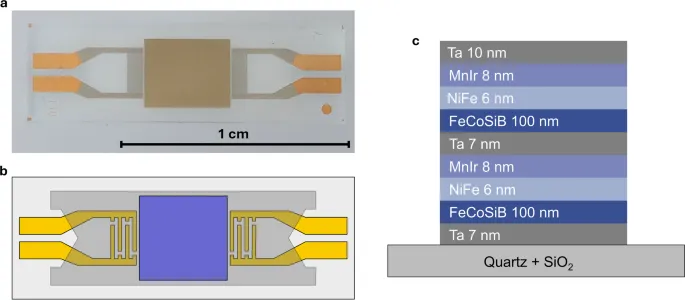
IntroductionSurface acoustic wave (SAW) sensors have emerged as versatile platforms for a wide range of sensing applications1,2, including magnetic field detection and electrical current measurement3,4,5,6,7. These devices operate by generating surface acoustic waves on a piezoelectric substrate using interdigital transducers (IDTs)8. The propagating acoustic waves induce periodic strain in an overlying magnetostrictive film. An external magnetic field alters the elastic properties of this film, such as its Young’s and shear modulus, through the \(\:{\Delta\:}E\)-effect and \(\:{\Delta\:}G\)-effect, respectively9. The magnetoelastic SAW interaction with these field-dependent elastic constants modulates the SAW propagation velocity in a delay line setup3,6,7,10 or frequency in a resonator setup11,12. Recent studies have demonstrated limits of detection (LOD), such as 22 pT/Hz1/213, 55 pT/Hz1/214 or 126 pT/Hz1/215 all at 10 Hz for various SAW sensor setups, highlighting the strong potential of this technology for low-frequency magnetic field sensing.

Nature·
Science

Single‑cell and bulk RNA sequencing identifies T cell marker genes to predict the prognosis of ovarian cancer - Nature

We’re sharing this article early to provide faster access to peer-reviewed, accepted research. It is citable and carries a permanent DOI. This version is subject to further edits and will be replaced automatically by the final Version of Record. All legal disclaimers apply. AbstractOvarian cancer, with high mortality and often late diagnosis, shows high recurrence despite treatment. The variable effectiveness of immunotherapy highlights the urgent need for personalized, advanced therapeutic strategies. To investigate T-cell marker genes, single-cell RNA-sequencing (scRNA-seq) data were sourced from the Gene Expression Omnibus (GEO) database. Additionally, bulk RNA-sequencing data along with clinical information from ovarian cancer patients were retrieved from the Cancer Genome Atlas (TCGA) database to establish a prognostic signature. This study involved survival analysis to evaluate associations between different risk groups, and explored cellular communication and relevant pathway analyses, including metabolic pathways.

Nature·
Science

Virus-based tool opens a faster route to studying cowpea genes | Newswise - Newswise

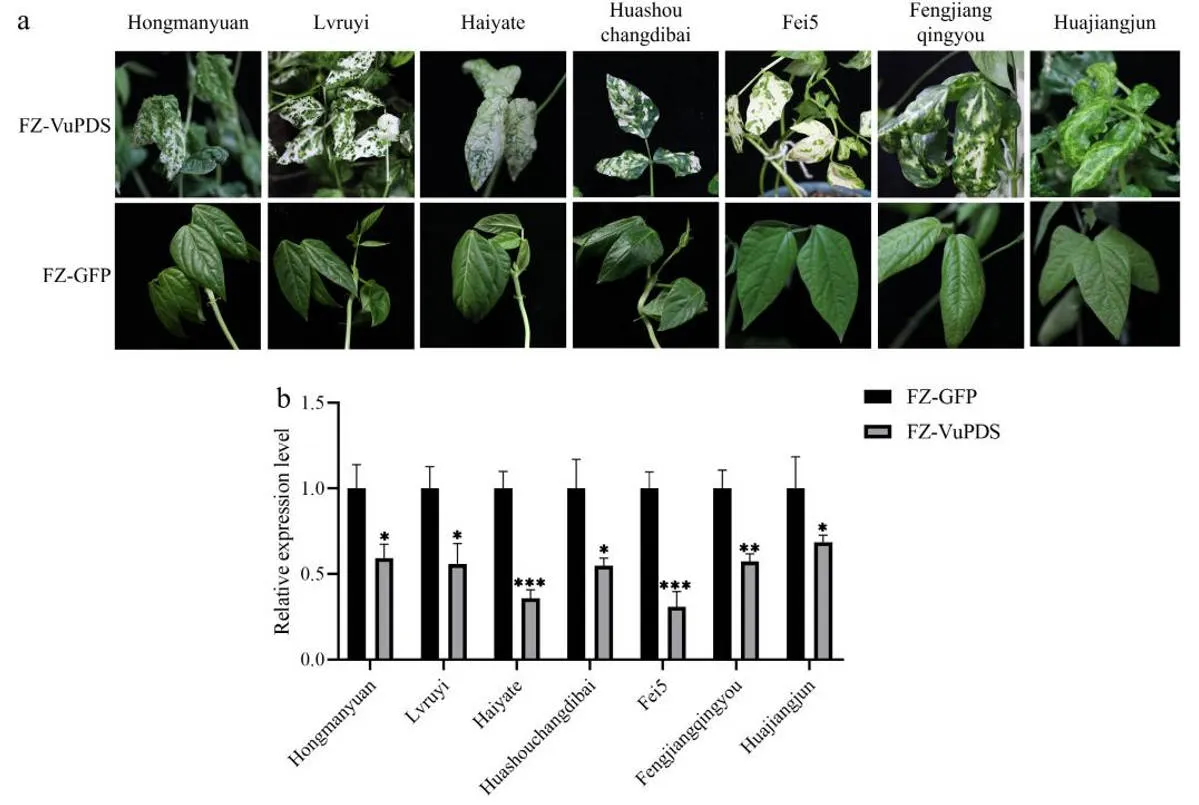
Cowpea (Vigna unguiculata) supplies dietary protein, livestock feed, and income in tropical and subtropical regions, while its nitrogen-fixing ability adds agricultural value. Genome sequencing has provided researchers with numerous candidate genes, and genetic transformation has enabled studies of traits such as drought and heat tolerance. However, stable transformation requires extensive preparation and lengthy screening, and its performance depends strongly on plant genotype. Virus-induced gene silencing offers a faster alternative by using viral vectors to trigger the plant’s own gene-silencing machinery. Yet existing approaches have performed inconsistently in cowpea, leaving researchers without a dependable, broadly applicable method for rapidly linking genes to biological functions. A study (DOI: 10.48130/tp-0026-0035) published in Tropical Plants on 08 October 2026 by Ying Zhou's team, Zhejiang University, reports sustained gene silencing across seven cowpea varieties and demonstrates the system's utility for investigating jasmonate regulation during leafminer infestation.

Newswise·
Science

Earth’s oldest evidence of life is written in stone – but it’s at risk of disappearing | Hindustan Times - Hindustan Times

Melbourne, Today, our planet is teeming with life, but it has not always looked the same. Long before forests reached skyward, animals walked on land, and the rise and fall of dinosaurs, our planet was shaped by a much smaller, more unassuming form of life. And we can still find traces of it today. Earth’s oldest evidence of life is written in stone – but it’s at risk of disappearingThese ancient fossils, the earliest visible evidence of life on Earth, are known as microbialites. Western Australia contains an extraordinary record of microbialites: from the oldest known examples, preserved in rocks almost 3.5 billion years old in the Pilbara, to living examples in the UNESCO World Heritage area of Shark Bay. Our review of 50 years of microbialite research in Western Australia, published today in the journal Alcheringa, summarises what this archive can tell us about the evolution and resilience of life on Earth. Despite a fossil record that spans billions of years, microbialites are surprisingly fragile. Fossil sites remain vulnerable to over-collection and degradation, while living microbialites are facing growing pressures.

Hindustan Times·
Science

An enhanced TOGI-based control framework for seamless bidirectional energy management in grid-connected solar PV–EV charging systems - Nature

We’re sharing this article early to provide faster access to peer-reviewed, accepted research. It is citable and carries a permanent DOI. This version is subject to further edits and will be replaced automatically by the final Version of Record. All legal disclaimers apply. AbstractThe less cost of photovoltaic (PV) modules and the rapid growth of electric vehicles (EV) has accelerated the adoption of solar-powered charging systems. Despite this progress, the use of bidirectional power flow in PV–EV integrated charging infrastructure has received comparatively less attention. An enhanced third order generalized integrator (ETOGI) is utilized to control bidirectional voltage source converter (VSC). A comparison is made between the Selective Harmonic Elimination Pulse Width Modulation (PWM) and Phase Disposition Pulse Width Modulation methods to find the performance of the system based on total converter losses and harmonics. The suggested model is implemented and analysed in Simulink environment and further tested through real-time implementation by a real-time OPAL-RT test platform.

Nature·
Science

Disaster preparedness and mental health: understanding psychological responses and support-system demands - Nature

Carlos Rodrigo Garibay Rubio1,2, Genta Nakano3, Katsuya Yamori3, Astrid Renneé Peralta Gutiérrez3,4, Silvia Morales Chainé5, Rebeca Robles García We’re sharing this article early to provide faster access to peer-reviewed, accepted research. It is citable and carries a permanent DOI. This version is subject to further edits and will be replaced automatically by the final Version of Record. All legal disclaimers apply.

Nature·
Science

Baseline radiographic and microbiologic predictors of treatment outcomes in a shortened all-oral regimen for MDR/RR-TB - Nature

AcknowledgementsThe authors are indebted to the patients who participated in the STEM-TB observational study and to the clinicians and program staff members of participating health facilities. We also acknowledge and thank the STEM-TB data team, including Joalane Makaka, Mahooe Thoakana, Refiloe Maime, Tlotlisang Thai, Litsoanelo Musa, and Daniel Monyaesa. FundingThis work was supported by the Global Fund to Fight AIDS, Tuberculosis, and Malaria and by the National Institute of Allergy and Infectious Diseases (grant number R01AI146095; to S. M., L. M., M. T., S. P., A. L., L. T., M. R., E. O., M. L. R., C. D. M., K. J. S., M. F. F., and K. K. M.). The content is solely the responsibility of the authors and does not necessarily represent the official views of the National Institutes of Health. Author informationAuthor notesThese authors contributed equally: Molly F. Franke, Kunda Kwabisha Mikanda. Authors and AffiliationsHarvard Medical School, Boston, Massachusetts, USAEdmund Q. L. ShenDepartment of Medicine, University of California, San Francisco, CA, San Francisco, USAEdmund Q. L.

Nature·
Science

APOD: 2026 October 17 - 3D 67P - NASA Science (.gov)

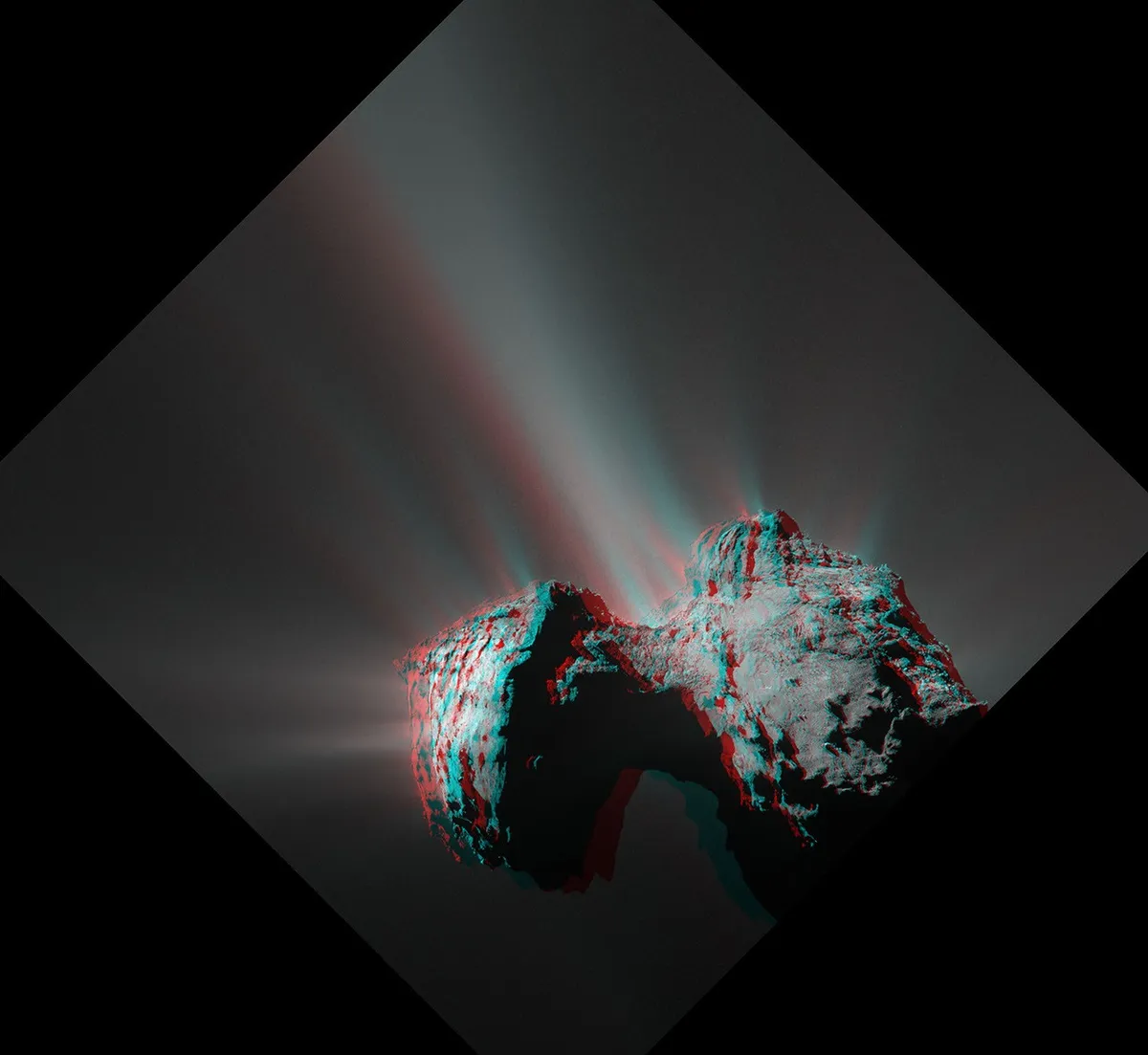
Discover the cosmos! Each day a different image or photograph of our fascinating universe is featured, along with a brief explanation written by a professional astronomer. Explanation: Put on your red/blue glasses and float next to the jagged and double-lobed nucleus of Churyumov-Gerasimenko, also known as Comet 67P . The stereo anaglyph was created by combining two images from the Rosetta spacecraft's narrow angle OSIRIS camera taken on July 25, 2015 from a distance of 184 kilometers. Numerous jets are emanating from the small solar system world's active surface near its closest approach to the Sun. The larger lobe is around 4 kilometers in diameter, joined to a smaller, 2.5 kilometer diameter lobe by a narrow neck. Rosetta's mission to the comet ended in September 2016 when the spacecraft was commanded to a controlled impact with the comet's surface . Keep those 3D glasses on though. You can check out a catalog of nearly 1400 stereo anaglyphs created from Rosetta image data on this website. Tomorrow's picture: open space

NASA Science (.gov)·
Science

Tracking the lithiation state of LixSi from machine-learned XPS binding energies | npj Computational Materials - Nature

Michael Alejandro Hernandez Bertran1,2, Davide Tisi3,4, Federico Grasselli1,2, Michele Ceriotti3, Elisa Molinari1,2 & … Deborah Prezzi We’re sharing this article early to provide faster access to peer-reviewed, accepted research. It is citable and carries a permanent DOI. This version is subject to further edits and will be replaced automatically by the final Version of Record. All legal disclaimers apply.

Nature·
Science

Mapping genetic switches behind rice seedlings’ cold response | Newswise - Newswise

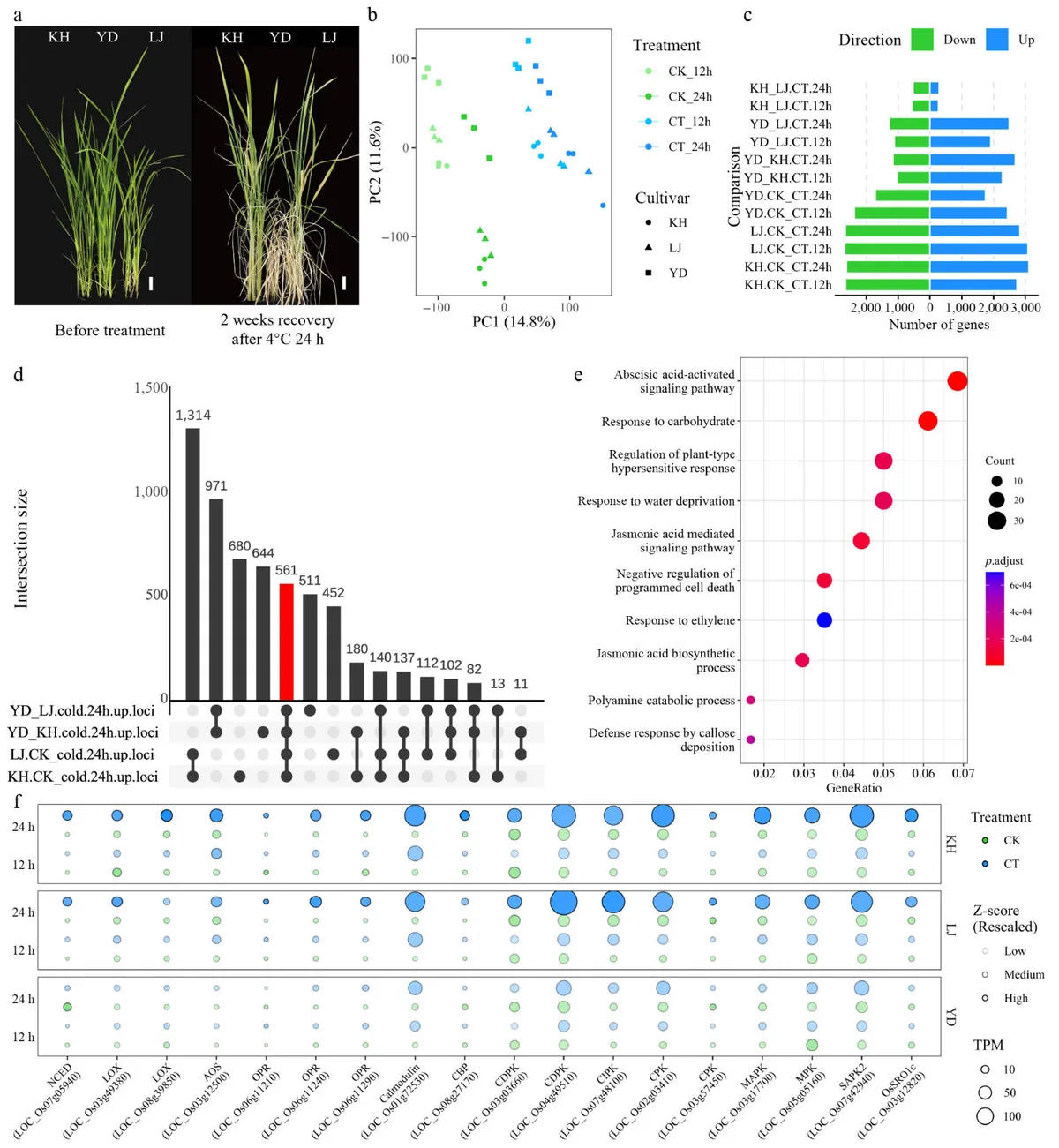
Rice originated in subtropical environments, yet its cultivation has expanded into regions where low temperatures threaten growth, development, and yield. Japonica rice generally tolerates cold better than indica rice, and researchers have linked this adaptation to changes in stress-responsive gene expression. Much attention has focused on C-repeat binding factors, a group of transcription factors that help coordinate plant cold responses. However, these proteins may directly regulate only 10%–20% of cold-regulated genes, suggesting that many other regulators operate alongside them. For numerous rice genes, the identities of those regulators and the locations of the DNA sequences they recognize remain unclear. A wider map of these interactions is therefore needed to understand cold adaptation and identify potential targets for crop improvement.

Newswise·