Categories
Health
10184 articles

Health
Broken Water Systems and Collapsing Health Services in War Zones Help Drug-Resistant Superbugs Thrive, New Publication from UN University and Geneva Water Hub Warns - UNU | United Nations University
Richmond Hill, Ontario, Canada (9 October 2026) – When governance collapses in war, the basic checks on antibiotic use, water quality and infection control collapse with it. A new publication from the United Nations University Institute for Water, Environment and Health (UNU-INWEH) and the Geneva Water Hub warns that these are the conditions under which antimicrobial resistance (AMR) spreads fastest and furthest, with water carrying resistant bacteria between hospitals, communities and farms, and across national boundaries. The Policy Brief, Antimicrobial Resistance in Water Systems: A One Health Imperative in Fragile and Conflict-Affected Settings, examines how resistant bacteria, resistance genes and antibiotic residues circulate through water across human, animal and environmental interfaces. Written for decision makers in the water, health and humanitarian sectors, the brief sets out practical actions for governments, donors and humanitarian agencies, including in settings where state systems are absent or severely weakened.
UNU | United Nations University·

Health
Healthcare professionals' current experiences shape future remote monitoring benefits - News-Medical
The future benefits expected of remote monitoring in healthcare are shaped by how professionals understand their current work and its associated challenges, a recent study from the University of Eastern Finland shows. Researchers interviewed healthcare professionals involved in a remote-monitoring pilot for older patients with neurological conditions. The study examined home-based digital monitoring as a new way of organizing care, with nurses' day-to-day work playing a central role during the pilot phase, when remote monitoring was still being tested.
News-Medical·

Health
Bike locks sold in Canada recalled over 'serious internal injuries' risk - Inside Halton
Health Canada issues a product recall notice for GIANT SureLock Bicycle Locks with an LED key over an ingestion hazard.
Inside Halton·

Health
Shared family factors influence screen use and mental health problems in young people - News-Medical
Shared family factors, such as genes and upbringing, are likely to explain a large part of the link between high screen use and mental health problems in young people. This is according to a new study from Karolinska Institutet published in Nature Human Behaviour. "Our results suggest that the association may in some cases have been overestimated because it has not been possible to fully account for shared family factors," says Tong Gong, research specialist at the Department of Medical Epidemiology and Biostatistics, Karolinska Institutet, and the study's corresponding author alongside Lu Yi, senior researcher at the same department.
News-Medical·

Health
Nominations open for 2027 Manitoba Healthy Aging Awards - DiscoverWestman
Nominations are now being accepted for the 2027 Manitoba Healthy Aging Awards, which recognize Manitobans who make a difference in the lives of older adults, Health, Seniors and Long-Term Care Minister Uzoma Asagwara announced yesterday. “Older Manitobans make our communities stronger every day and these awards are about recognizing the people who give their time, energy and leadership to help others age well,” said Asagwara. “Whether they are supporting mental wellness, bringing generations together, helping seniors stay active or advocating for better care, we want to celebrate the people making a real difference in communities across Manitoba.”
DiscoverWestman·
Health
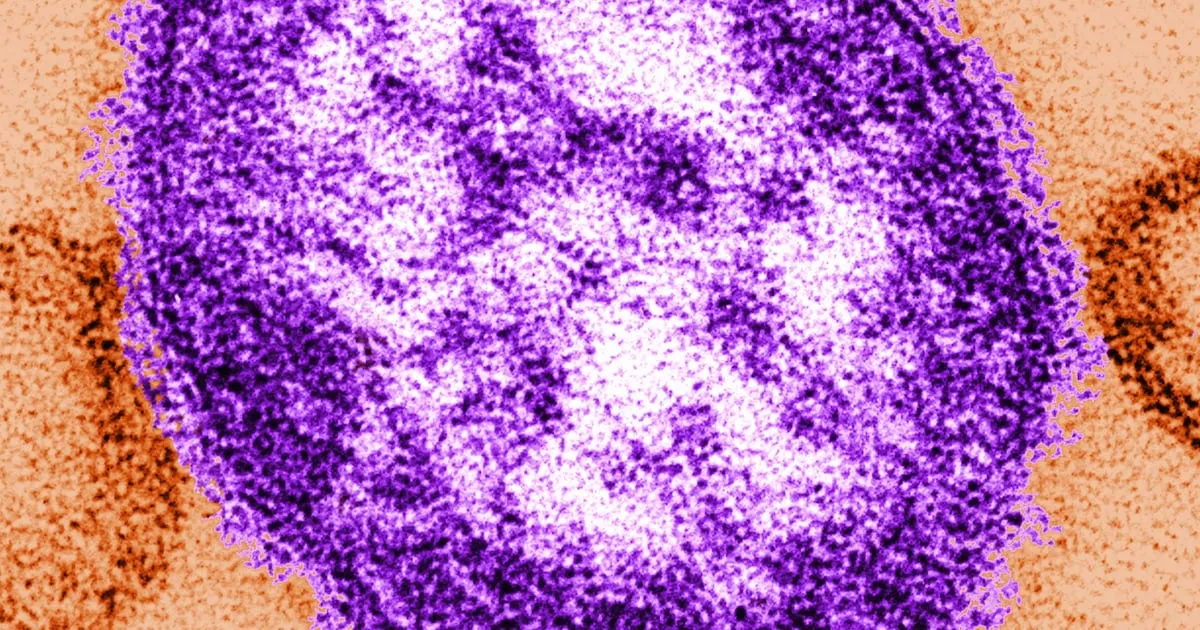
Ottawa Public Health alerting residents of possible measles exposure locations - CTV News
AtlanticNova ScotiaNew BrunswickPrince Edward Island Newfoundland and LabradorCalgaryLethbridgeKitchenerGuelphNorthern OntarioSudburyNorth BaySault Ste. MarieTimminsOttawaKingstonBrockvillePembrokeReginaYorktonSaskatoonPrince AlbertTorontoWatchWeatherPeelHamiltonDurhamYorkHaltonNiagaraQueen's ParkToronto City HallIn PicturesVancouverVancouver IslandCanadaLocal SpotlightRoyal FamilyPoliticsNanosPower PlayQuestion PeriodFederal Election 2025WorldMideast ConflictRussia-Ukraine WarWatchLatestCaptured on CameraPoliticsLifestyleConsumerHealthExplainedEntertainmentTechnologyDeception DecodedAutosEnvironmentBusinessInflationReal EstateAutos
CTV News·

Health
Investigation desperately needed into health-care professionals' stress and depression levels - CTV News
ADVERTISEMENTMontreal WatchDr. Jean-Paul Brutus says Quebec health-care professionals' levels of stress and depression levels throughout the system are alarming. October 08, 2026 at 12:49p.m. EDT
CTV News·

Health
WHO issues first global guidelines on child and adolescent obesity - Pan American Health Organization (PAHO)
The World Health Organization (WHO) today released its first guidelines addressing the sharp rise in obesity among children and adolescents, setting out how health systems and health workers can deliver timely, evidence-based and people-centred care. In 2024, 170 million children and adolescents aged 5–19 years were living with obesity, including 70 million children aged 5–9 years and 100 million adolescents aged 10–19 years. Obesity prevalence in this age group has quadrupled since 1990, rising from 2% to 8%. Obesity is a chronic, relapsing disease that can be managed with effective care. Its consequences can begin early in life, increasing the risk of noncommunicable diseases, including type 2 diabetes and cardiovascular disease. Children and adolescents living with obesity may also experience stigma, discrimination and bullying. Preventing and managing obesity is essential to protect the physical and mental health of children and adolescents and support their healthy growth, education, social well-being and quality of life.
Pan American Health Organization (PAHO)·

Health
Health Matters: Dying With Dignity Canada condemns MAID changes - Global News
Health Matters: 8 Ebola cases confirmed in Kenya Health Matters: Ottawa pressed for health funding clarity
Global News·

Health
Grudges are bad for both physical and mental health - Harvard T.H. Chan School of Public Health
Holding a grudge can be a mental burden—and can also harm physical health, according to Harvard T. H. Chan School of Public Health’s Tyler VanderWeele. VanderWeele, John L. Loeb and Frances Lehman Loeb Professor of Epidemiology, was among the experts featured in an Oct. 4 CBS News report about the harmful nature of grudges, or what VanderWeele referred to as “unforgiveness.”
Harvard T.H. Chan School of Public Health·

Health
Ipsos Health Service Report 2026 - Ipsos
Since 2018, Ipsos has been tracking perceptions of the quality of healthcare systems, the biggest health issues and the biggest public health problems. Key Research Findings:Download the report belowMental health remains the biggest health problem and is growing as a concernOn average across 32 countries one in two (48%) see mental health as one of the biggest health problems in their country ahead of cancer (40%), stress (32%) and obesity (25%). Mental health has topped our list of worries since 2023 and despite many already seeing it as a problem 19 out of the 28 countries surveyed this year and last are more likely to see it as major issue in 2026. Quality of care perceptions vary sharply around the world Malaysia tops our quality of care perceptions index with a score of 72%. While Hungary records the lowest score (28%). The quality of care perceptions index looks at people’s satisfaction with their country’s healthcare system, trust in the system, ability to access a doctor and a pharmacy, and whether the system treats all people equally.
Ipsos·
Health
Vaccines Available as Respiratory Illness Season Approaches - Government of Nova Scotia
Booking is now open for Nova Scotians to receive free COVID-19 and influenza vaccines. These safe and effective vaccines are recommended for everyone aged six months and older and help to support healthier communities throughout the respiratory season.
Government of Nova Scotia·