BBlogFlow

Categories

Automotive

314 articles

Automotive

Can good design stop content creators from having sex in robotaxis?

“You may be driving by yourself, but that’s not your classic private environment,” Rouchitsas said. Rouchitsas said there are two prevalent use cases. The first is the content creator. “So you have OnlyFans, you have Pornhub, you have a very mature adult industry in the US. So opportunistic content creators that might perceive this Waymo or public shuttles as studios: very cheap, providing good lighting, soundproof—kind of,” Rouchitsas said. The other is tourists, who might not know local customs. “I come from Greece, and I also come from an island, so I know what tourist debauchery looks like, what young people tend to do when they’re given context-wise the chance to do so,” Rouchitsas said.

Ars Technica Cars·
Automotive

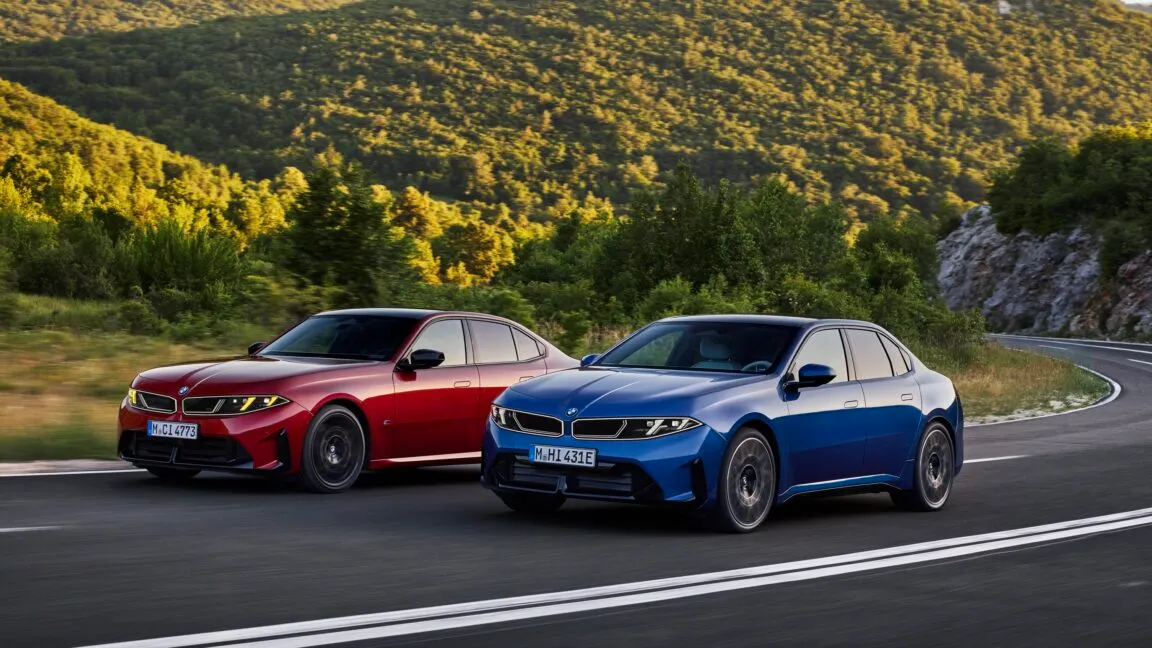
BMW reveals US 3 series pricing: The EV carries a hefty premium

Light replaces chrome for the kidney grille. Pricing for those future electric variants will be revealed closer to their sale dates. But we can tell you the price of the 2027 i3 50 xDrive: $61,500. For context, the 2026 i4 xDrive40, which is less powerful but also has 60 percent of the range, currently starts at $62,300.

Ars Technica Cars·
Automotive

This study looks at how and with whom connected cars share your data

In news that should surprise very few, connected cars remain a complete privacy nightmare. But now we have a better idea of what data those cars are giving away, and to whom, thanks to a study conducted by a team of researchers at Northeastern University and Consumer Reports. Testing 21 cars from 19 different brands revealed patterns of traffic to advertisers and trackers, as well as data shared with Big Tech firms like Microsoft and Adobe. And using a car’s companion app can multiply the problem, their testing found. In 2023, the Mozilla Foundation published a widely covered report looking at the privacy policies of more than two dozen automakers. They were appalled, writing that “cars are the worst product category we have ever reviewed for privacy.” But that analysis was conducted by sitting down and reading all the various privacy policies of each brand; today’s study involved measuring traffic from actual cars under a number of scenarios, including idling and being driven. The researchers even parked 11 cars—just the electric ones—in a Faraday tent to see if the loss of a cellular signal would push that traffic to the car’s Wi-Fi connection instead.

Ars Technica Cars·
Automotive

Trump cuts fuel economy standards back to 2014 levels

One perhaps not-terrible change in the new rule is a tightening of the light truck loophole. Passenger cars and light trucks have been classified separately under CAFE, with weaker standards for the latter. That encouraged car companies to redesign their crossovers such that they could be categorized as light trucks, with the end result that our roads are full of SUVs that are bigger and thirstier than they should be. Should these regulations still be in effect by model year 2030, they will “change classification criteria starting in model year 2030 to reflect each vehicle’s intended use accurately, flipping the current fleet mix of approximately 70 [percent] light trucks and 30 [percent] passenger vehicles to around 70 [percent] passenger cars and 30 [percent] light trucks,” according to the Department of Transportation.

Ars Technica Cars·
Automotive

F1 in Azerbaijan: That was almost a close-run thing

Kimi Antonelli could not repeat his Monza magic after a crash in qualifying. Cars line up on the grid for the race start during the F1 Grand Prix of Azerbaijan at Baku City Circuit on September 26, 2026 in Baku, Azerbaijan.

Ars Technica Cars·
Automotive

Tesla’s big electric truck faces an even bigger infrastructure challenge

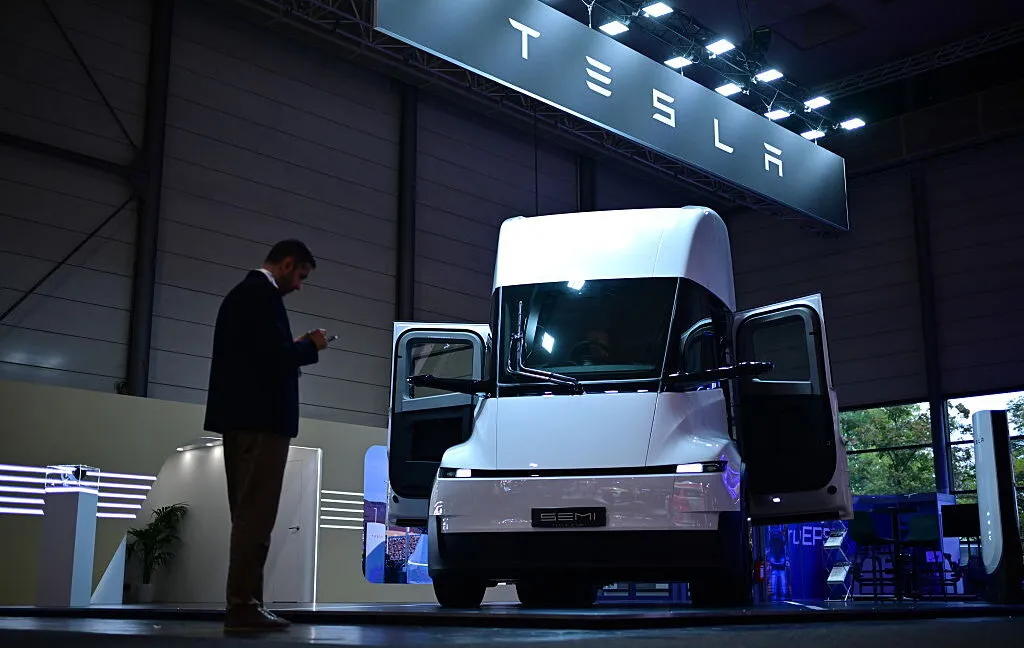
Plus, the Trump administration and the GOP—the same group Musk spent millions to get into the White House—cut billions in federal support for electric vehicles last year. The administration is also working to lower fuel economy standards for truck engines, which would have required manufacturers to hit aggressive climate goals. Heavy trucks alone account for some 7 percent of US greenhouse gas emissions. And yet, it’s not a bad time to be an EV-maker. US diesel prices hit record highs this month as the Iran War continues to disrupt oil production and shipping in the Middle East; prices are up nearly double from this time last year. The truck “is going to make a ton of sense economically because the cost of electricity is much less than the cost of diesel, especially in these crazy times,” Musk said in his pre-taped address, nodding to the conflict launched by the administration he once worked for.

Ars Technica Cars·
Automotive

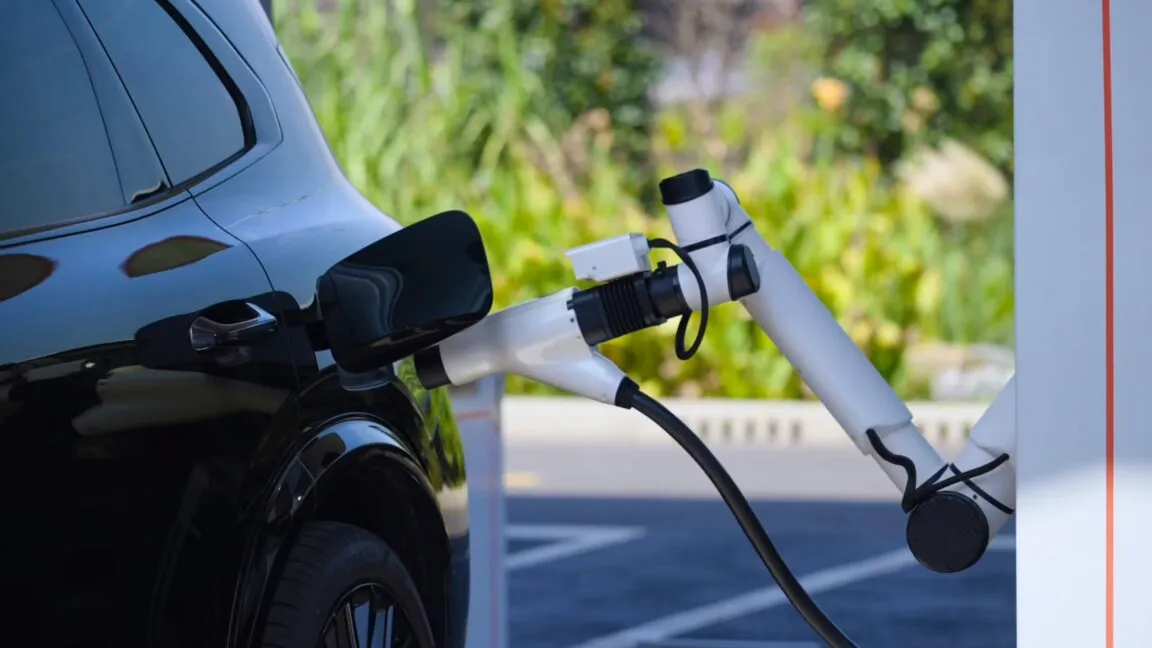
US being left behind in EV charging speeds as China goes sub-5 min to 70%

Hype merchants have a habit of overdoing it, but there’s no denying that China is making the US look more than a little antiquated when it comes to electric vehicles. Some of that is due to a deep integration of connected services and an extension of the car as part of the owner’s digital life—think additional infotainment screens and AI personal assistants, but with an Android phone-maker’s cadence of updates rather than that of a traditional car company. Other advances sound more appealing. China’s OEMs are in a battle over who can charge the fastest, and this week, Geely fired its latest salvo. China might have a much younger driving culture than North America or Europe, but it has still been long enough to condition those drivers to how long it takes to fill a tank of gas. For all their many improvements over internal combustion engine vehicles—far greater efficiency, instant torque, very little NVH, more reliabiity, and so on—EVs do still take longer to recharge than it takes to refuel a car with a liquid.

Ars Technica Cars·
Automotive

Formula 1 looks at 3.0 L V8 turbos and smaller hybrids for 2030

Regenerative braking isn’t the only way to recharge an F1 car’s battery, though. The electric motor can also act as a generator, siphoning power from the V6 to charge the battery—this is called “super clipping.” But any power going to the electric motor is power that isn’t going to the rear wheels. So sometimes an F1 car will have 1,005 hp (750 KW) and sometimes 536 hp (400 kW) if the battery is empty and only the V6 is powering the car. It sometimes has even less if it’s super clipping, where up to 335 hp (250 KW) is diverted to the electric motor instead of the rear wheels. And most of that is out of the driver’s control. Instead, complex and somewhat opaque algorithms are in charge, and they are supremely sensitive to driving style. More than a few times this season, we’ve seen a driver crash after a sudden torque spike they weren’t expecting.

Ars Technica Cars·