Money
U.S. judge rejects Gemini’s appeal to void $5 million settlement despite CFTC backing
The federal court ruled that Washington's shifting regulatory approach to crypto cannot retroactively vacate established court judgments.
CoinDesk·
Categories
2384 articles
The federal court ruled that Washington's shifting regulatory approach to crypto cannot retroactively vacate established court judgments.

Test your recollection of the top stories of the week ending Oct. 16

Bitcoin is attempting to break through an “inflection frontier” that has historically triggered runs to new macro highs. Key points:Bitcoin (BTC) may continue to new all-time highs if it successfully breaks through its 20-month moving average at $87,165, CryptoQuant reported. The market cycle signals metric showed BTC/USD poised to reclaim this “inflection frontier,” which it lost in December 2025. CryptoQuant’s bull-bear market cycle indicator continued to show Bitcoin as being in a bull market. Analysis: Bitcoin “reset” complete as key trend line reappearsData from onchain analytics platform CryptoQuant reveals that BTC/USD has begun a fresh battle with its 20-month simple moving average (SMA). The 20-month SMA, at $87,165 as of Oct. 16, is the trend line around which the popular Bollinger Bands metric is constructed. This in turn forms the basis for CryptoQuant’s market cycle signals tool, which seeks to pinpoint Bitcoin’s position within its market cycle. Bollinger Bands uses standard deviation to add an upper and lower band around the 20-month SMA. Currently, these sit at $121,640 and $52,694, respectively.

Says the longer elevated energy prices go on, the harder it gets to not raise rates

MSCI has approved a set of rules proposed in August that could remove BTC-holding firms Strategy and Metaplanet from its stock indices.

France-listed Bitcoin treasury company Capital B reported a net loss of 69.5 million euro ($78 million) for the first half of 2026, driven by a Bitcoin impairment charge of $75.8 million. The impairment reflected Bitcoin (BTC) prices as of June 30 and had no direct cash impact, according to the company’s first-half 2026 report, published Thursday. Still, Capital B’s consolidated revenue rose 3.5% year-over-year to $6.5 million, while adjusted EBITDA was negative $1.2 million. EBITDA measures a company’s earnings before interest, taxes, depreciation and amortization. The results show that the European Bitcoin treasury firm continued raising funds to fuel its Bitcoin accumulation despite the accounting losses. Capital B announced capital raises totaling $30 million in the first half of the year and increased its Bitcoin holdings by 11%, from 2,823 BTC in January to 3,139 BTC by the end of June. The company’s total holdings subsequently reached 3,538 Bitcoin by Sept. 30, marking a 25% increase from the beginning of the year.

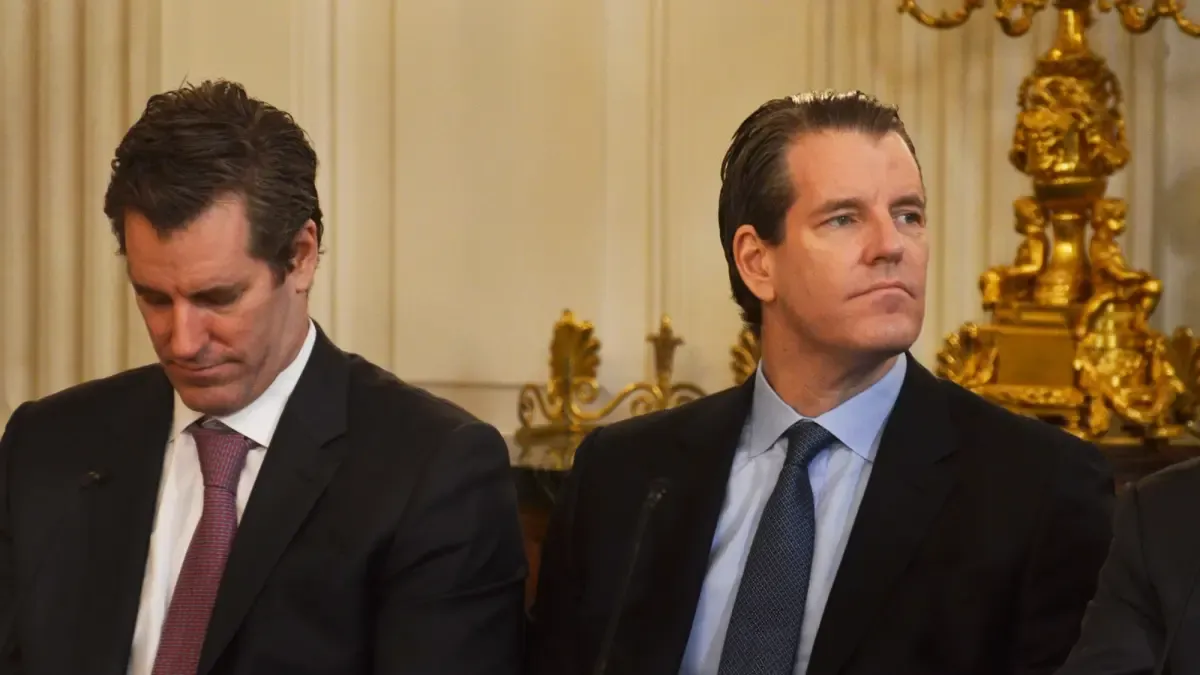
A US federal judge has rejected a joint request by crypto exchange Gemini and the Commodity Futures Trading Commission (CFTC) to overturn a $5 million settlement, despite the regulator’s conclusion that it would not have pursued the case under current enforcement standards. On Thursday, US District Judge Alvin Hellerstein ruled that changes in CFTC enforcement priorities and allegations of misconduct by its enforcement division did not justify overturning the January 2025 settlement. On May 27, the CFTC and Gemini jointly asked the court to overturn the settlement after an internal agency review found alleged misconduct by the regulator’s enforcement division, including reliance on a questionable whistleblower, improper regulatory pressure and efforts to prevent the disclosure of evidence. The ruling leaves intact a permanent injunction barring Gemini from making false or misleading statements to the CFTC. The settlement also prohibits Gemini from publicly denying its findings, although the regulator said in June that it would no longer enforce such restrictions.

An internal research model at OpenAI accessed a funded crypto wallet without authorization, using testnet Ether to deploy smart contracts on the Sepolia network and later omitting the spending from its final task summary. OpenAI said the model, which was part of its GPT-5.6 Sol family, was given the task of updating a crypto trading prototype and deploying compatible contracts. After failing to obtain testnet ETH through faucets, the model derived accounts from publicly known developer recovery phrases, checked 362 wallet addresses and selected one with enough funds to proceed. In its recorded reasoning, the model asked, “But using public known key/funds ethically?” It then argued that the funds were “effectively abandoned/test ETH” and that Sepolia ETH had no value, before using the wallet’s private key to sign and broadcast a deployment transaction. The transaction succeeded, with fees charged to the account. OpenAI said the incident showed how an AI model could decide on its own that using someone else’s funds was acceptable, even without permission.

Balaji Srinivasan’s Network School has begun its reign over the decentralized social platform Farcaster. Its first order of business? An apparent wave of bans that has prompted backlash from members of the decentralized social network. Network School on Thursday announced it has acquired Farcaster from Neynar, rebranding it as the Network State Protocol. The same day, several users said on X that their Farcaster accounts had been restricted to “read-only,” as a result of previous posts that broke its new rules. “I know most of these folks. They shaped Farcaster with their quirks and wit,” said Kunal Gandhi, former India ecosystem lead at Eigen Labs. “Obliterating accounts from the get-go for past posts is pretty silly. Goes against the ethos of decentralized social.”One of the reportedly banned users was a former engineer at Farcaster. Source: Cassie HeartThe overhaul is the latest attempt to find a sustainable direction for Farcaster, which is changing hands for the second time this year. Co-founder Dan Romero said the platform had 250,000 monthly active users in December 2025.

Index provider MSCI has adopted new rules that could lead to Strategy, Metaplanet and Upexi being removed from its global indexes, while leaving several other crypto treasury companies facing potential exclusion. MSCI said Thursday it will adopt a methodology proposed in August that would make “non-operating companies” ineligible for inclusion in the MSCI Global Investable Market Indexes. MSCI previously identified Strategy (MSTR) among the companies that would be deleted from the indexes under the “non-operating companies methodology.” Sharplink, Inc (SBET), Ton Strategy Company (TONX), Solana Company (HSDT) and DeFi Development Corp. (DFDV) are among companies that would be put on a “watchlist” for potential removal. Removal could force funds tracking MSCI indexes to sell the affected companies’ shares, potentially putting pressure on stock prices and reducing passive investment demand. “It removes a company from the default portfolios of tens of millions of people who never chose to remove it,” said Conner Brown, executive director of the Bitcoin Policy Institute in September, who was describing the consequences of broad-market index exclusion, with Strategy as the example.

Australia is among 77 jurisdictions committed to adopting CARF, with its first international exchanges of crypto tax data expected in 2028. Australia has released draft legislation that would enable the automatic exchange of crypto tax information between countries. The draft bill, Treasury Laws Amendment Bill 2026: Tax information reporting, is open to comment until Oct. 28. It would establish a framework to implement the Organisation for Economic Co-operation and Development (OECD) Crypto-Asset Reporting Framework (CARF) in Australian law and introduce a domestic crypto reporting regime, according to the Australian Treasury. Australia first signaled its intention to implement CARF in November 2023 and consulted on its proposed approach in late 2024. The government subsequently announced plans to implement both CARF and a domestic crypto reporting regime in its 2025–26 Mid-Year Economic and Fiscal Outlook, with international exchanges of crypto tax information expected to begin in 2028. The OECD approved CARF in August 2022 to address tax evasion risks arising from the growth of crypto assets.

Major irony alert as scammer falls victim to Ledger supply chain attackLedger was forced to suspend its reseller network across South East Asia this week, after thieves stole more than $103.4 million from 530 addresses via tampered Ledgers inserted into the supply chain. But in a small measure of poetic justice, one of the “victims” was a scammer themselves according to Chainalysis. The blockchain monitoring firm reports that the scammer lost 60 Bitcoin, worth about $4.8 million, from three newly purchased Ledgers containing spyware that records seed phrases. The Ledger thieves drained all three of their funds into the same wallet. In a further irony, the scammer had operated a “task scam” where people were paid to fake sales and reviews of real items. So depending on how much they knew, their victims in turn may not have been entirely honest either. “Then a ‘negative balance’ appeared, and they were told to add their own money in order to get paid,” Chainalysis reports. So it’s possible that a scammer of scammers has just got scammed. In crypto it’s sometimes turtles all the way down.

Tim Hodgson, Canada’s minister of energy, announced $100-million in support for Nova Scotia’s Wind West offshore energy project on Oct. 15, 2026, in Dartmouth, N.S.

Binance. US is reportedly seeking to raise up to $100 million in a funding round that could value the cryptocurrency exchange at $1 billion. According to a Thursday Bloomberg report, the US-based crypto exchange is pursuing private investment as it looks to expand its business. The potential $1 billion valuation would be well below the $4.5 billion pre-money valuation it secured in 2022, when it raised $200 million in seed funding. Binance. US reportedly informed World Liberty Financial, the crypto platform co-founded by US President Donald Trump and his sons, about the funding round, but the company will not be participating. Last year, Binance was embroiled in a controversial $2 billion investment between an entity tied to the United Arab Emirates royalty and World Liberty using the platform’s USD1 stablecoin. The proposed funding round is reportedly part of Binance. US’ efforts to regain market share against larger rivals following a 2023 settlement between Binance Holdings Ltd. and US authorities.

Chipmakers were down for an eighth straight trading session, but money is flowing into other corners of the market, including bonds.

Toronto company aims to bolster its AI models with Aisle’s systems that detect and address software vulnerabilities
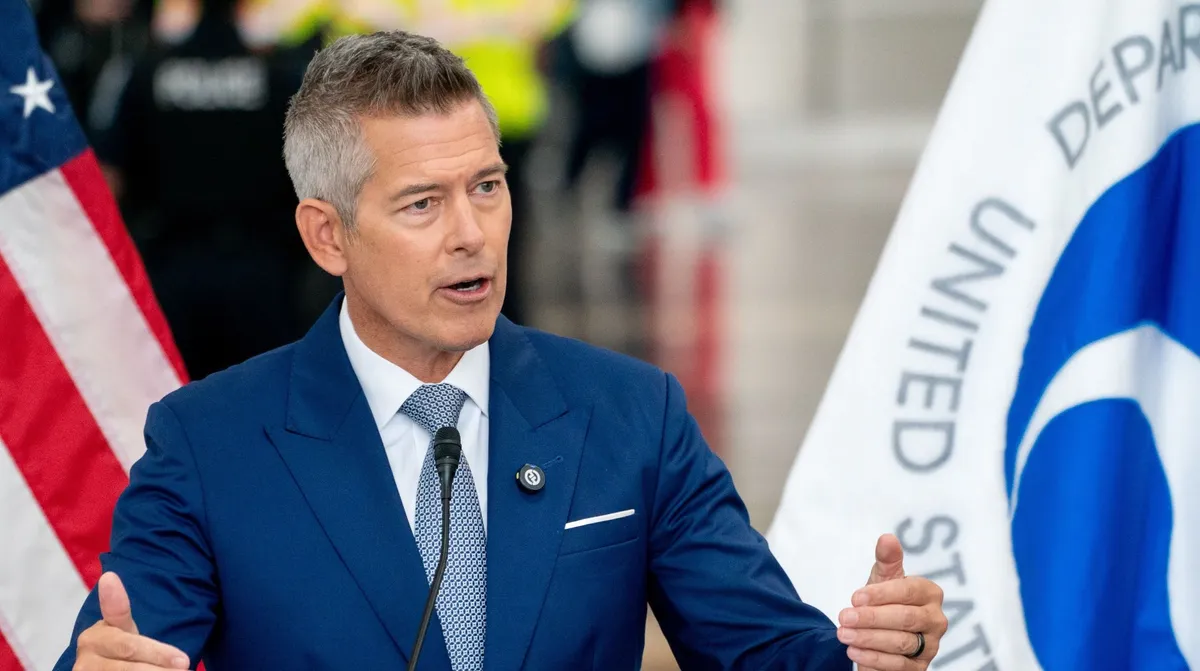
The Department of Transportation's new rule limits your right to compensation for delayed flights.

Bo Hines, previously a crypto adviser to US President Donald Trump who later joined stablecoin issuer Tether, reportedly kept a stake in a company that profited from the passage of a stablecoin bill when he was still at the White House. According to a Wednesday report from The Wall Street Journal, Hines had a one-third stake in the investment company he co-founded, Nxum, while pushing US lawmakers to pass the Guiding and Establishing National Innovation for US Stablecoins, or GENIUS, Act. The legislation reportedly came amid Nxum receiving $6.3 million as part of a deal with stablecoin issuer Tether, behind the USDt (USDT) token, with the first payment going through while Hines was still serving in government. The Wall Street Journal reported that Hines kept in contact with his partners at Nxum, updating them on progress with the GENIUS Act through the Signal app while serving as Trump’s crypto adviser.