Australia releases draft bill to adopt OECD crypto tax reporting framework
This story deserves to be shared
Send it to someone who'd care, or post it on your networks.

Australia is among 77 jurisdictions committed to adopting CARF, with its first international exchanges of crypto tax data expected in 2028. Australia has released draft legislation that would enable the automatic exchange of crypto tax information between countries. The draft bill, Treasury Laws Amendment Bill 2026: Tax information reporting, is open to comment until Oct. 28. It would establish a framework to implement the Organisation for Economic Co-operation and Development (OECD) Crypto-Asset Reporting Framework (CARF) in Australian law and introduce a domestic crypto reporting regime, according to the Australian Treasury. Australia first signaled its intention to implement CARF in November 2023 and consulted on its proposed approach in late 2024. The government subsequently announced plans to implement both CARF and a domestic crypto reporting regime in its 2025–26 Mid-Year Economic and Fiscal Outlook, with international exchanges of crypto tax information expected to begin in 2028. The OECD approved CARF in August 2022 to address tax evasion risks arising from the growth of crypto assets.
This article is an excerpt. To read the full content, visit the original source. Cointelegraph
Related articles
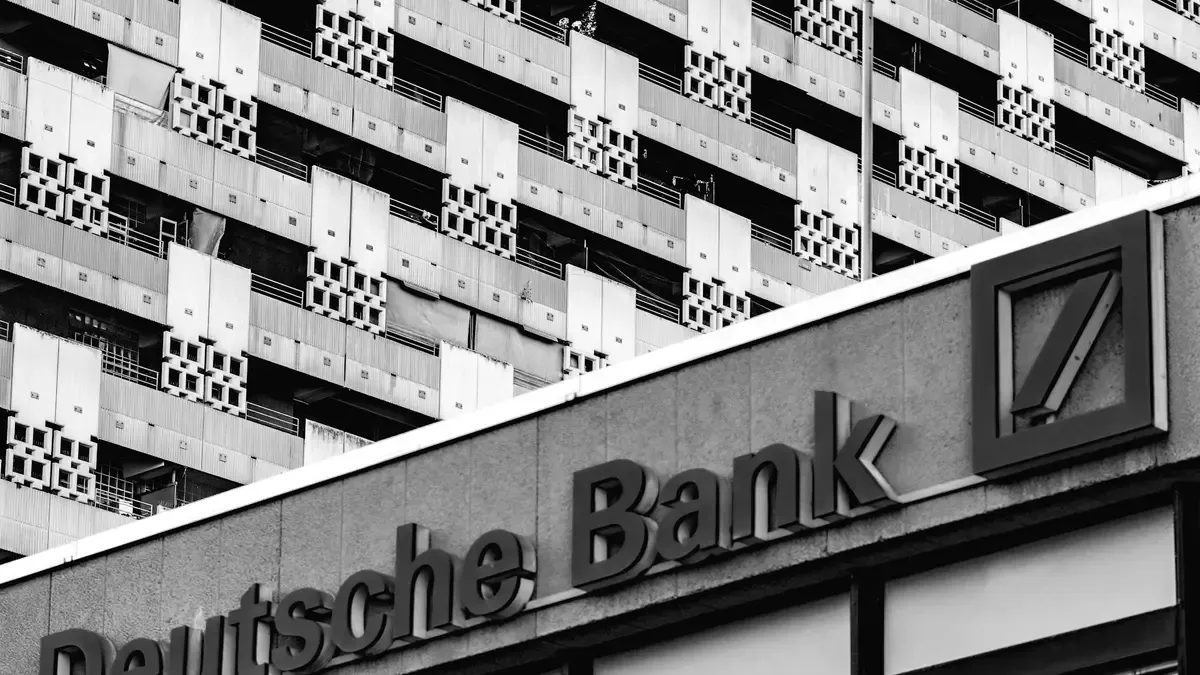
Deutsche Bank targets Asia crypto custody expansion in 2027 as German launch nears
The service will initially support bitcoin, ether and the stablecoins USDC, EURC and EURAU, with the bank managing clients’ wallets and private keys.
Qubic freezes chain after attacker drains 1.4K wallets with weak seeds
Layer-1 blockchain network Qubic halted operations Sunday after an attacker reportedly exploited weakly generated wallet seeds to drain approximately $1.4 million from more than 1,400 accounts, according to the project. In a statement on X, Qubic said the network was halted at tick 85,371,949, where it remains paused at the time of writing. Qubic said the vulnerability affected wallet seeds generated using any browser on an iPhone or iPad, Safari on a Mac until Oct. 18, 2026, or the Qubic iOS app before July 2025, leading to 2.94 trillion Qubit (QU) stolen. “87.1% of the drained funds never left the Qubic network and remain frozen in place,” said Qubic. “The remaining 12.9% was sent to MEXC, whose team froze the receiving account within about an hour.” The Qubic theft is the latest in a series of attacks tied to weak wallet seeds. In July, Coldcard disclosed that attackers had stolen funds from wallets whose seeds were weakened by a firmware bug. Similar flaws affected Trust Wallet’s browser extension and the Libbitcoin Explorer tool in 2023.

Canada needs more permanent solutions to its housing problem
Recent tax rebates have brought buyers back to the market, but their expiry threatens to undo that progress
SEC tokenized stock framework faces issuer pushback as Broadcom, Verizon object to OKX-ICE listing
Eight more companies objected to trading on the planned OKX-ICE venue, while Nasdaq has separately said it would opt out under the SEC’s framework.

India’s Finance Minister blames easy exits and excess liquidity for equity market's underperformance
LivestreamWatchlistSIGN INCreate free account

Richard Heart caught ‘off-guard,’ QDay gets even closer: Hodler’s Digest
HEX erases $246 million in market cap after founder detained in TurkeyThe HEX market cap fell from $561 million to $315 million this week after founder Richard Schueler — better known to the crypto community as Richard Heart — was detained by authorities in Istanbul on October 14. Police seized $7.15 million in cash along with firearms and ammunition during an early morning raid in Istanbul’s Beşiktaş district, alongside searches of 15 related addresses according to Turkish Justice Minister Akın Gürlek. Police impounded nine luxury vehicles registered to Schueler’s wife according to news agency Anadolu. The haul reportedly included 28 watches, 300 bags and 19 graphics cards. Interpol issued a “Red Notice” for Schueler’s two years ago over allegations of tax fraud and assault, after Finnish authorities sought his arrest. A spokesperson for Finland’s National Bureau of Investigations declined to comment on the matter. Turkish media refer to Schueler as “Whale James” and have linked him to a $1 billion unregistered securities offering in the US. However that case was dismissed by a US judge in February 2025.
0 comments
No comments yet. Be the first to share your thoughts!