Will plants survive climate change? The 'Great Dying' reveals clues about their resilience. - Live Science
This story deserves to be shared
Send it to someone who'd care, or post it on your networks.
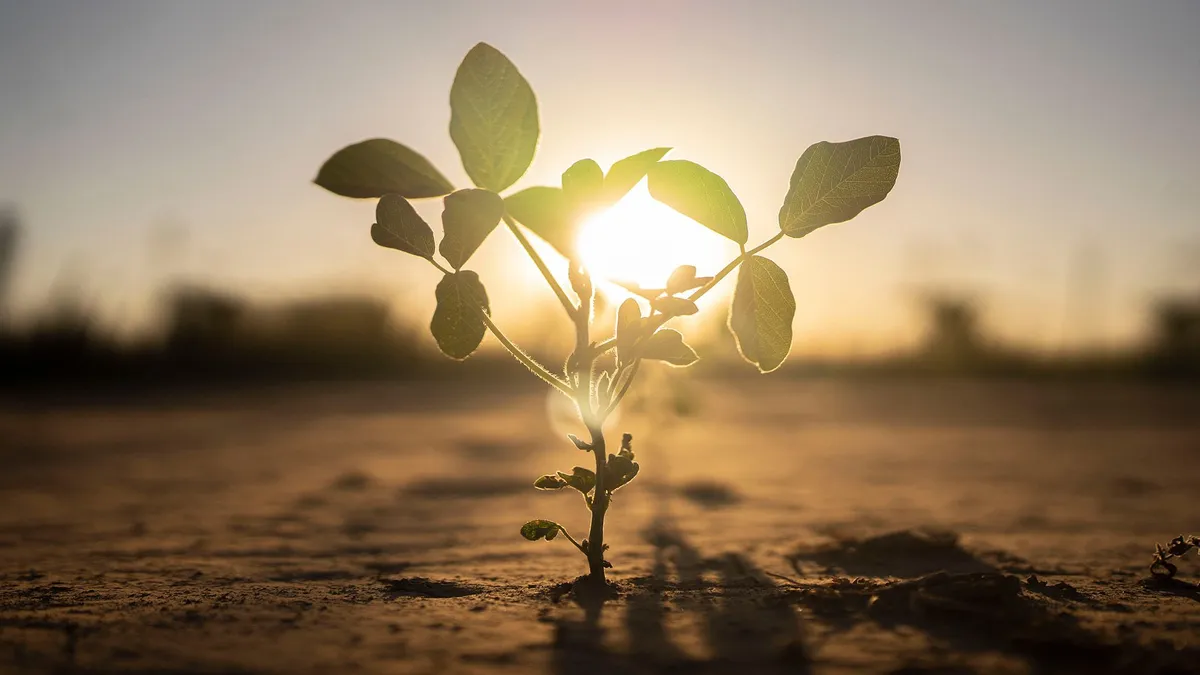
Plants can't easily pick up and move when environmental conditions get rough, so they've evolved strategies to weather harsh conditions in place. That could help some plants survive in the face of a warming climate.
This article is an excerpt. To read the full content, visit the original source. Live Science
Related articles

MEGATRON simulations connect the first stars with the universe's smallest galaxies - The Brighter Side of News
MEGATRON simulations offer a possible explanation for the similar iron content of many of the smallest galaxies. Radiation delayed early star formation until galaxies could retain elements from powerful stellar explosions. The results connect ancient stars with early-universe observations, but depend on uncertain assumptions about the first stars. Some of the universe’s smallest galaxies contain a surprisingly similar proportion of iron, despite holding different amounts of stars. Computer simulations now offer an explanation: a single explosion from a very massive first-generation star could have supplied much of that iron. The finding gives astronomers a testable way to investigate stars that disappeared billions of years ago. One paper follows the chemical legacy of the first stars into hundreds of simulated dwarf galaxies. Its central finding concerns an iron pattern already measured in nearby galaxies, rather than a direct observation of the earliest stellar explosions. Other MEGATRON studies investigate galaxy spectra and the gas within and around galaxies.

Single X-ray pulse reveals plasma nanostructures across scales with one camera - Phys.org
Schematic of an observational experiment using an X-ray free-electron laser to study the plasma formation dynamics of a microscale rod assembly target under a high-intensity femtosecond laser. Credit: National Institute for Fusion Science Understanding instabilities and turbulence in plasmas is one of the key challenges across a wide range of plasma research fields, including nuclear fusion, astrophysics and laser-plasma physics. In plasmas, slight disturbances can grow due to instabilities, and energy is transferred between structures of various sizes due to turbulence. These phenomena give rise to structures ranging from very small to large, which significantly influence the overall motion and energy flow of the plasma.

From the Rewrite Desk: Neanderthal Man Was Not a Stupid Brute - Walter Bradley Center for Natural and Artificial Intelligence
An ideologue should hate paleontology. It is always turning up something new. And sometimes the new stuff is really inconvenient. At one time, Neanderthal man was our dumb cousin. His stupidity caused him to lose the Darwinian battle for survival. National Geographic had the story back then.

The Eerie Sounds of Jupiter, Saturn, and Uranus - Yahoo
This is the sound of our solar system's giants. By converting astronomical data into audio, we can now 'listen' to Jupiter, Saturn, and Uranus. This process, called sonification, translates light detected from the planets into unique and ethereal soundscapes.

On this day in space! Oct. 24, 1946: V-2 rocket takes 1st photos of Earth from space - Space
While these grainy, black-and-white images might not look like much today, they were a huge deal at the time.

Nanoscale alloy redesign tackles cold brittleness for potential deep-space and deep-sea applications - Phys.org
Chen and his team pioneered an innovative "negative-curvature interface" strategy in alloys. The graphic illustrates how negative-curvature interfaced nanoprecipitates harden the novel microstructures of the designed alloy. Credit: Nature Communications (2026). DOI: 10.1038/s41467-026-74629-1 Metallic materials used in extremely cold environments must maintain high strength, ductility and fracture toughness to support applications in aerospace, clean energy, superconducting systems and deep-space exploration. However, traditional alloys often suffer performance degradation at ultralow temperatures because of the long-standing trade-off between strength, ductility and toughness. Although metals may become stronger at lower temperatures, they can also become more brittle and prone to fracture.
0 comments
No comments yet. Be the first to share your thoughts!