Whale Valley: The whale graveyard in the Sahara desert that shows they once had feet and toes - Live Science
This story deserves to be shared
Send it to someone who'd care, or post it on your networks.
This article is an excerpt. To read the full content, visit the original source. Live Science
Related articles
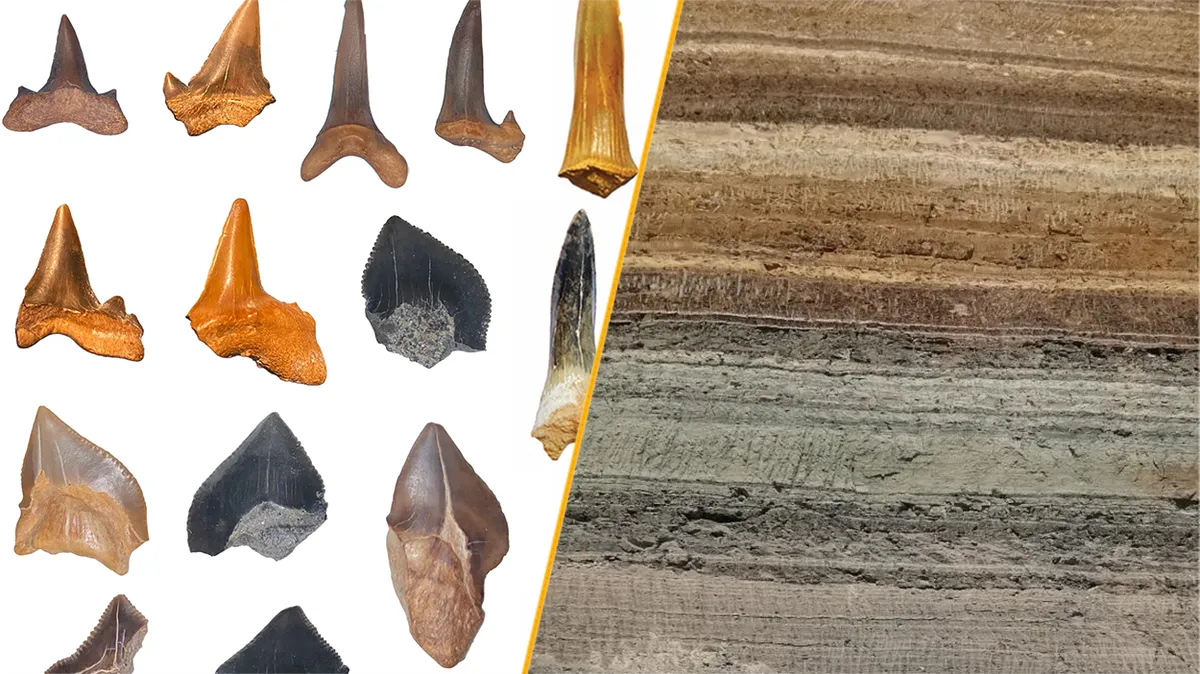
Ancient shark 'graveyard' uncovered in Egyptian desert - Live Science
Fossilized teeth from at least seven shark species have been discovered in the Egyptian desert, hinting at its complex, watery past.
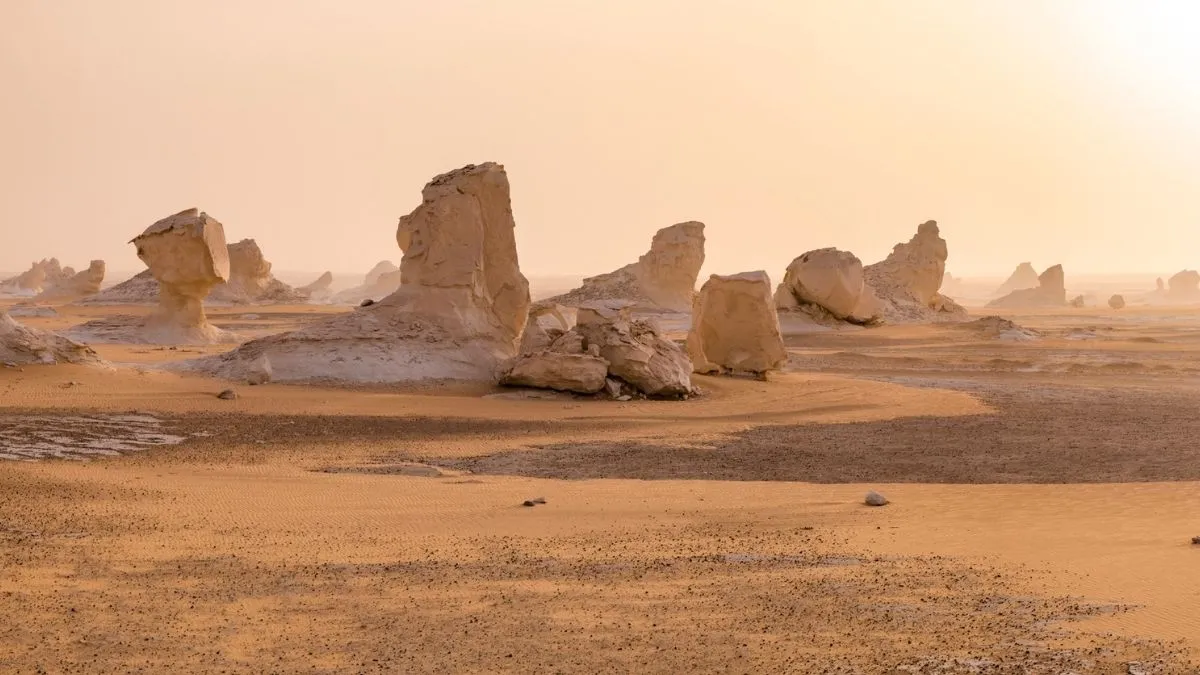
An Ancient Shark Graveyard Has Been Found in The Egyptian Desert - ScienceAlert
The desert sands of Egypt have been dry for thousands of years. As difficult as it is to picture now, however, much of that desert was once submerged beneath a sea that covered much of the northern perimeter of the African continent. Nor was it a dead sea – evidence suggests that, during the Cretaceous period, it may have been a tropical wonderland, where rising currents lifted nutrients into the water column to feed a thriving ecosystem. Now, buried in what was once the floor of that long-ago sea, on the Abu-Tartur Plateau, paleontologists have found evidence of its lushness: the teeth of sharks that would have thrived amid the bounty of fish. And not just one shark. The total number of different species found in that layer of the Duwi Formation now numbers at least seven – offering a glimpse of the rich marine ecosystems that once flourished along the northern edge of Africa. The 14 teeth represented five species. (Yassin et al., Cretac.
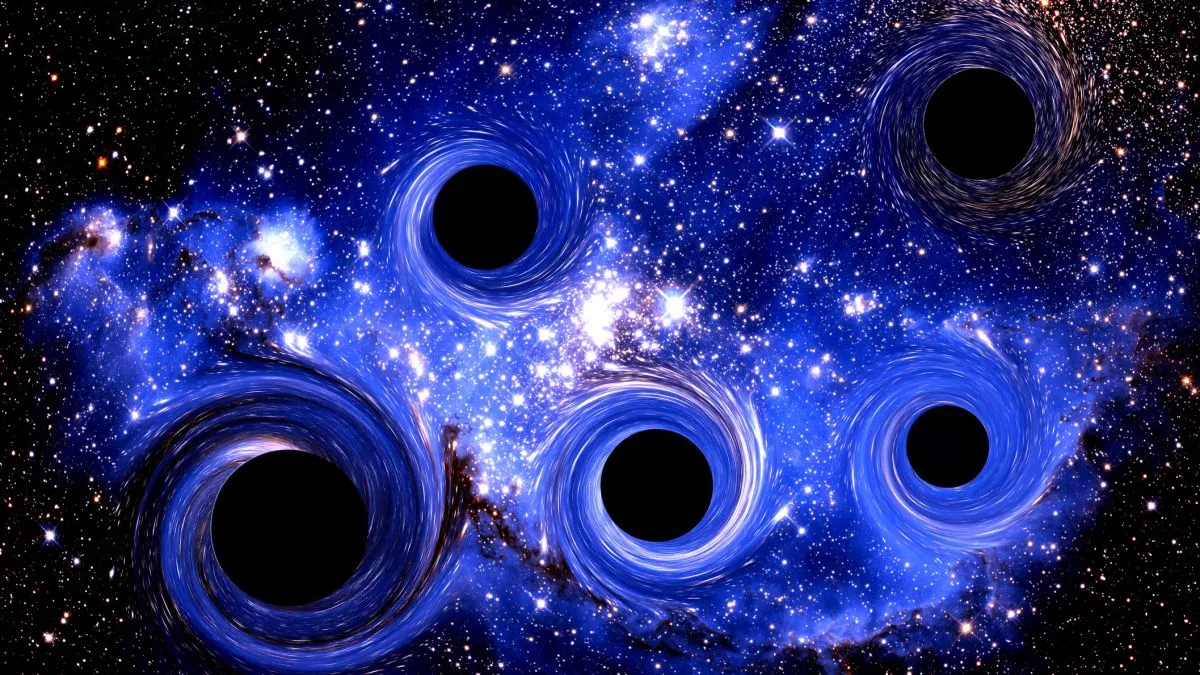
There May Be 170 Million Black Holes Lurking in The Milky Way's Graveyard - ScienceAlert
Black holes are sneaky. Unless they light up their surroundings with a rare feeding frenzy, it's very difficult to tell that they are there. That makes it hard to know exactly how many invisible stellar-mass black holes our galaxy contains. Now, astronomers have simulated the Milky Way to find its hidden "Galactic Underworld", estimating that around 170 million stellar-mass black holes are scattered throughout our galaxy. What's more, the work predicts the distribution of those black holes, their sizes, and even what the explosions that created them may have been like – providing a roadmap for upcoming observations, which will in turn put the simulations to the test. The findings have been submitted to AAS journals and can be found on preprint server arXiv while they undergo the formal peer review process. Black holes are what's left of a massive star after it has effectively died. Having exhausted its fusion fuel, the star becomes unstable and explodes; no longer supported by the outward pressure fusion supplies, the star's core collapses into an object so dense that light cannot escape its gravity.
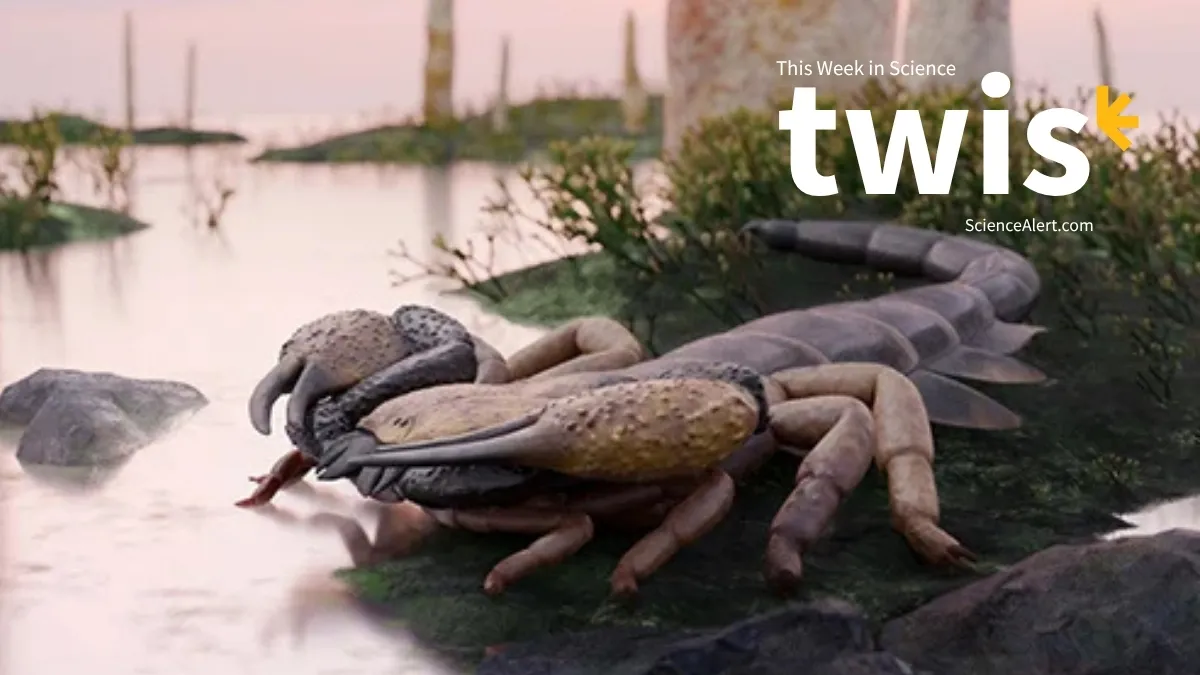
This Week in Science: World's Biggest Scorpion, a Whale Graveyard, And More! - ScienceAlert
This week in science: A world record, a world first, and much more! We start with a scorpion you absolutely don't want to meet. Thankfully, you probably won't have to worry about running into this critter. After all, this scorpion lived 415 million years ago. Let's just say it's big. Scary big. This week, we've also got news about a world-first gene therapy that could reverse some symptoms of aging. Despite the considerable promise, it's worth noting that the technique comes with substantial risk. We can explain. Also: What happens when you simulate a nuclear fireball in the lab? Researchers found something unexpected when they simulated that very thing – and the discovery helps us understand more about the mysterious phenomena that take place during a nuclear event. Watch the video below for all the details, and read on for even more in science news! Scientists Identify The World's Biggest Known Scorpion, The Size of a DogAn artist's impression of Praearcturus gigas. (Franz Anthony)The world's biggest scorpion has been identified: a dog-sized critter that was one of the first apex land predators 415 million years ago.

Giant Whale Graveyard Found in The Ocean Is Like a Drowned City of The Dead - ScienceAlert
In an abyssal chasm yawning deep beneath the Indian Ocean, a vast 'city of the dead' has slowly been growing in the frigid darkness. Along some 1,200 kilometers (745 miles) of the Diamantina Fracture Zone, which splits the ocean floor between Australia and Antarctica, and reaches depths of 7,002 meters, scientists have found an unprecedented necropolis containing the remains of nearly 500 whales. Some of those bones have been dated to 5.3 million years ago – long before the emergence of humans. It is the biggest, deepest, and oldest whale graveyard ever found, and it may have been accumulating continuously for millions of years. Brittle stars and scale worms on a fallen whale skull. (Peng et al., Nature, 2026)"These findings," writes a team led by deep-sea scientist Xiaotong Peng of the Chinese Academy of Sciences, "reshape the understanding of the limits and biogeography of whale-fall ecosystems and establish some deep-sea floors as a fossil archive for tracing cetacean evolution over geological time. "There's not much that lasts at the bottom of the deepest depths of the sea.

'Just defies belief': 5 million-year-old whale graveyard stretches for 750 miles in the Indian Ocean - Live Science
Researchers have discovered a "megasite" of dead whales along with new species of marine life feasting on the corpses.
0 comments
No comments yet. Be the first to share your thoughts!