Unclogging carotid artery fails to improve cognition in clinical trial - Medical Xpress
This story deserves to be shared
Send it to someone who'd care, or post it on your networks.

Cognition often deteriorates when the brain's main blood vessels are clogged, but a Columbia-led study published in JAMA shows that cognition cannot be improved by opening the blockages with stenting or surgery.
"We had hoped that improving blood flow in the brain in this way would improve cognition—and there were tantalizing clues from animal studies and case series that it would," says study leader Randolph Marshall, M. D., the Elisabeth K. Harris Professor of Neurology at Columbia University Vagelos College of Physicians and Surgeons.
This article is an excerpt. To read the full content, visit the original source. Medical Xpress
Related articles
Reading and associations with brain health, cognition, well-being, and mental health | Psychological Medicine - Cambridge University Press & Assessment
While people have long been aware of the importance of prevention and early detection of physical health problems, only recently are they becoming aware that the same principles apply to well-being and mental health. In part, this awareness has developed due to increasing numbers of people with mental health disorders. The World Health Organization (WHO) has found that more than 1 billion people are living with mental health disorders, with conditions such as anxiety and depression inflicting immense human and economic tolls (World Health Organisation, 2025b). Globally, about one in seven 10- to 19-year-olds experience a mental disorder, accounting for 15% of the disease burden in this age group. Depression, anxiety, and behavioral disorders are among the leading causes of illness and disability, and suicide is the third leading cause of death for those aged 15–29 years, highlighting the urgent need for mental health support in adolescence (World Health Organisation, 2025a). However, another driver is the understanding that there are environmental factors that affect our brain health, cognition, mental health, and physical health, which can be modified through behavior change.

This lifestyle program improved cognition 55% more than basic health advice - Science Daily
Older adults at risk of dementia improved their memory, thinking skills, and overall cognitive performance after taking part in two culturally adapted lifestyle programs across 11 Latin American countries. The strongest benefits were seen among participants who received more structured guidance, including regular coaching and support. The Alzheimer's Association-funded study, known as the Latin American Initiative for Lifestyle Intervention to Prevent Cognitive Decline (LatAm-FINGERS), followed participants for two years.
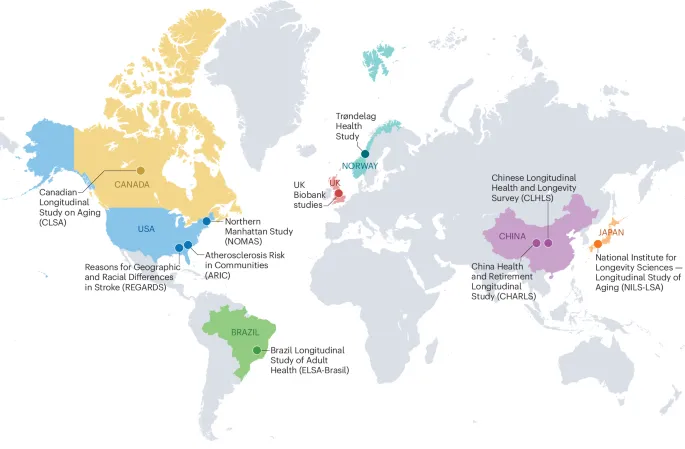
Effects of obesity on brain health and cognition - Nature
NCD Risk Factor Collaboration (NCD-RisC). Worldwide trends in underweight and obesity from 1990 to 2022: a pooled analysis of 3663 population-representative studies with 222 million children, adolescents, and adults. Lancet 403, 1027–1050 (2024). Article Obesity and overweight. World Health Organization https://www.who.int/news-room/fact-sheets/detail/obesity-and-overweight (2025). Lingvay, I., Cohen, R. V., Roux, C. W. L. & Sumithran, P. Obesity in adults. Lancet 404, 972–987 (2024). Article
Menopause on the brain: Your questions about mental health and cognition answered - World Health Organization (WHO)
The Heat and Cognition Project - lifelong health and wellbeing lab - Simon Fraser University

Examining the Oral Steroid Burden in Asthma and COPD - HCPLive
Patients with asthma and chronic obstructive pulmonary disease (COPD) often receive systemic corticosteroids from multiple specialties, and that cumulative exposure is rarely tracked in 1 place. At the same time, the options for reducing reliance on oral steroids have grown, with approvals of dupilumab and mepolizumab for eosinophilic COPD and of depemokimab, a twice-yearly anti-interleukin (IL)-5 agent, for severe asthma.1-4 Clinicians outside pulmonology increasingly manage these patients when specialty access is limited. On October 6, 2026, Mollie Chartoff, FNP-BC, a nurse practitioner on the advanced COPD team at Vanderbilt Lung Institute in Nashville, Tennessee, moderated a virtual clinical forum for advanced practice providers on asthma and COPD. Participants included nurse practitioners and physician assistants in pulmonology, allergy and asthma, dermatology, oncology, and interventional pain practices in Tennessee, Texas, Missouri, and North Carolina. The discussion covered biomarkers, oral corticosteroid (OCS) exposure, biologic selection, and access barriers.
0 comments
No comments yet. Be the first to share your thoughts!