This engineered fungus cuts emissions and tastes like meat - ScienceDaily
This story deserves to be shared
Send it to someone who'd care, or post it on your networks.
This article is an excerpt. To read the full content, visit the original source. ScienceDaily
Related articles
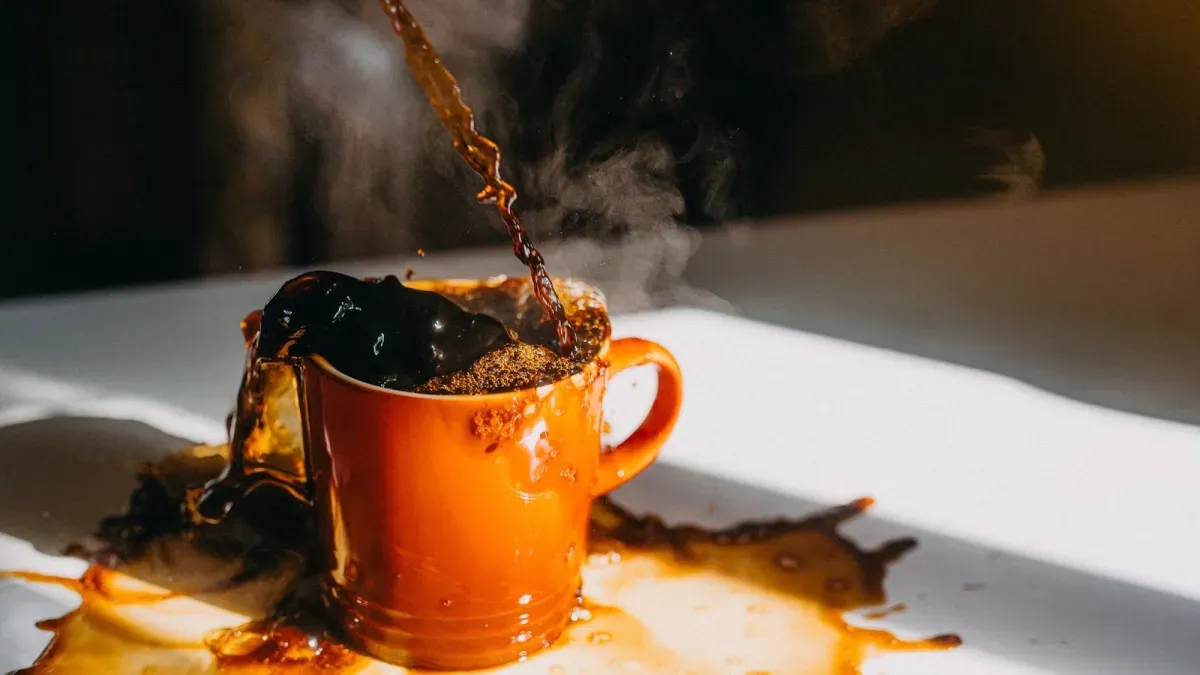
Why coffee tastes bitter, according to molecular biology - Popular Science
There are 26 different bitter receptors in the human body. Regular coffee drinkers know there is a big difference between a brew’s aroma and its taste. A cup may smell warm and full-bodied only to leave you with a lingering bitterness behind the first sip. Researchers have long known a coffee’s potentially acrid flavor profile is dictated at a molecular level thanks to your tongue’s taste receptors, but how that occurs has remained a mystery. Now, a team at the University of North Carolina at Chapel Hill has the answer thanks to precise imaging technology—and their findings may have much wider ramifications beyond the coffee pot.
What if your mood decided how your wine tastes? Science reveals the surprising truth - Futura, le média qui explore le monde

Single X-ray pulse reveals plasma nanostructures across scales with one camera - Phys.org
Schematic of an observational experiment using an X-ray free-electron laser to study the plasma formation dynamics of a microscale rod assembly target under a high-intensity femtosecond laser. Credit: National Institute for Fusion Science Understanding instabilities and turbulence in plasmas is one of the key challenges across a wide range of plasma research fields, including nuclear fusion, astrophysics and laser-plasma physics. In plasmas, slight disturbances can grow due to instabilities, and energy is transferred between structures of various sizes due to turbulence. These phenomena give rise to structures ranging from very small to large, which significantly influence the overall motion and energy flow of the plasma.
0 comments
No comments yet. Be the first to share your thoughts!