'They Could literally Suck The Air Out Of You' - These Two V8 Engines Are Freaks Of Nature
This story deserves to be shared
Send it to someone who'd care, or post it on your networks.
Justin Pritchard is a seasoned Sudbury, Ontario-based automotive journalist, producer, and technical writer. With a passion for cars and a talent for storytelling, he's established himself as a prominent figure in the Canadian automotive scene. His work, which encompasses automotive reviews, insightful analyses, and stunning photography, is featured across multiple Canadian television programs, print publications, and online platforms. Justin's dedication to his craft has earned him numerous awards and accolades, solidifying his reputation as a trusted voice in the automotive industry.
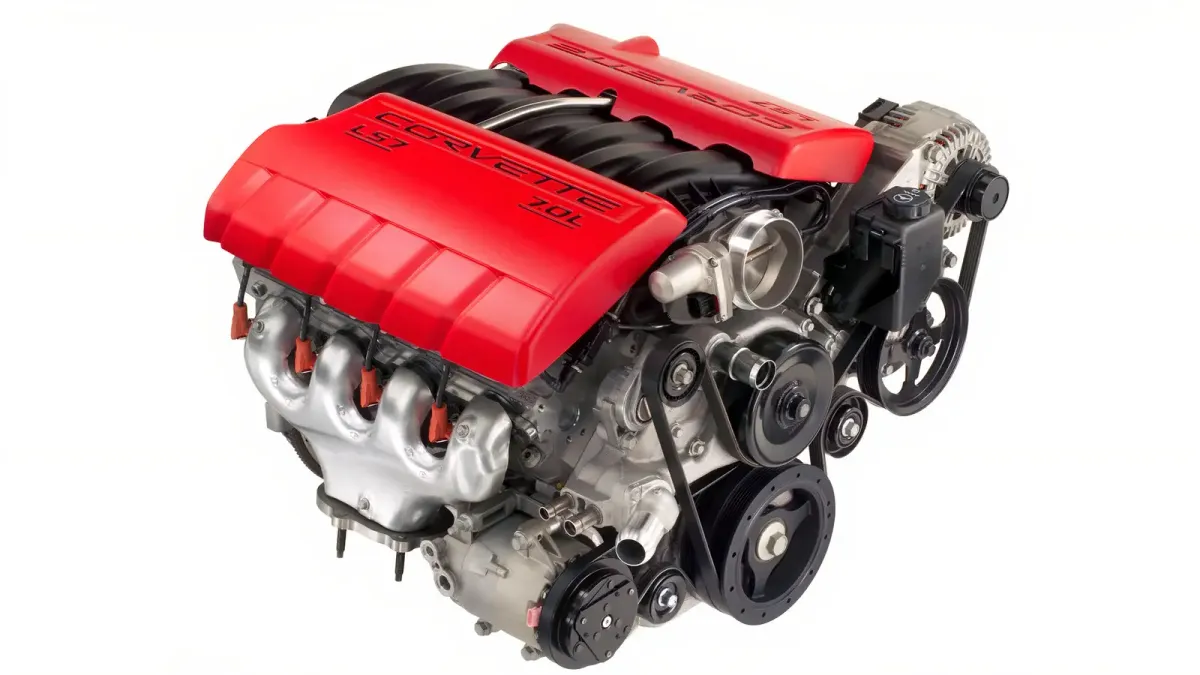
Some performance engines, like the 8.0-plus liter V10 in the Dodge Viper, are known for their displacement. Others, like the 3.5-liter V8 in the F355 F1, are known for their high revs. Usually, this is a one-or-the-other affair: performance engines tend to deliver big on either displacement or revs, but usually not both. The ones that do are considered particularly exotic, because delivering both high revs and high displacement requires overcoming some daunting engineering challenges.
This article is an excerpt. To read the full content, visit the original source. CarBuzz
Related articles
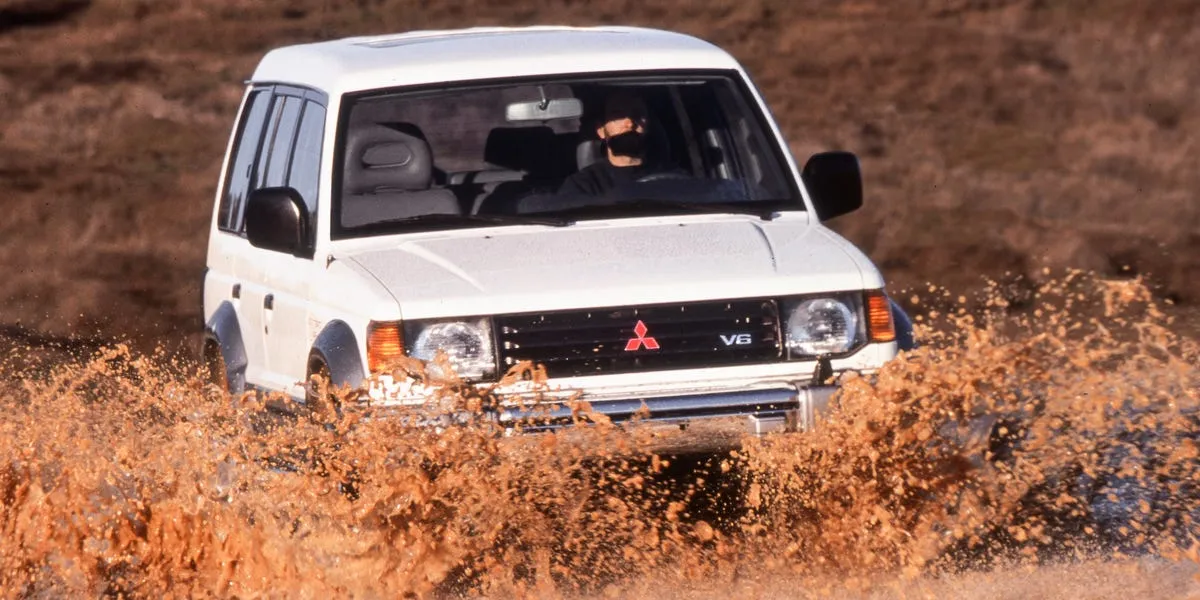
Tested: 1995 Mitsubishi Montero SR Is One for Gadget Freaks
From the March 1995 issue of Car and Driver. Let’s be honest here: the reason sport-utility vehicles are selling faster than earplugs at a Michael Bolton concert is not because global temperatures are down and average snowfall is up and Americans need four-wheel drive in order to reach the video store for those adult-education tapes hidden behind that veil of beads. It’s because, in contrast to other roomy conveyances like station wagons and minivans, every SUV projects an image. The Hummer wears a Gold’s Gym body. The Grand Cherokee is as outdoorchic as an Orvis flyrod. And the Mitsubishi Montero SR, the object of this review, packs all the techno-wizardry of a Sharper Image catalog. Aaron Kiley|Car and DriverThose who enjoy Pentiums and DirecTV and EOS cameras will feel immediately at home in the SR. The instrument cluster is straight off the set of The Hunt for Red October, with gauges for everything from four-wheel-drive mode to oil pressure to volts to a useful new electronic compass and exterior-temperature display that replaces the frivolous “lean-angle” inclinometer. Why, the SR has more buttons than a Marine Corps parade.
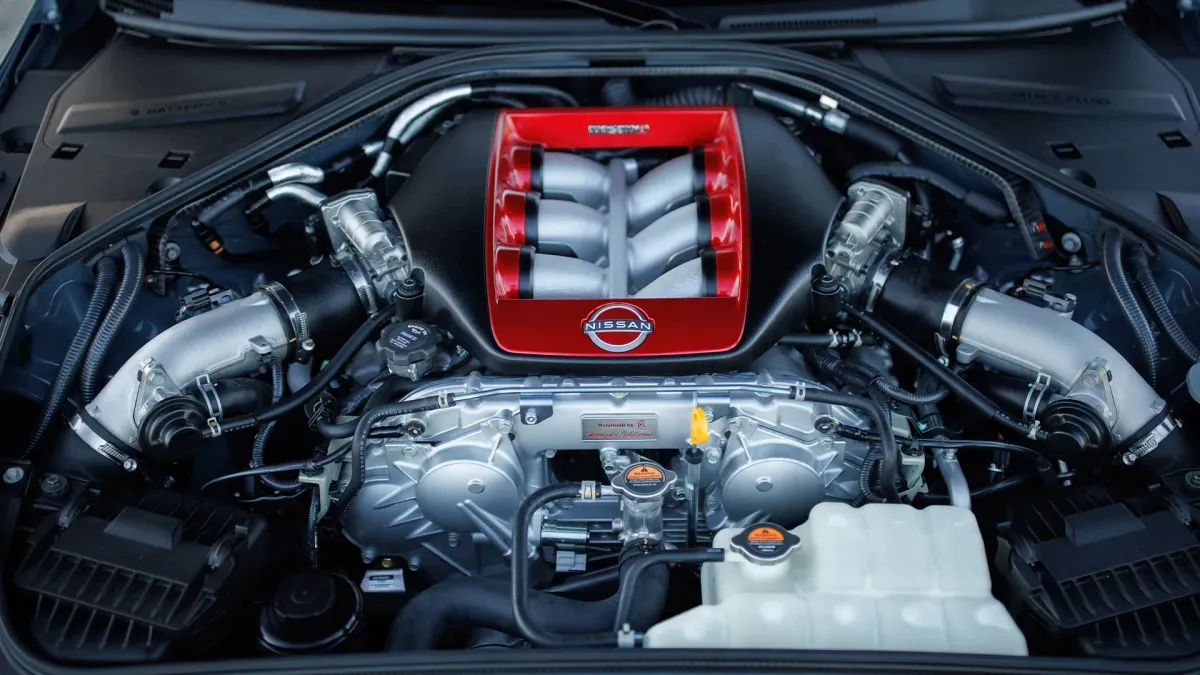
This Is Why Everyone Hates V6 Engines
If you’re a child of the 1990s, a V6 is probably part of the soundtrack to your youth, just like the Backstreet Boys. These engines were once the default choice when automakers needed a little extra power in sedans, SUVs, minivans—you name it. There have been many notable V6-powered performance cars as well, from the Buick GNX to the R35 Nissan GT-R. But V6s just don’t inspire the same passion as other engine formats. V6-powered cars have their fans, but the engine itself really doesn’t. The Drive explored why that is in a new YouTube video, and it starts with engineering compromises. Companies started experimenting with V6 engines before World War II, and Lancia brought the V6 to mass production in the Aurelia in 1950, but the story of the V6 as a truly mainstream engine begins in 1962 with General Motors. Looking to economize, the automaker’s Buick division lopped two cylinders off one of its smaller V8s to create the “Fireball” V6. It was all about saving engineering costs since, aside from the different number of cylinders, everything else was the same.

You Can Run Ford's EcoBoost Engines On Regular, But There's A Benefit To Premium
Higher octane ratings will cost you more but it could be worth the price Regular and premium gasoline may look and smell the same, but they differ in many key ways. In the U. S., most regular pump gas has an octane rating of 87, while premium gas generally ranges from 91 to 94 octane. The increased octane rating means premium gas is better for performance and is often recommended for use in supercharged, turbocharged, and high-compression engines. And in the Ford world, regular and premium gas can mean the difference between an engine that's constrained and one that produces maximum power.
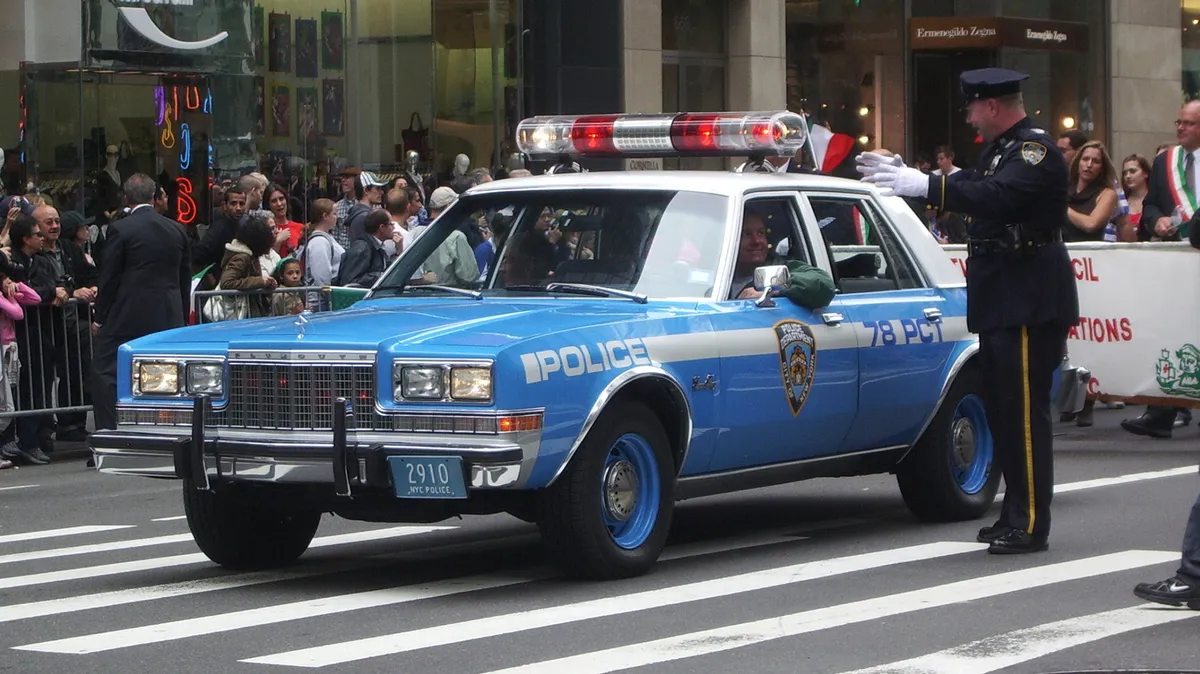
Most Police Cars Don't Come With V8 Engines Anymore
The V8 cruiser in your rearview mirror is becoming quite a rare sight these days. Police departments across America have largely moved on from big, thirsty eight-cylinders, and the reasons come down to three things: the cars are gone, the fuel bills make little sense, and the smaller engines that replaced them are actually really good. Start with the cars. The Ford Crown Victoria Police Interceptor, the 4.6-liter V8 sedan that defined American policing for decades, went out of production after 2011. Production of its Taurus-based successor, the Police Interceptor Sedan, ended in 2019. Dodge's Charger Pursuit, the last big rear-drive V8 sedan in patrol work, went away along with the gas-powered Charger in 2023.
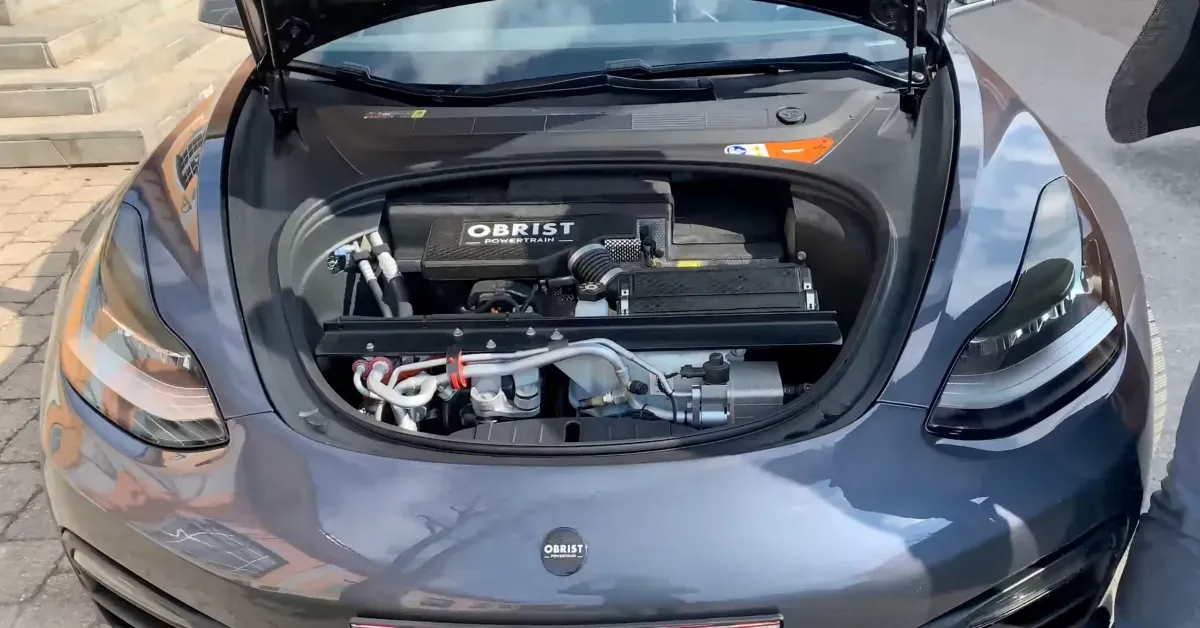
Company that put gas engines in Teslas goes bankrupt owing $37 million
Obrist, the Austrian engineering firm famous for ripping battery cells out of a Tesla Model 3 and bolting a gas engine into the frunk, is bankrupt. Three companies in the Obrist Group are insolvent with combined debts of about €31.8 million, or roughly $37 million. The company spent over a decade pitching its “HyperHybrid” range extender as the smarter alternative to battery-electric cars. It never got a single production vehicle out of it.

‘They pulled a guy’s face off. It’s my favourite bit!’ Linda Cardellini on Freaks and Geeks, Mad Men and slasher horror Crystal Lake
‘The first time I had the tooth in my hand,” says Linda Cardellini, “I thought, ‘Oh my God, this is what I’m doing.’” The star of Freaks and Geeks, ER, Dead to Me, Mad Men and DTF St Louis (for which she recently won an Emmy) is talking about her pivot towards full-blown horror. In Crystal Lake, the prequel to the Friday the 13th movies, Cardellini plays Pamela Voorhees, the original slasher of the 1980 film. The tooth, by the way, is human and gets embedded in Pam’s knuckle – until she yanks it out with a gruesome, revolting slurping sound. Casual filmgoers may associate Friday the 13th with Jason, the hockey-mask-wearing serial killer. But aficionados will know that Pam, Jason’s mother, is the villain of the first movie. “He didn’t even have the mask until the third movie,” says Cardellini, who has clearly done her homework. “Pam is the original killer, in vengeance of his death.” (There is some massaging of previous storylines in Crystal Lake, such as moving Jason’s drowning from the 1950s to the early 70s, but since the franchise is flexible enough to have sent Jason into space at one point, a bit of timeline tweaking feels fair game.)‘I like to change it up’ … Linda Cardellini
0 comments
No comments yet. Be the first to share your thoughts!