The Pokémon universe goes hard on ecology and climate science - Scientific American
This story deserves to be shared
Send it to someone who'd care, or post it on your networks.
This article is an excerpt. To read the full content, visit the original source. Scientific American
Related articles
How Nature Lovers Can Aid Ecology with an Assist From AI | Newswise - Newswise
Newswise — Millions of people worldwide, likely without realizing it, are capturing rare and valuable data that can help researchers assess trends in ecosystem health. Such data, however, are hidden in an ocean of comments on free online platforms like eBird and iNaturalist used by birdwatchers and other nature enthusiasts. A new study led by the University of Michigan has shown that artificial intelligence can help researchers identify comments with pertinent data, then extract and categorize the information to build robust datasets. In this proof-of-concept study, the team found evidence of non-native plant species creeping into ecosystems along America's West Coast that might have been otherwise missed. "The potential here is really big," said Hengxing Zou, the lead author of the study who performed the work as a postdoctoral scholar in the U-M Institute for Global Change Biology. "The approach is really versatile and we have a lot of data out there basically waiting to be mined. "The work was supported in part by federal funding from the U. S. National Science Foundation and the U. S.
How nature lovers can aid ecology with an assist from AI (IMAGE) - EurekAlert!
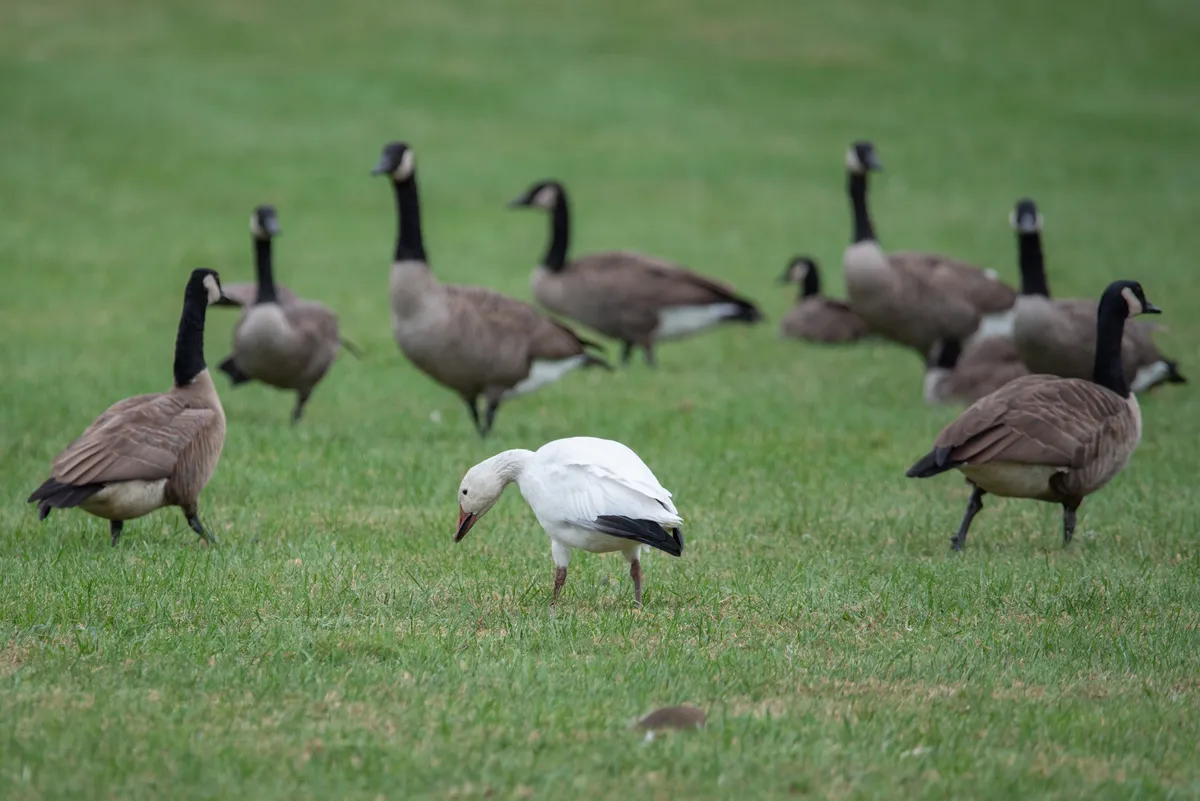
A single snow goose (Anser caerulescens) feeds with a group of Canada geese (Branta canadensis). This mixed-flock represents a type of interaction that is mutually beneficial and often recorded in comments of participatory science platforms like eBird. Credit must be given to Jing-Yi Lu, who retains copyright of this image. Jing-Yi Lu has granted permission to any media outlet covering the Zou et al. 2026 study permission to reproduce this photograph in connection with that story, including in print and online, at no charge.
Tiny worm brains reveal surprising sex differences beyond neural wiring - Interesting Engineering
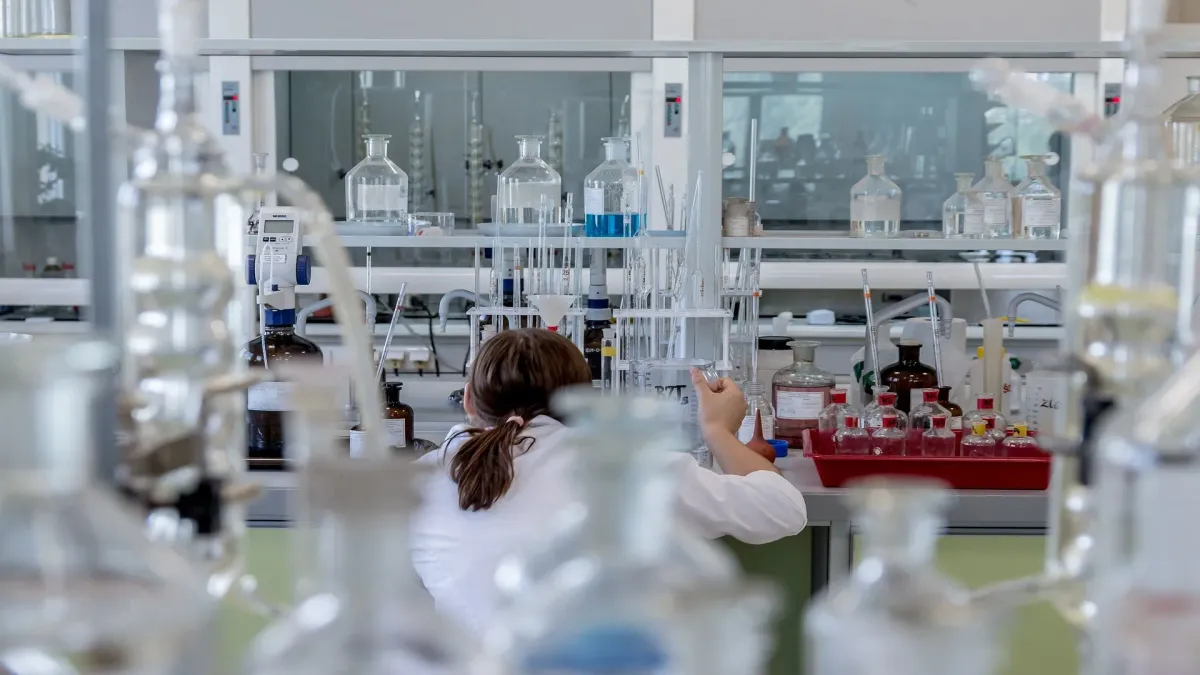
With 302 neurons, 200 of them in their heads, hermaphrodite female roundworms reveal surprising sex-specific differences in the nervous system and how these differences influence behavior, reproduction, and aging. Researchers at Northeastern University compared brain activity in male and hermaphroditic Caenorhabditis elegans, a microscopic worm widely used in biological research to understand how sex wires males and female nervous systems differently.
New dinosaur species identified from fossil stashed in drawer for a century - EarthSky
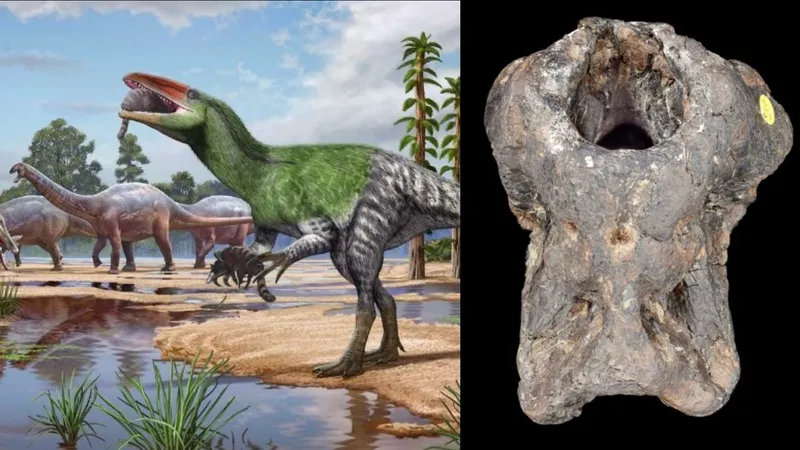
Artist’s concept of the new dinosaur species Invictibellatrix amberina, along with the fossil from which it was identified. The fossil had been sitting in a drawer for 100 years, until researchers pulled it out and became curious. Image via Sergey Krasovskiy and Pedro Salas/ Natural History Museum London. You deserve a daily dose of good news. For the latest in science and the night sky, subscribe to EarthSky’s free daily newsletter.
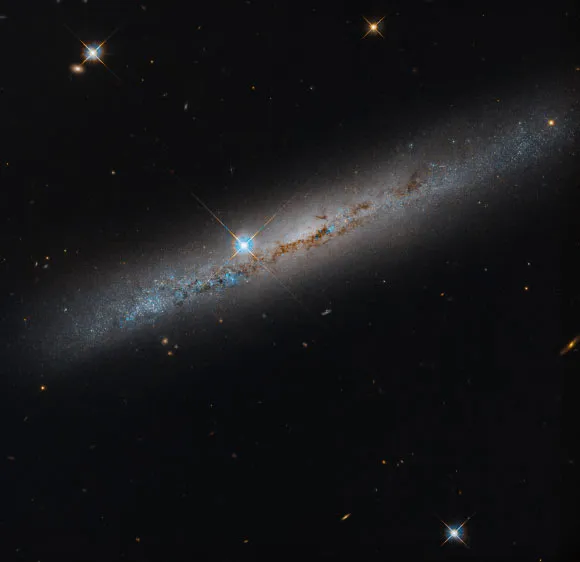
Hubble Space Telescope Spots Dusty Spiral Galaxy: NGC 1827 - Sci.News
Astronomers using the NASA/ESA Hubble Space Telescope have captured a new view of NGC 1827, an intermediate spiral galaxy seen edge-on in the constellation Columba. This Hubble image shows the edge-on, intermediate spiral galaxy NGC 1827. Image credit: NASA / ESA / Michael Jones, California Institute of Technology / Gladys Kober, NASA / Catholic University of America.
0 comments
No comments yet. Be the first to share your thoughts!