Ecology’s war on ‘invasive’ species isn’t science - Aeon
This story deserves to be shared
Send it to someone who'd care, or post it on your networks.
This article is an excerpt. To read the full content, visit the original source. Aeon
Related articles
How Nature Lovers Can Aid Ecology with an Assist From AI | Newswise - Newswise
Newswise — Millions of people worldwide, likely without realizing it, are capturing rare and valuable data that can help researchers assess trends in ecosystem health. Such data, however, are hidden in an ocean of comments on free online platforms like eBird and iNaturalist used by birdwatchers and other nature enthusiasts. A new study led by the University of Michigan has shown that artificial intelligence can help researchers identify comments with pertinent data, then extract and categorize the information to build robust datasets. In this proof-of-concept study, the team found evidence of non-native plant species creeping into ecosystems along America's West Coast that might have been otherwise missed. "The potential here is really big," said Hengxing Zou, the lead author of the study who performed the work as a postdoctoral scholar in the U-M Institute for Global Change Biology. "The approach is really versatile and we have a lot of data out there basically waiting to be mined. "The work was supported in part by federal funding from the U. S. National Science Foundation and the U. S.
How nature lovers can aid ecology with an assist from AI (IMAGE) - EurekAlert!
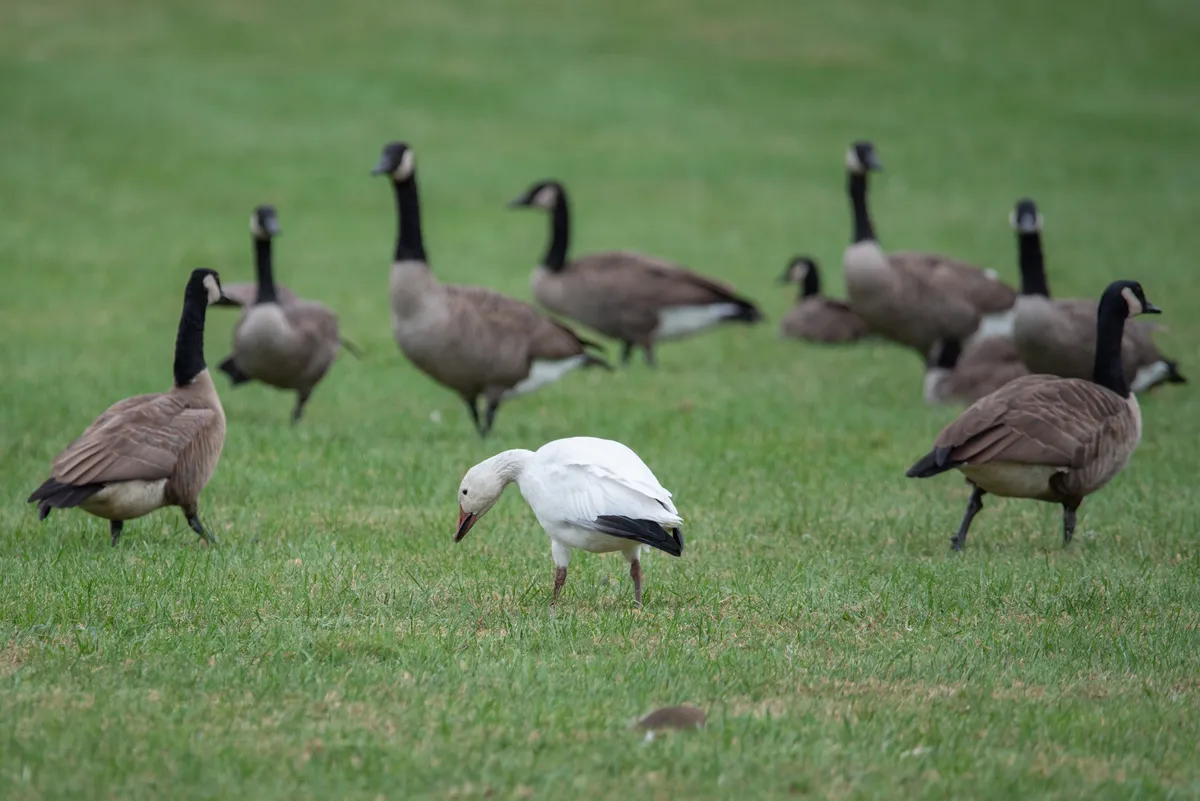
A single snow goose (Anser caerulescens) feeds with a group of Canada geese (Branta canadensis). This mixed-flock represents a type of interaction that is mutually beneficial and often recorded in comments of participatory science platforms like eBird. Credit must be given to Jing-Yi Lu, who retains copyright of this image. Jing-Yi Lu has granted permission to any media outlet covering the Zou et al. 2026 study permission to reproduce this photograph in connection with that story, including in print and online, at no charge.
Ancient Nubian temple faience workshop reveals links between craft production and royal power - Phys.org
Archaeologists have discovered a faience workshop at a major temple complex in the ancient Nubian capital of Napata, showing how the rulers of ancient Kush used specialized craft production to reinforce royal power.
The American Mountains With The Darkest Night Skies - WorldAtlas
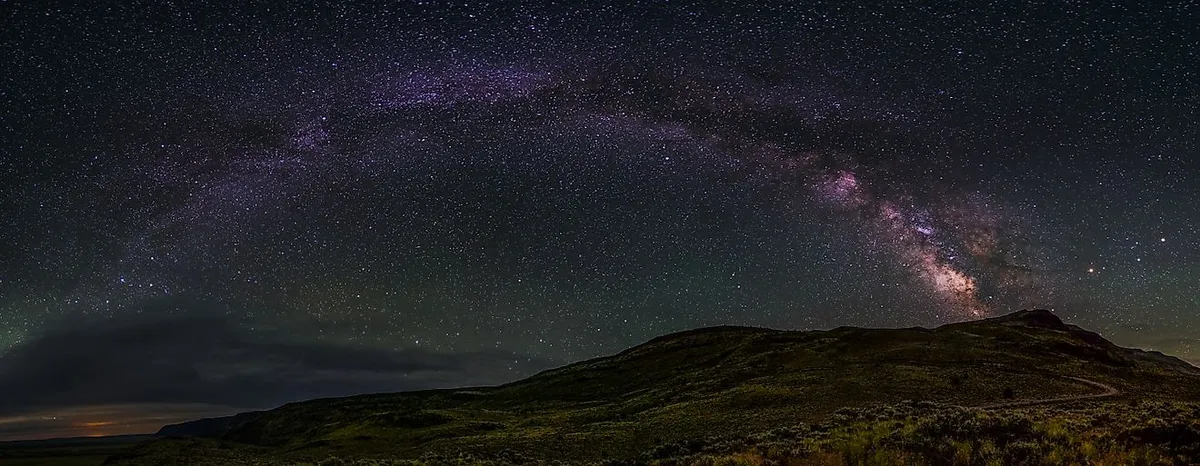
More than 99% of the US population lives under light-polluted skies, according to a 2016 study published in Science Advances. With streetlights, brightly lit parking lots, arenas, and passing headlights brightening the night, it can be easy to forget how dark the sky actually is and how many stars appear when you get away from populated areas. Seeing that many stars for the first time can make you pause and remember where you truly are. You are on a rock spinning through space, surrounded by a universe filled with stars, planets, and galaxies larger than anything you can imagine. A remote mountain excursion can combine a dark sky encounter with a day of hiking and sightseeing. After sunset, bright stars emerge above the slopes and ridgelines. These American mountains lie within officially designated dark sky locations that protect natural darkness and the views of the universe it reveals. In northeastern New Mexico, Capulin Volcano sits among volcanic cones, mesas, and buttes in one of the darker areas of the lower 48 states. These landforms help shield the night sky from distant lights, while the rugged terrain has discouraged development in the area.
What’s Happening in Space Policy October 18-24, 2026 - Space Policy Online
Here is SpacePolicyOnline.com’s list of space policy events for the week of October 18-24, 2026 and any insight we can offer about them. The House and Senate are in recess, except for pro forma sessions, until after the midterm elections. This week has two especially interesting events — the launch of JAXA’s Martian Moons eXploration (MMX) mission tomorrow (Monday) afternoon EDT, and a NASA update on the Artemis program on Friday — plus many others. We’re also keeping track of the discussions on social media about the very close approach of Russia’s Kosmos 2612 to the U. S.-registered ICEYE X36 Synthetic Aperture Radar (SAR) satellite.
0 comments
No comments yet. Be the first to share your thoughts!