That burning smell: What's normal when first heat turns on?
This story deserves to be shared
Send it to someone who'd care, or post it on your networks.
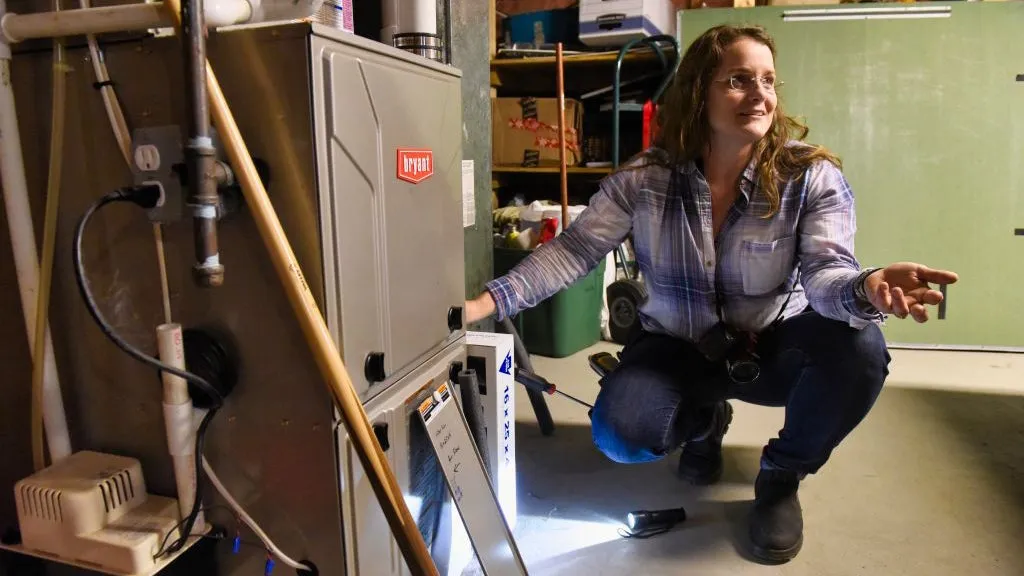
Home inspector Jolene Lomnes, owner of Informative Home Inspections, checks out the furnace at a home in the town of Ballston, New York(Paul Buckowski/Albany Times Union via Getty Images)Summer has finally gone away, but it now smells like something is going to burn to a crisp in your home after you turn on the heat for the first time. What gives? The good news: You've already roasted enough under heat domes this summer that your indoor furnace probably isn't going to finish the job. But those dust bunnies that have been loafing around on your heater all summer, yeah... they're toast. That burning smell is completely normal and you and your home are safe. The dust bunnies are burning! What can I do? The short answer: Just wait. The smell that populates your home will generally only last about an hour. Get More of Our News on GoogleSet The Weather Company as a 'Preferred Source' to get quicker access to the news you value. If this smell is too overwhelming, just leave the house for a little while and come back. The smell should pass pretty quickly. To reduce the smell, swap in a fresh air filter before firing up the furnace for the first time.
This article is an excerpt. To read the full content, visit the original source. The Weather Channel
Related articles
Lake turnover: Why lakes smell like rotten eggs in fall
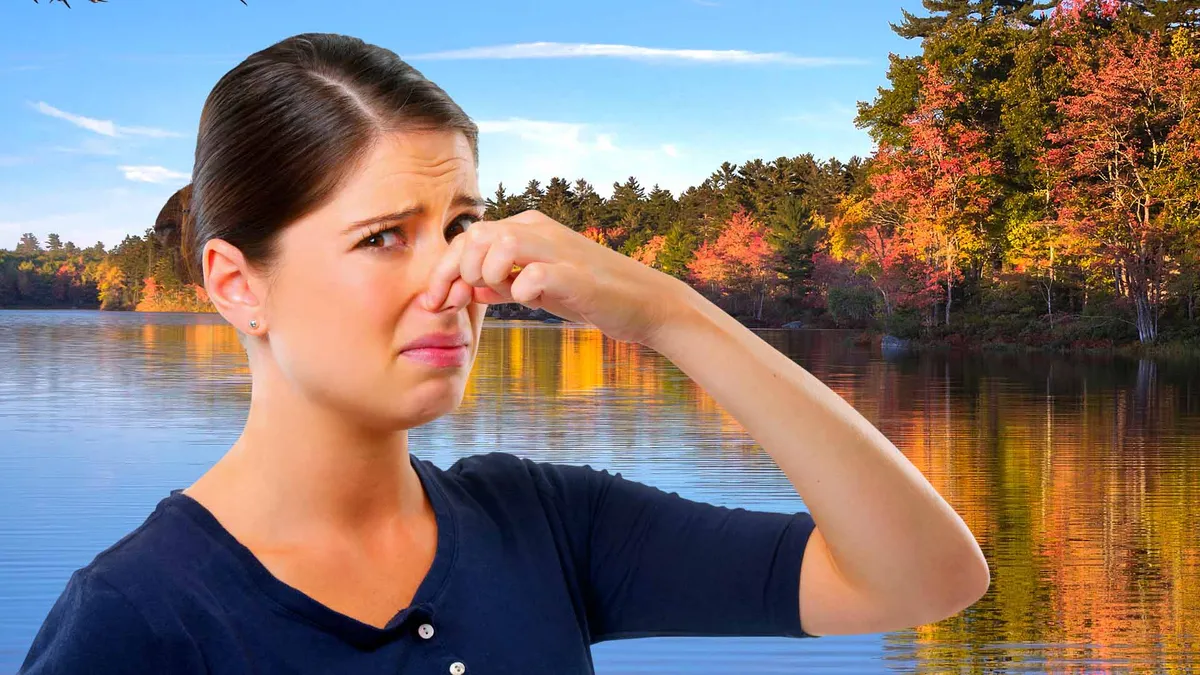
Here’s why some lakes smell like rotten eggs in fallAs the brisk temperatures of fall start to settle in, you might notice your favorite fishing spot or neighborhood lake smells a little funky, almost like rotten eggs. It's usually not pollution; it's fall turnover — a natural, seasonal mixing of the lake that brings oxygen-deprived bottom water to the surface. This week's cold front could set it off where you live. How a lake 'flips'While you're enjoying the lake all summer, warm water stays on top, while cold, dense water stays on the bottom. They're separated by something called the thermocline, which prevents those warm and cold layers from mixing. Deep underwater where the sunshine doesn't reach, bacteria breaks down dead plants and other organic materials, and because there isn't much oxygen, hydrogen sulfide is released, which is responsible for that awful smell.(MORE: What the Super El Niño means for your fall and winter)Get More of Our News on GoogleSet The Weather Company as a 'Preferred Source' to get quicker access to the news you value.

Why we love the smell of rain
There's nothing like the smell associated with rain on a crisp day. If you enjoy the smell and wonder why it is so appealing, there is a good reason for it. But the aroma isn't from the rain itself, technically. It's an odour that results primarily from a chemical called geosmin, according to Sahil Bhandari, researcher and consultant, formerly associated with a community science project called Smell Vancouver. "When people say, 'the smell of rain,' people usually mean after [the] rain. What that means is the raindrops fall, [are] falling or have fallen on the soil," said Bhandari, in a 2023 interview with The Weather Network. (Getty Images-691761646)Content continues belowRELATED: We know what causes the scent of spring, but what's it actually for? Smell can arise even before it rains, can generate other odoursGeosmin is a very specific molecule, a compound that's released by micro-organisms in the soil, mostly from bacteria, he noted. In some instances, people can pick up on the smell even before it starts to rain. "That's because there might be some lightning or thunderstorms in that area.
The 'smell of snow' isn't really a smell at all; it's this
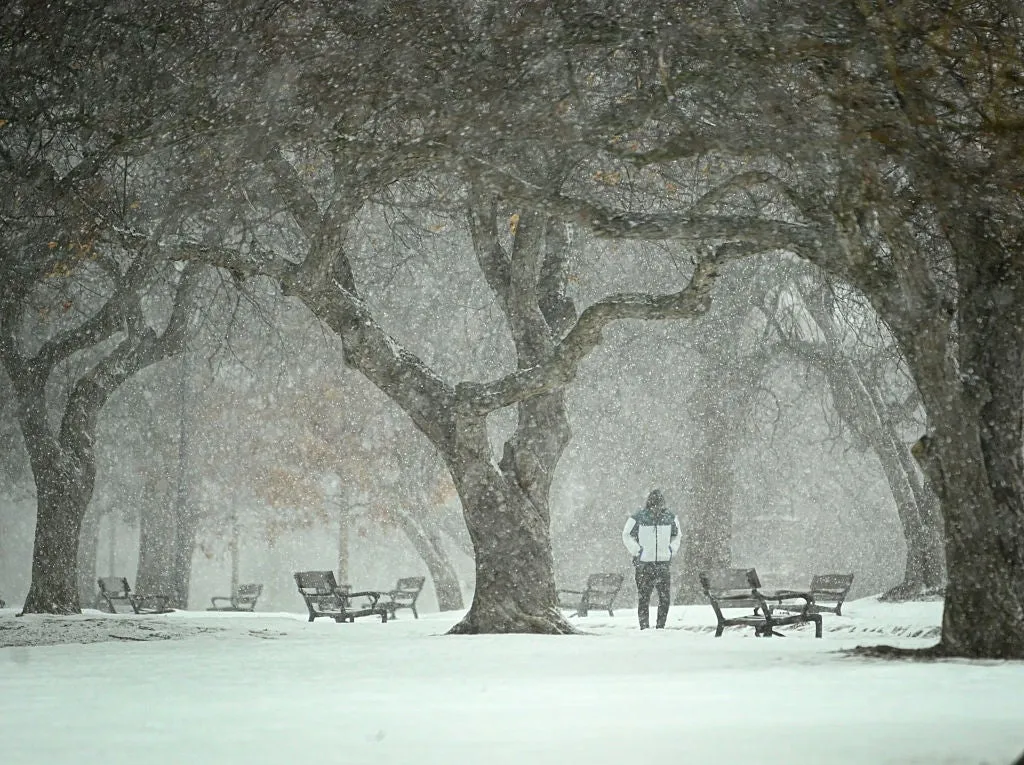
The ‘smell of snow’ is actually a trick of your noseIf you love freshly fallen snow like me, you definitely know that moment an hour or two before the first flakes fall, when we say we can smell it coming. It’s a clean, metallic smell in the air that promises those beautiful flakes. But the truth is that you aren’t smelling anything at all. Smell of snow is a mental thingWhat you're actually sensing is your trigeminal nerve. It’s the same facial nerve that causes menthol to feel cold or hot pepper to feel like a burn in your nose and mouth.(MORE: Why noises sound louder during the winter)When cold, dry air rushes in ahead of a winter storm, along with the pressure shift that comes with it, your trigeminal nerve picks up on that cold-and-pressure combination and sends that “it’s about to snow” signal to your brain, even though no odor molecule is actually involved. And because you've felt that specific sensation right before snow so many times, your brain has associated this feeling with snow coming. Get More of Our News on GoogleSet The Weather Company as a 'Preferred Source' to get quicker access to the news you value.
Why does it smell so good after it rains? Meet petrichor
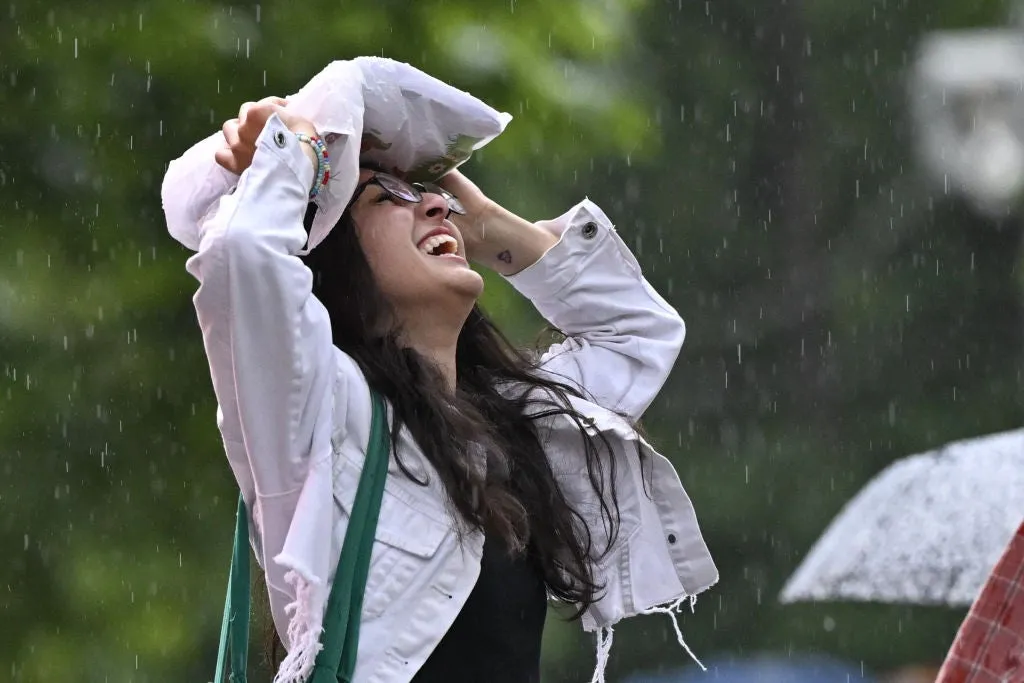
The smell of rain has a name; you're actually smelling three thingsThere is a very particular smell that happens when it rains, and it has a name: petrichor. It actually isn’t just one smell. There are three, and they come from totally different places. What are the three smells? The term petrichor was coined by Australian scientists in 1964 to describe the earthy and recognizable smell linked to rain. Let’s break down the three smells you are experiencing: Ozone: This almost metallic smell occurs when lightning strikes split oxygen and nitrogen molecules. These recombine into nitric oxide and ozone. The ozone molecules are brought down to the surface by downdrafts from powerful storms. Multiple lightning strikes are seen during a summer nighttime thunderstorm near the city of Thessaloniki, as seen from Kalochori Lagoon in Delta National Park in Northern Greece. Lightning strikes create ozone molecules which are then brought to the surface via downbursts. Ozone has an almost metallic smell to it and is one of the components of petrichor. (Getty Images)Geosmin: The earthy note comes from bacteria in the soil. They create compounds that our noses detect.
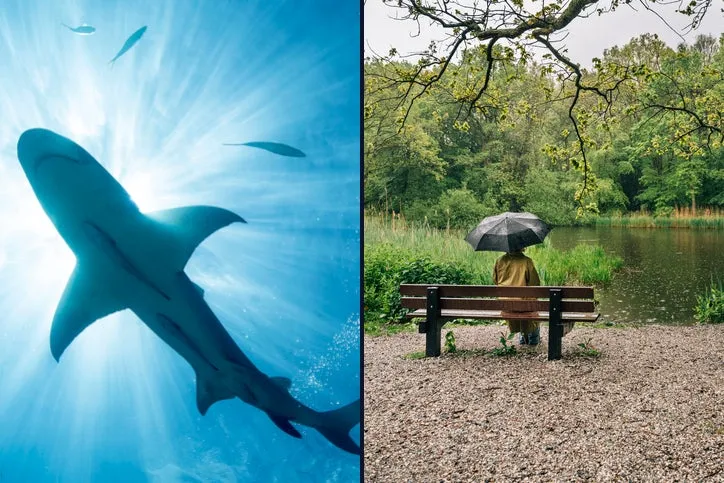
Humans can smell rain better than sharks can smell blood
The nose knows: Why humans smell rain better than sharks smell bloodIt’s a common thing you might hear about sharks. “They can smell a single drop of blood from over a mile away!” But what if I told you that not only is that false, but humans are actually better at smelling something surprising: rain. Sharks do have an amazing sense of smell and can typically smell blood in water at concentrations as low as 1 part per million, depending on species and chemical composition of blood.(MORE: Weather.com's Week-Long Exploration Of Sharks, From Their Forecasting Capabilities To Their Public Perception)That’s a ratio of 1 part blood to 1 million parts water, and it’s about equivalent to a single drop of blood in a standard backyard swimming pool. This alone disproves the “one drop a mile away” myth, because the blood becomes more diluted as it gets farther from the source and ocean currents may not carry the molecules toward a shark. But here’s where things get interesting. Get More of Our News on GoogleSet The Weather Company as a 'Preferred Source' to get quicker access to the news you value.
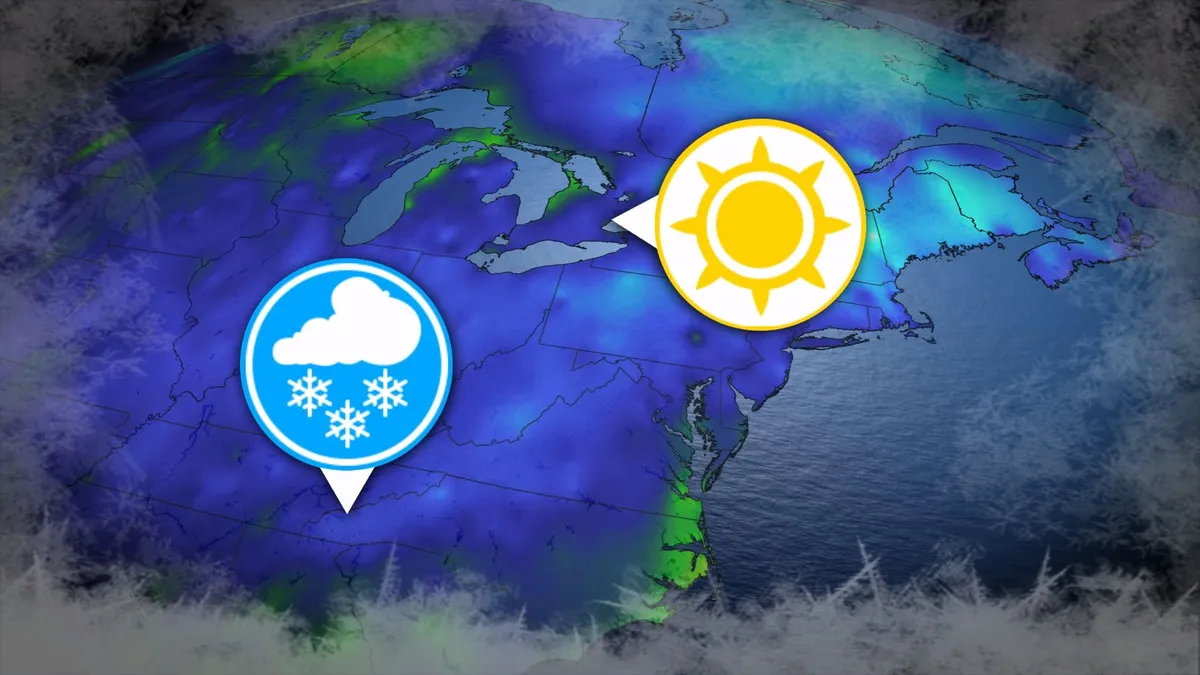
Where’s the frost? Southern U.S. hits freezing before Toronto, Montreal
Toronto and Montreal have remained above the freezing mark every day for almost six months. While frosts and even some snowflakes have intruded across parts of Ontario and Quebec in recent weeks, the two cities have yet to reach that magic number. What’s even more remarkable is that a handful of communities across the southern United States have already dipped to the freezing point--and some have even seen accumulating snowfall. DON’T MISS: Official: Canada records first -30°C reading of the seasonThe last time we saw a freezing temperature in either Toronto or Montreal was the second-to-last week of April. Toronto hit -1.3°C early on April 20, while Montreal dipped to -2.0°C the following morning. Our average first frost in both cities occurs right around the middle of October. But warmer-than-normal years can see this milestone slide several weeks past due. Montreal once had to wait 207 consecutive days for its first frost, with the city’s first subfreezing temperature in 2017 waiting until Nov. 7. The latest Toronto’s had to wait to hit the zero-degree mark was Nov. 13, 2022.
0 comments
No comments yet. Be the first to share your thoughts!