Lake turnover: Why lakes smell like rotten eggs in fall
This story deserves to be shared
Send it to someone who'd care, or post it on your networks.
Here’s why some lakes smell like rotten eggs in fallAs the brisk temperatures of fall start to settle in, you might notice your favorite fishing spot or neighborhood lake smells a little funky, almost like rotten eggs. It's usually not pollution; it's fall turnover — a natural, seasonal mixing of the lake that brings oxygen-deprived bottom water to the surface. This week's cold front could set it off where you live. How a lake 'flips'While you're enjoying the lake all summer, warm water stays on top, while cold, dense water stays on the bottom. They're separated by something called the thermocline, which prevents those warm and cold layers from mixing. Deep underwater where the sunshine doesn't reach, bacteria breaks down dead plants and other organic materials, and because there isn't much oxygen, hydrogen sulfide is released, which is responsible for that awful smell.(MORE: What the Super El Niño means for your fall and winter)Get More of Our News on GoogleSet The Weather Company as a 'Preferred Source' to get quicker access to the news you value.
This article is an excerpt. To read the full content, visit the original source. The Weather Channel
Related articles

Why we love the smell of rain
There's nothing like the smell associated with rain on a crisp day. If you enjoy the smell and wonder why it is so appealing, there is a good reason for it. But the aroma isn't from the rain itself, technically. It's an odour that results primarily from a chemical called geosmin, according to Sahil Bhandari, researcher and consultant, formerly associated with a community science project called Smell Vancouver. "When people say, 'the smell of rain,' people usually mean after [the] rain. What that means is the raindrops fall, [are] falling or have fallen on the soil," said Bhandari, in a 2023 interview with The Weather Network. (Getty Images-691761646)Content continues belowRELATED: We know what causes the scent of spring, but what's it actually for? Smell can arise even before it rains, can generate other odoursGeosmin is a very specific molecule, a compound that's released by micro-organisms in the soil, mostly from bacteria, he noted. In some instances, people can pick up on the smell even before it starts to rain. "That's because there might be some lightning or thunderstorms in that area.

The 'smell of snow' isn't really a smell at all; it's this
The ‘smell of snow’ is actually a trick of your noseIf you love freshly fallen snow like me, you definitely know that moment an hour or two before the first flakes fall, when we say we can smell it coming. It’s a clean, metallic smell in the air that promises those beautiful flakes. But the truth is that you aren’t smelling anything at all. Smell of snow is a mental thingWhat you're actually sensing is your trigeminal nerve. It’s the same facial nerve that causes menthol to feel cold or hot pepper to feel like a burn in your nose and mouth.(MORE: Why noises sound louder during the winter)When cold, dry air rushes in ahead of a winter storm, along with the pressure shift that comes with it, your trigeminal nerve picks up on that cold-and-pressure combination and sends that “it’s about to snow” signal to your brain, even though no odor molecule is actually involved. And because you've felt that specific sensation right before snow so many times, your brain has associated this feeling with snow coming. Get More of Our News on GoogleSet The Weather Company as a 'Preferred Source' to get quicker access to the news you value.
Nor' easter to bring coastal flooding, winds to East Coast
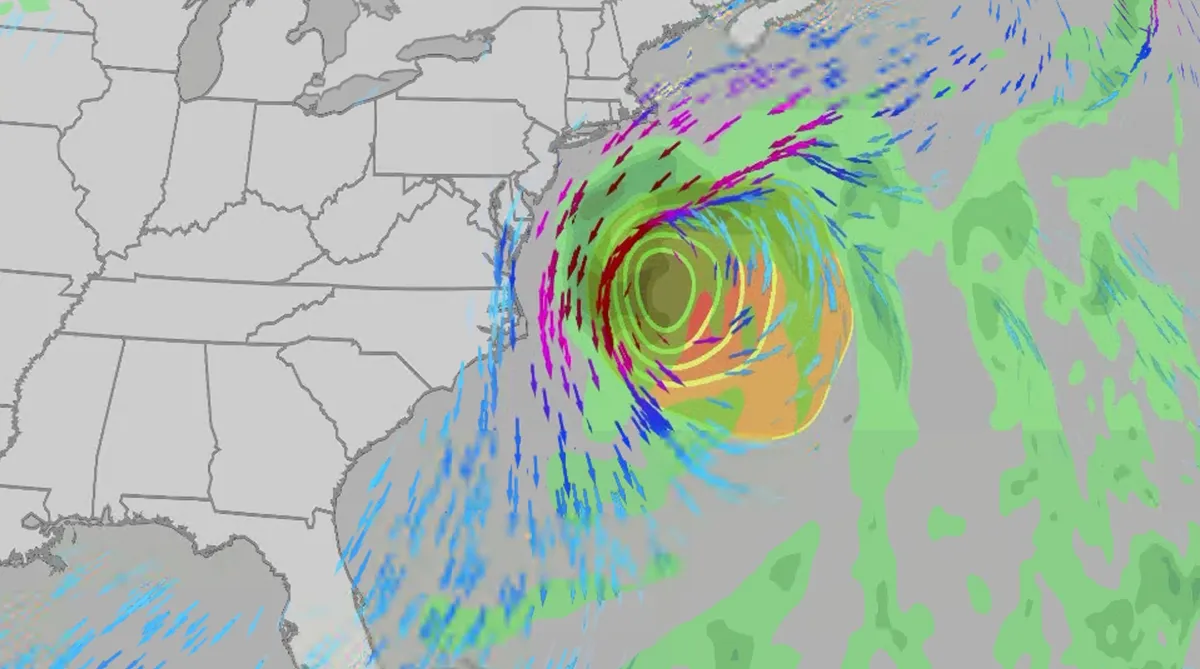
An October nor'easter is developing in the Atlantic, where it will bring high surf, rip currents, coastal flooding, winds and rain to parts of the East Coast for several days this week. The National Hurricane Center has it highlighted as an area to watch this week for potential subtropical development. However, regardless of development, this system will bring dangerous conditions to the East Coast this week. Fortunately, this system doesn't look to be as strong as the one in September. But the bad news? It could linger for much of the week, so impacts could have a longer duration than you would think. There are currently coastal flood alerts across parts of coastal North Carolina and Virginia, where anywhere from 1 to 4 feet of inundation is possible. Key takeawaysWe do not expect this storm to be as strong as the late September nor'easter. The area most likely impacted the longest appears to be from the Delmarva Peninsula to eastern North Carolina, with more models pointing to primarily eastern North Carolina.

Coastal homes burn as hot winds fuel California wildfires
Thousands evacuate Southern California as wind-fueled fires burn homesFire crews in Southern California gained ground Saturday on a wind-driven blaze that charred hills and damaged or destroyed at least six large coastal homes, allowing evacuation orders to be lifted and thousands of people to return home. The fast-moving Norte Fire sparked the previous day in San Clemente amid hot, strong Santa Ana winds that drove it into San Juan Capistrano, prompting the evacuation of about 16,000 residents. Firefighters work to douse a house fire during the Norte Fire on Friday, Oct. 16, 2026, in San Juan Capistrano, Calif.(AP Photo/Jae C. Hong)Hundreds of firefighters deployed to combat the blaze in the hills of Orange County. At one home engulfed in smoke and fire, photos showed them using hoses to try to douse the flames. Most of the evacuations were lifted Saturday evening, except for one street in San Clemente. The Norte Fire was one of several in the region hit by the Santa Anas, which blow from the interior and toward the coast.

Meet the marine technician documenting Antarctica's beauty while protecting its future
Marine technician crosses world's roughest sea to document AntarcticaFor Andrew Naslund, Antarctica is his “favorite place in the world.”He’s a marine technician for Scripps Institution of Oceanography. And while not a professional photographer, he’s capturing Antarctica’s beauty along his research journey. Andrew Naslund, Scripps Institution of Oceanography marine technician.(Andrew Naslund)The researchNaslund spends months aboard a research vessel, the R/V Roger Revelle (AGOR 24), which he describes as “basically a floating laboratory.”“The purpose of this ship is to provide a platform for scientists to reach some of the most remote reaches of our oceans,” Naslund said. A big part of his role is assisting the scientists to safely deploy and recover their instrumentation over the side of the ship. He also keeps track of incoming data, ensuring the scientists are getting the information that they came out there to get. “[We’re] a mobile weather station. So anywhere that we travel in the world, we’re collecting meteorological weather data,” he says.
Weather Of The World: October 18
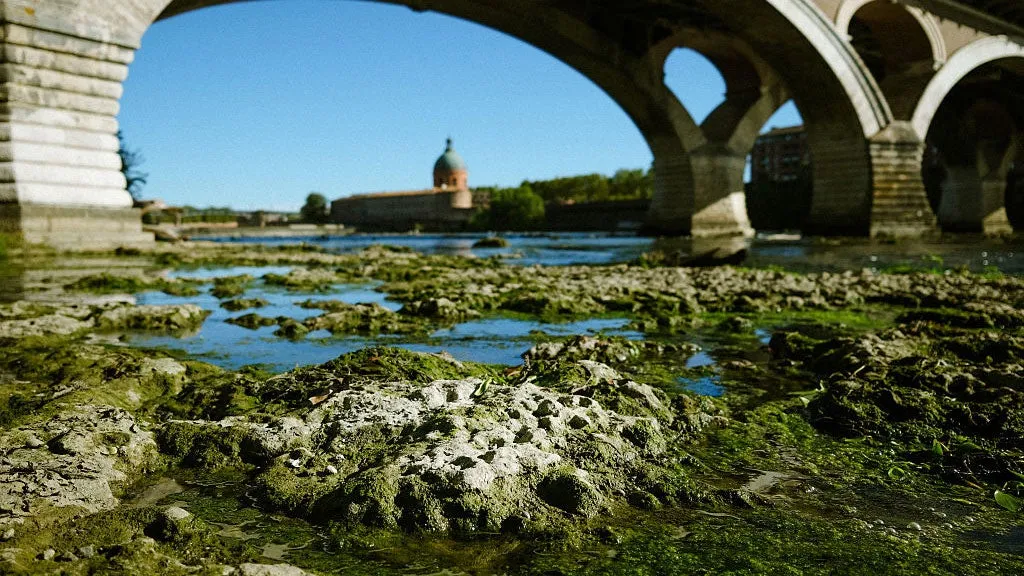
Wander the world one snapshot at a time. Explore striking moments of weather in motion in this week's slideshow. ByAda Wood•9 hours agoUpdated: October 18, 2026, 7:05 am EDTPublished: October 18, 2026, 7:00 am EDTA view of the Garonne River at a historically low level due to a lack of rainfall, successive summer heat waves and the prefecture's low-water management policy in Toulouse, in southwestern France, on Oct. 14, 2026.(Pat Batard/Hans Lucas/AFP via Getty Images)From a river in need of rainfall in France to a mountain range with changing leaves in Poland, it has been another busy week of weather around the world. Here are some of the most jaw-dropping and awe-inspiring weather photos we found this week. A view of the Tatra Mountains from the village of Niedzica, Lesser Poland Voivodeship, on Oct. 14, 2026.(Sergei GAPON/AFP via Getty Images)Rain drops cover fall leaves in Denver, Colorado on Wednesday, Oct. 14, 2026.(Hyoung Chang/The Denver Post)Chilies hang from branches in a rooftop garden in Lalitpur, Nepal, on Oct. 14, 2026, following the complete withdrawal of the monsoon. (Subaas Shrestha/NurPhoto via Getty Images)A poisonous fly agaric grows in the Harz National Park.
0 comments
No comments yet. Be the first to share your thoughts!