Synchronized bodily responses do not always reflect cooperation, study finds - Phys.org
This story deserves to be shared
Send it to someone who'd care, or post it on your networks.
This article is an excerpt. To read the full content, visit the original source. Phys.org
Related articles
A Strange New Time Crystal Emerges From Synchronized Vibrations - ScienceAlert
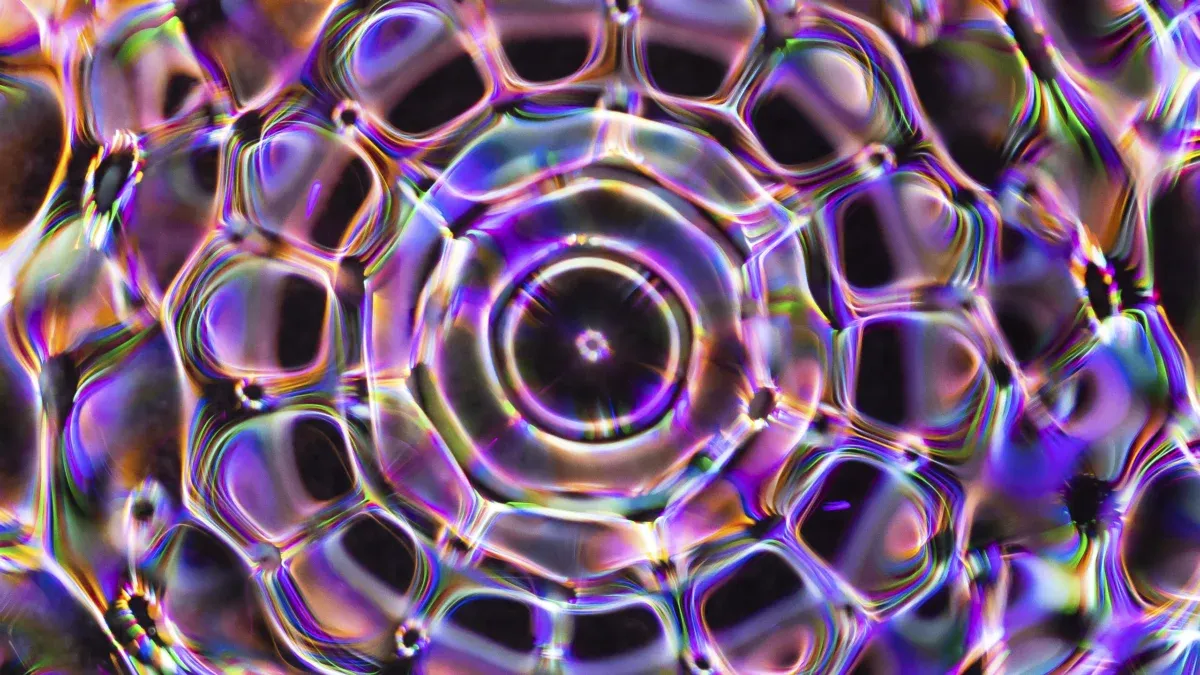
A colourful pattern formed by vibrations in a liquid, illustrating how waves can create intricate, organized structures. (Xvision/Moment/Getty Images) To us mortals, the flow of time goes one way. Yesterday is gone, tomorrow is yet to come, and no matter how precisely and faithfully a clock marks the passing seconds, we can never return to a moment that has passed. But for a time crystal, things are very different. The constituent ranks of this mysterious state of matter – be they atoms, sound waves, or topological defects – are strictly regimented in time, a repeating pattern of beats that could be snipped from a recording at regular intervals and perfectly superimposed, one over another. Once thought impossible, time crystals have been observed in systems from physical atomic lattices to levitating styrofoam. Now, physicists have discovered a strange new way for a time crystal to emerge – not through the imposition of an external rhythm, but through a spontaneous process in which competing vibrations gradually fall into step – order gradually emerging from chaos.
The Pomegranates That Seeded Life in the Universe - Medium
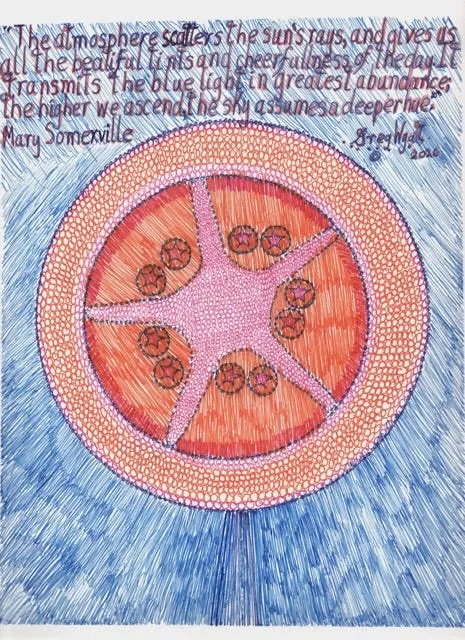
6 min read1 hour ago--(Image credit: Greg Wyatt)A supernova remnant looks like a pomegranate, carrying the seeds of life in the form of Carbon, Hydrogen, Nitrogen, Oxygen, Nitrogen, Phosphorus and Sulfur (abbreviated as CHNOPS) inside. These elements make up roughly 98% of the mass of most living organisms and serve as the fundamental building blocks for all primary biomolecules: carbohydrates, lipids, proteins, and nucleic acids (DNA). Carbon [C] is the backbone of life. Its unique ability to form four stable covalent bonds allows it to build complex, chain-like, and ring-shaped molecules. Hydrogen (H) is the most abundant element in the universe. It pairs with oxygen to form water (H2O) and creates hydrogen bonds, which give DNA its double-helix structure and stabilize protein shapes. Nitrogen (N) is a critical component of amino acids (the building blocks of proteins) and nitrogenous bases (the core elements of DNA and RNA). Oxygen (O) is an essential building block in water and organic molecules. It is a crucial constituent in cellular respiration, the process by which many organisms generate energy.
Star Alliance Wins Top Airline Alliance Award for APAC - Business Traveller
Evolutionary Biologist Wins Prestigious Research Prize - Mirage News
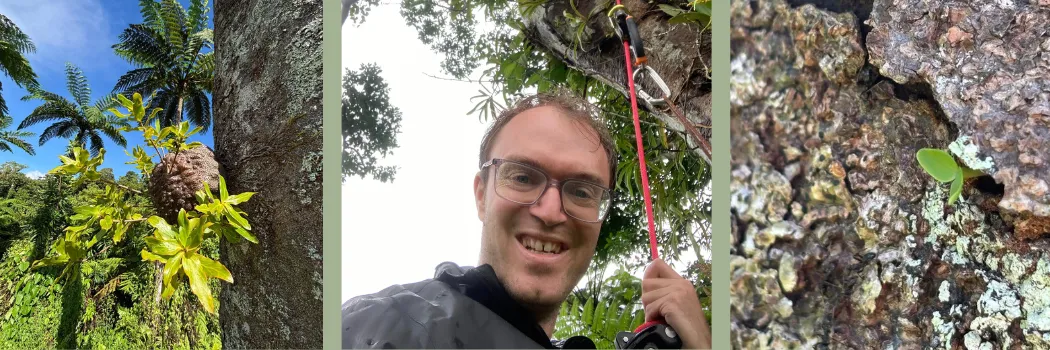
Professor Guillaume Chomicki from our Department of Biosciences has been awarded a prestigious Philip Leverhulme Prize for his internationally recognised research in evolutionary biology. The prizes, awarded by the Leverhulme Trust, recognise outstanding researchers whose work has already gained international recognition and whose future careers show exceptional promise. Guillaume conducts world-leading research into how partnerships between species evolve, persist and break down. He is particularly interested in why different species - such as insects and plants - form partnerships and what causes these relationships to change or break down. Partnerships over millions of years Much of Guillaume's work focuses on the Hydnophytinae, a group of around 100 plants that grow on the branches of rainforest trees across Australasia. They form swollen, hollow stems divided into chambers where ant colonies live. In return, the ants feed the plant with their waste and with the debris they carry home. Some of these plants rely on a single specialist ant, others accept many kinds, and some have given up ants altogether.
0 comments
No comments yet. Be the first to share your thoughts!