Supercomputer creates the most realistic virtual brain ever - Science Daily
This story deserves to be shared
Send it to someone who'd care, or post it on your networks.
This article is an excerpt. To read the full content, visit the original source. Science Daily
Related articles
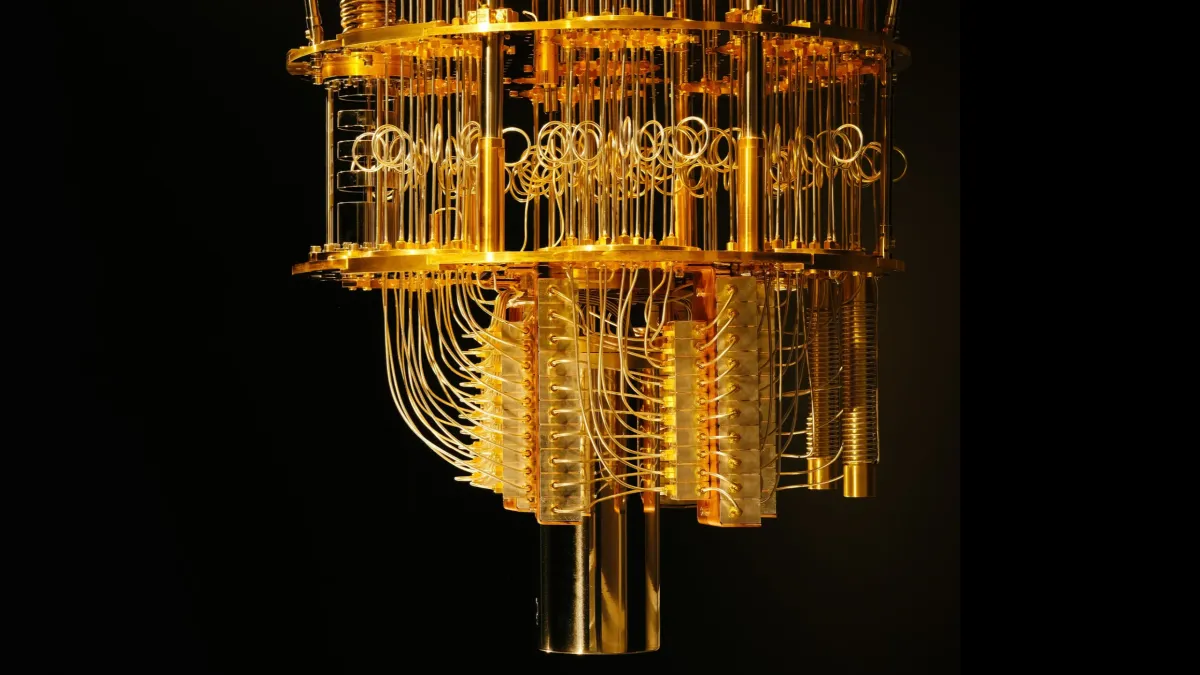
IBM's Quantum Computer Completes in 19 Seconds What Could Take a Supercomputer a Century - ScienceAlert
Some computations are so hardcore that it takes a facility of extraordinary power to even think about running them. These are the supercomputers – massive facilities humming with the corpulence of their GPUs and CPUs, crunching applications that would take a desktop computer hundreds to thousands of years. A commercially accessible quantum computer has just accomplished a feat that suggests this newer technology could one day leave supercomputers in the dust. In just 19 seconds, IBM's Nighthawk r2 processor generated a million samples – a task estimated to take a supercomputer around 110 years. The results of the experiment have been described in a preprint currently available on arXiv. "To our knowledge," write researchers in a paper led by theoretical condensed matter physicist Tigran Sedrakyan of BlueQubit in the US, "this is the first demonstration of quantum advantage for a vanilla random-circuit sampling on a commercially and broadly accessible quantum processor that most non-expert quantum computer users can easily replicate. "Nighthawk r2, IBM's current-gen quantum processor.

Quantum Tug-of-War Limits High-Temperature Superconductivity - Mirage News
New work helps show why the dream of high-temperature superconductivity has been so hard to realize: a quantum brawl between superconductivity and a competing state of matter. The finding resulted from a collaboration that included theorists with the Simons Foundation's Flatiron Institute in New York City and experimentalists at Quebec's Institut national de la recherche scientifique (INRS). The researchers investigated a copper alloy called a 'cuprate' as it transitioned from the superconducting state to an enigmatic neighboring state of matter called the 'pseudogap.' Using laser pulses and computer simulations, they were able to understand the behavior of electrons inside the cuprate. In a paper published October 20 in Nature Physics , the team shows how the two states — superconductivity and the pseudogap — wrestle for dominance. That finding challenges the idea that superconductivity in cuprates merely builds upon a pre-existing pseudogap phase. "We're really showing that these states are competing," says study co-author Olivier Gingras , an associate research scientist at the Flatiron Institute's Center for Computational Quantum Physics (CCQ).
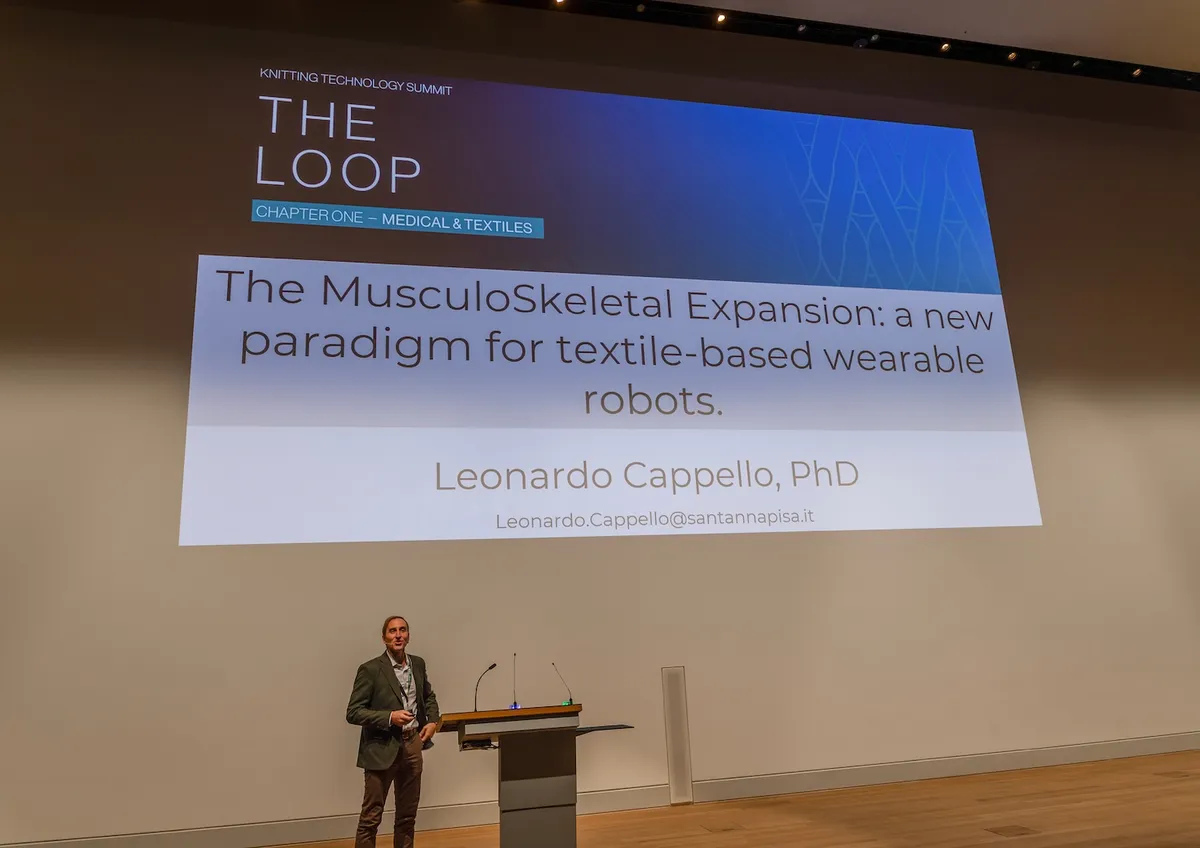
Textile wearable robotics: A new paradigm - Knitting Industry
Italian researchers are exploring knitted textiles and soft robotics to develop new wearable assistive technologies. Leonardo Cappello, Assistant Professor at the BioRobotics Institute of Scuola Superiore Sant'Anna in Pisa, presents on textile wearable robotics.
0 comments
No comments yet. Be the first to share your thoughts!