Should You Wash Raw Chicken? Here’s What the Science Actually Says - Serious Eats
This story deserves to be shared
Send it to someone who'd care, or post it on your networks.
This article is an excerpt. To read the full content, visit the original source. Serious Eats
Related articles
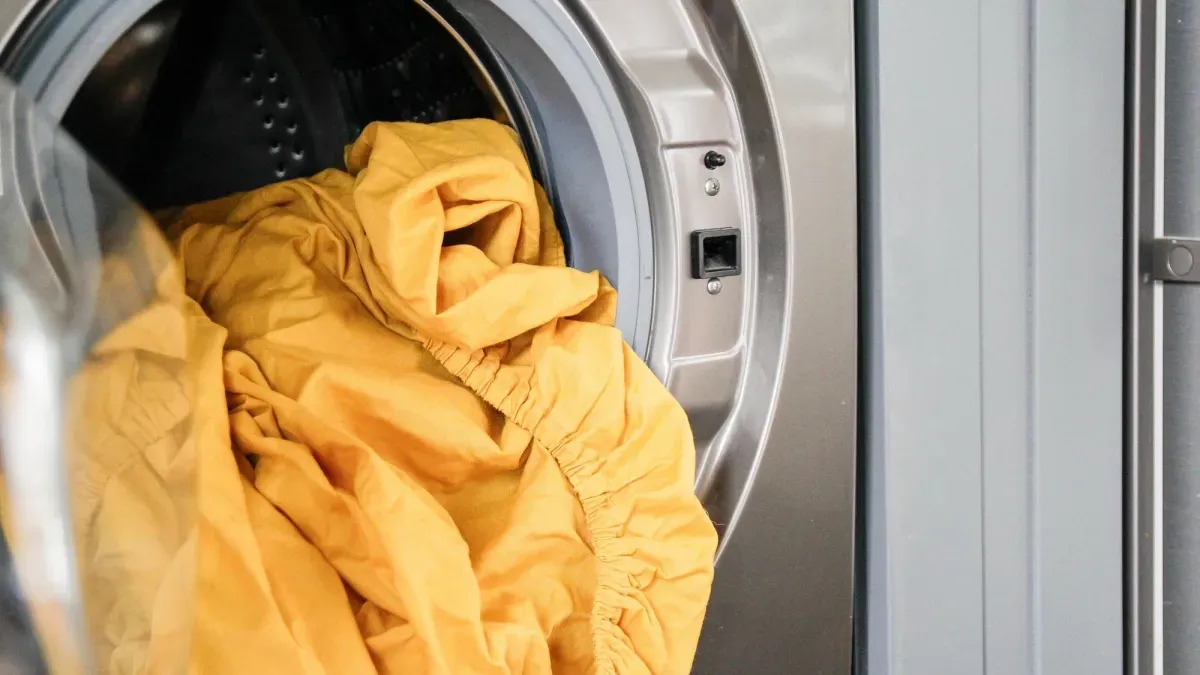
How often you should wash your sheets and towels, according to science - Popular Science
Don't wait until your sheets and towels smell to throw them in the wash. You’ve had a long day. You can’t wait to get home, take a hot shower, and climb into bed. Sounds wonderful, doesn’t it? Well, we hate to break it to you, but it could actually be incredibly gross.

NASA reveals 16 stunning galaxies hiding cosmic chaos - Science Daily
Some galaxies glow with sweeping spiral arms, while others are shaped by violent collisions, powerful black holes, and explosive bursts of star formation. A newly released collection of 16 images from NASA's Chandra X-ray Observatory and other telescopes reveals the extraordinary diversity of these cosmic structures. Like precious gemstones, galaxies come in many shapes and sizes, each with characteristics that tell a story about its history. Astronomers generally classify them into three major groups. Spiral galaxies, including our Milky Way, have winding arms extending from their centers. Elliptical galaxies typically contain older stars and are often thought to form through galactic mergers. Irregular galaxies have less orderly structures and can display a wide variety of cosmic activity.

7 Plants You Need To Protect From Animals (Not the Cold) In October – Before Winter Damage Is Done - Homes and Gardens
Worried about winter damage from wildlife? Identify plants most at risk and take these essential steps now

Finding neuroheterogeneity’s sweet spot - The Transmitter
Neurons are a motley crew, varying widely in connectivity and firing properties. But computational models of the brain usually treat neurons as identical. “The convention in the field is homogeneity,” says Scott Rich, assistant professor at the University of Connecticut. Heterogeneity makes models mathematically complex and unwieldy, so researchers have shied away from incorporating it, he says. “But it shouldn’t be [omitted] if we really want to understand how the brain works.”
A hybrid data-centric machine learning for lost circulation prediction using imbalanced drilling and geological datasets - Nature
We’re sharing this article early to provide faster access to peer-reviewed, accepted research. It is citable and carries a permanent DOI. This version is subject to further edits and will be replaced automatically by the final Version of Record. All legal disclaimers apply. AbstractLost circulation remains one of the most critical operational challenges in drilling engineering, yet predictive modeling in real-field conditions is often constrained by severely imbalanced and limited datasets. While previous studies have primarily relied on single imbalance-handling techniques or large datasets, this study introduces a sequential, hybrid data-centric machine learning framework specifically designed for small, multiclass, and highly skewed drilling datasets. A dataset of 258 operational records from the Buzergan oil field in southern Iraq, including drilling parameters, mud properties, and geological indicators, were used to predict lost circulation severity.
0 comments
No comments yet. Be the first to share your thoughts!