A hybrid data-centric machine learning for lost circulation prediction using imbalanced drilling and geological datasets - Nature
This story deserves to be shared
Send it to someone who'd care, or post it on your networks.
We’re sharing this article early to provide faster access to peer-reviewed, accepted research. It is citable and carries a permanent DOI. This version is subject to further edits and will be replaced automatically by the final Version of Record. All legal disclaimers apply.
AbstractLost circulation remains one of the most critical operational challenges in drilling engineering, yet predictive modeling in real-field conditions is often constrained by severely imbalanced and limited datasets. While previous studies have primarily relied on single imbalance-handling techniques or large datasets, this study introduces a sequential, hybrid data-centric machine learning framework specifically designed for small, multiclass, and highly skewed drilling datasets. A dataset of 258 operational records from the Buzergan oil field in southern Iraq, including drilling parameters, mud properties, and geological indicators, were used to predict lost circulation severity.
This article is an excerpt. To read the full content, visit the original source. Nature
Related articles
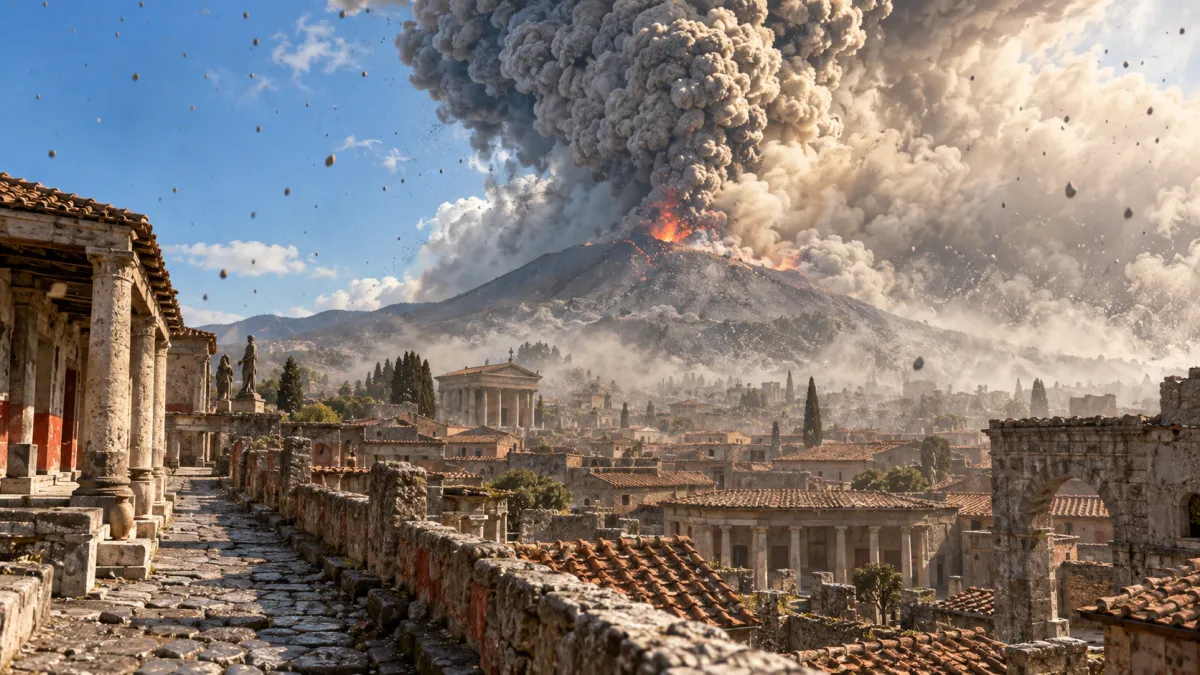
The eruption that buried Pompeii is helping scientists synchronize Earth’s geological clocks - The Brighter Side of News
Scientists used the precisely recorded 79 CE eruption of Mount Vesuvius to recalibrate argon-argon dating, reducing uncertainty for a nearly 2,000-year-old volcanic event to just 13 years. The new measurements dated Vesuvius to 87 ±13 CE, statistically consistent with the historically supported eruption date of August 24, 79 CE, while achieving about 0.7% precision. The benchmark also produced a nearly twofold improvement in the precision of a key potassium-40 decay constant, potentially strengthening volcanic, archaeological and geological timelines far beyond Pompeii. Nearly 2,000 years after Mount Vesuvius buried Pompeii, the disaster is helping scientists tell geological time with unprecedented precision. Researchers used minerals ejected during the famous 79 CE eruption to test and recalibrate argon-argon dating, one of geology’s most versatile radioactive clocks. Their measurements produced an age of 1,938 ±13 years before the samples were analyzed in 2025, corresponding to 87 ±13 CE and agreeing closely with the historical date. The study, published in Science Advances, was led by researchers at the Berkeley Geochronology Center, UC Berkeley and the University of Padua.
Runoff: Surface and Overland Water Runoff | U.S. Geological Survey - USGS (.gov)
When rain falls onto the earth, it just doesn't sit there, it starts moving according to the laws of gravity. A portion of the precipitation seeps into the ground to replenish Earth's groundwater. Most of it flows downhill as runoff. Runoff is extremely important in that not only does it keep rivers and lakes full of water, but it also changes the landscape by the action of erosion. Flowing water has tremendous power—it can move boulders and carve out canyons; check out the Grand Canyon! Runoff of course occurs during storms, and much more water flows in rivers (and as runoff) during storms. For example, in 2001 during a major storm at Peachtree Creek in Atlanta, Georgia, the amount of water that flowed in the river in one day was 7 percent of all the streamflow for the year. Some definitions of runoff:1. That part of the precipitation, snow melt, or irrigation water that appears in uncontrolled (not regulated by a dam upstream) surface streams, rivers, drains or sewers. Runoff may be classified according to speed of appearance after rainfall or melting snow as direct runoff or base runoff, and according to source as surface runoff, storm interflow, or groundwater runoff.2.

7 Plants You Need To Protect From Animals (Not the Cold) In October – Before Winter Damage Is Done - Homes and Gardens
Worried about winter damage from wildlife? Identify plants most at risk and take these essential steps now
0 comments
No comments yet. Be the first to share your thoughts!