Scientists Want to Spray Diamond Dust Into the Sky for 45 Years to Cool the Planet - Futura, le média qui explore le monde
This story deserves to be shared
Send it to someone who'd care, or post it on your networks.
This article is an excerpt. To read the full content, visit the original source. Futura, le média qui explore le monde
Related articles
Help Overlap Zoo Reveal Cosmic Dust - NASA Science (.gov)
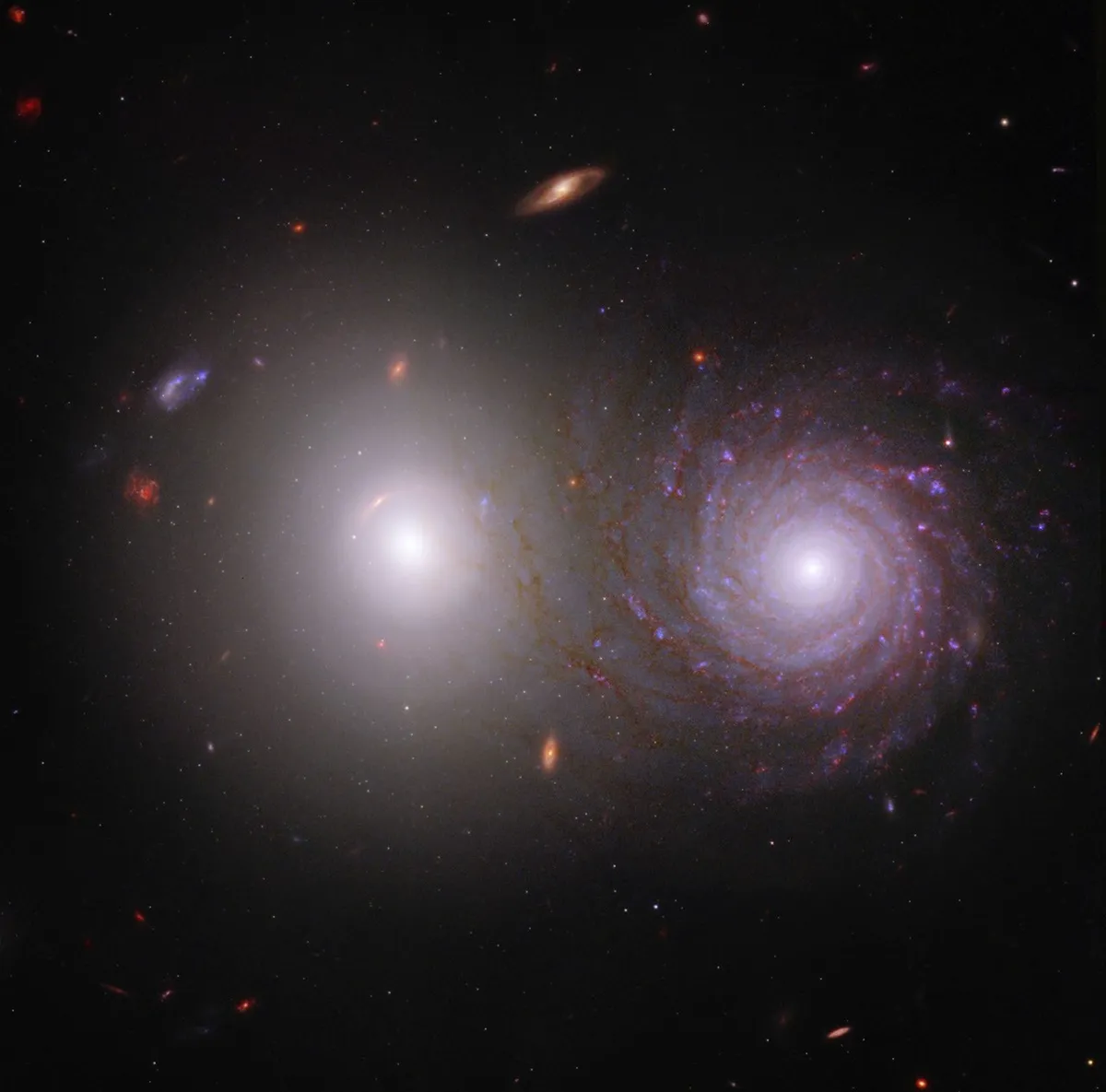
Galaxies, vast collections of billions of stars, gas, and dust held together by gravity, are scattered across the immensity of space. But every so often, a coincidence occurs: Two galaxies line up from our point of view on Earth (or from a space telescope) and appear to overlap in the sky. These rare overlapping galaxies give astronomers a chance to study something normally difficult to see: the dust inside one of these distant cosmic objects. That’s the focus of NASA’s new Overlap Zoo project. Picture the background galaxy acting like a cosmic flashlight, shining through the nearer galaxy. The backlit dust creates dark silhouettes, like shadows on a screen. By studying these silhouettes, astronomers can map how dust is distributed throughout galaxies and learn how it blocks, scatters, and dims starlight traveling through space. Measurements of how dust impacts light can even help astronomers refine estimates of the distances to faraway objects.
Dust Outbreak Reaches Europe - NASA Science (.gov)
The American Mountains With The Darkest Night Skies - WorldAtlas
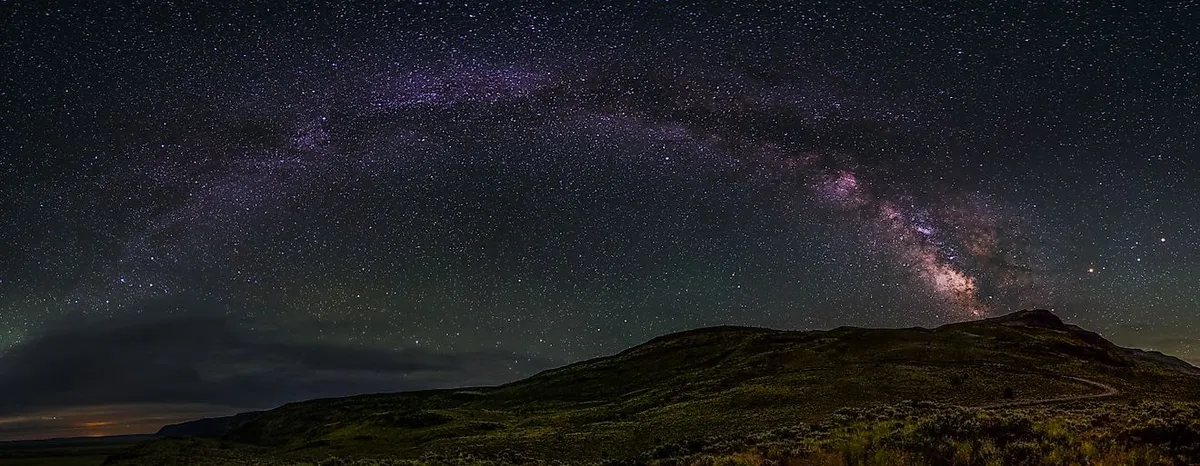
More than 99% of the US population lives under light-polluted skies, according to a 2016 study published in Science Advances. With streetlights, brightly lit parking lots, arenas, and passing headlights brightening the night, it can be easy to forget how dark the sky actually is and how many stars appear when you get away from populated areas. Seeing that many stars for the first time can make you pause and remember where you truly are. You are on a rock spinning through space, surrounded by a universe filled with stars, planets, and galaxies larger than anything you can imagine. A remote mountain excursion can combine a dark sky encounter with a day of hiking and sightseeing. After sunset, bright stars emerge above the slopes and ridgelines. These American mountains lie within officially designated dark sky locations that protect natural darkness and the views of the universe it reveals. In northeastern New Mexico, Capulin Volcano sits among volcanic cones, mesas, and buttes in one of the darker areas of the lower 48 states. These landforms help shield the night sky from distant lights, while the rugged terrain has discouraged development in the area.
What’s Happening in Space Policy October 18-24, 2026 - Space Policy Online
Here is SpacePolicyOnline.com’s list of space policy events for the week of October 18-24, 2026 and any insight we can offer about them. The House and Senate are in recess, except for pro forma sessions, until after the midterm elections. This week has two especially interesting events — the launch of JAXA’s Martian Moons eXploration (MMX) mission tomorrow (Monday) afternoon EDT, and a NASA update on the Artemis program on Friday — plus many others. We’re also keeping track of the discussions on social media about the very close approach of Russia’s Kosmos 2612 to the U. S.-registered ICEYE X36 Synthetic Aperture Radar (SAR) satellite.
Inhibitory characteristics of a surfactant-enhanced sodium salt inhibitor for coal spontaneous combustion - Nature
We’re sharing this article early to provide faster access to peer-reviewed, accepted research. It is citable and carries a permanent DOI. This version is subject to further edits and will be replaced automatically by the final Version of Record. All legal disclaimers apply. AbstractSodium-salt-based physical inhibitors reduce coal–oxygen interactions through moisture absorption and retention in the prevention of coal spontaneous combustion, but their wetting and spreading performance on coal surfaces can be further improved. To enhance the overall inhibition performance of sodium-salt-based inhibitors, the anionic surfactant sodium dodecyl sulfate (SDS) was introduced to modify the sodium chloride (NaCl) inhibition system, and the optimal composite inhibitor formulation was selected through experimental characterization and comprehensive evaluation using the entropy weight method. The results showed that SDS further enhanced the moisture-regulation capacity of the NaCl system.
0 comments
No comments yet. Be the first to share your thoughts!