Scientists resurrect 3.2-billion-year-old enzyme to reveal how life began on Earth - Science Daily
This story deserves to be shared
Send it to someone who'd care, or post it on your networks.
This article is an excerpt. To read the full content, visit the original source. Science Daily
Related articles

Scientists Resurrect 160-Million-Year-Old Molecules With Surprising Power Against Superbugs - SciTechDaily
Scientists reconstructed antimicrobial peptides from mammalian ancestors dating back up to 160 million years and found that some ancient forms killed bacteria more effectively than modern versions. Credit: ShutterstockAncient mammalian antimicrobial peptides revealed stronger bacteria-killing activity in some cases, offering clues for designing future treatments against resistant infections. Some proteins that vanished millions of years ago may still have something to teach scientists about fighting modern infections. University of Oregon biologists have reconstructed antimicrobial molecules dating back as far as 160 million years, and laboratory tests showed that some ancient versions were more effective against drug-resistant bacteria than their modern counterparts. The work, described in a paper published in PLOS Biology on August 25, traced these peptides — short protein fragments — through the evolutionary history of placental mammals, the lineage that includes humans and nearly all mammals living today.
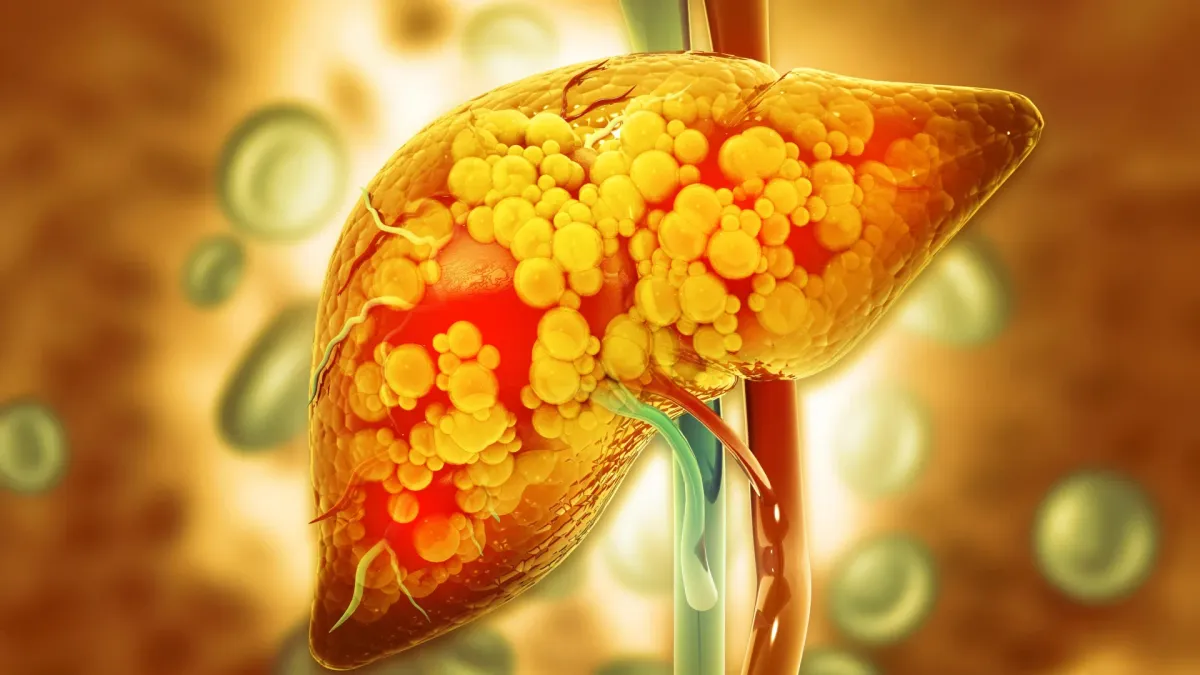
This protective enzyme could help stop fatty liver disease from getting worse - Science Daily
Researchers co-led by Cedars-Sinai Health Sciences University have identified an enzyme that may help protect the liver from the damage that can occur as the most common form of liver disease becomes more severe. The findings, from a preclinical study published in Nature Metabolism, could eventually support new strategies for preventing serious liver injury and progression toward liver failure. An estimated 100 million people in the U. S. have metabolic dysfunction-associated steatotic liver disease (MASLD), formerly called nonalcoholic fatty liver disease, according to the American Liver Foundation. Roughly 20% to 25% of those affected go on to develop metabolic dysfunction-associated steatohepatitis (MASH), a more serious form of the condition in which excess liver fat is accompanied by inflammation, cell injury and scarring.
Claude discovers a novel enzyme system with CRISPR-like repeats - Anthropic
We’re introducing a new life sciences research group and laboratory at Anthropic. Our focus is on fundamental biology research using Claude: exploring datasets of DNA to identify uncharacterized protein families, generating hypotheses at scale, and testing them through experiments in the lab. This post introduces the team behind this work and shares early results in which Claude discovered a novel enzyme system with properties reminiscent of CRISPR, with only high-level direction from our scientists. Many discoveries that have revolutionized biology and medicine started with a scientist noticing something odd in the staggering diversity of molecular machines found in nature. Restriction enzymes, proteins that cut DNA at specific short sequences, were found in bacterial immune systems, where they destroy the DNA of invading viruses. Researchers realized they could use these enzymes to cut DNA at chosen places and splice genes from one organism into another, which launched the biotechnology industry. Taq polymerase, an enzyme that copies DNA at high temperatures, was identified in a bacterium in a Yellowstone hot spring.

This deep-sea enzyme survives heat that destroys most proteins - Science Daily
Microorganisms are capable of some extraordinary chemistry. One example is nitrogen fixation, a process that converts nitrogen gas (N2) into a form living organisms can actually use. Nitrogen makes up about 78 percent of Earth's atmosphere, but plants and animals cannot use it directly because the two nitrogen atoms in N2 are joined by an exceptionally strong chemical triple bond. Certain microorganisms have evolved a way around this problem. They can break that bond and transform N2 into ammonia, which can then be incorporated into biological molecules. One of these organisms is the deep-sea archaeon Methanocaldococcus infernus, which lives in volcanic marine environments where vent fluids can reach temperatures above the boiling point of water.
One enzyme, many sugars: How a single protein builds a medicinal plant’s chemical arsenal - EurekAlert!
For centuries, Epimedium has been used in traditional medicine to support bone health and vitality, yet the precise location of its active compounds within the plant—and the enzymes that create them—has remained a mystery. Now, researchers have mapped where these medicinal molecules accumulate and identified a single enzyme capable of producing a remarkable diversity of flavonol glycosides from multiple substrates and sugar donors. The findings open new doors for understanding how plants manufacture their chemical defenses and for engineering these pathways to produce valuable therapeutics more efficiently. Plants produce flavonoids—bioactive compounds with antioxidant, anti-inflammatory, and osteoprotective properties—through complex modification pathways. Glycosylation, the attachment of sugar molecules to flavonoid cores, is a key driver of this chemical diversity. In Epimedium, over 88% of kaempferol derivatives are glycosylated, yet the enzymes responsible and their spatial regulation within the plant have been poorly understood.
0 comments
No comments yet. Be the first to share your thoughts!