Scientists find a youth protein that helps aging brain cells act young again - Science Daily
This story deserves to be shared
Send it to someone who'd care, or post it on your networks.
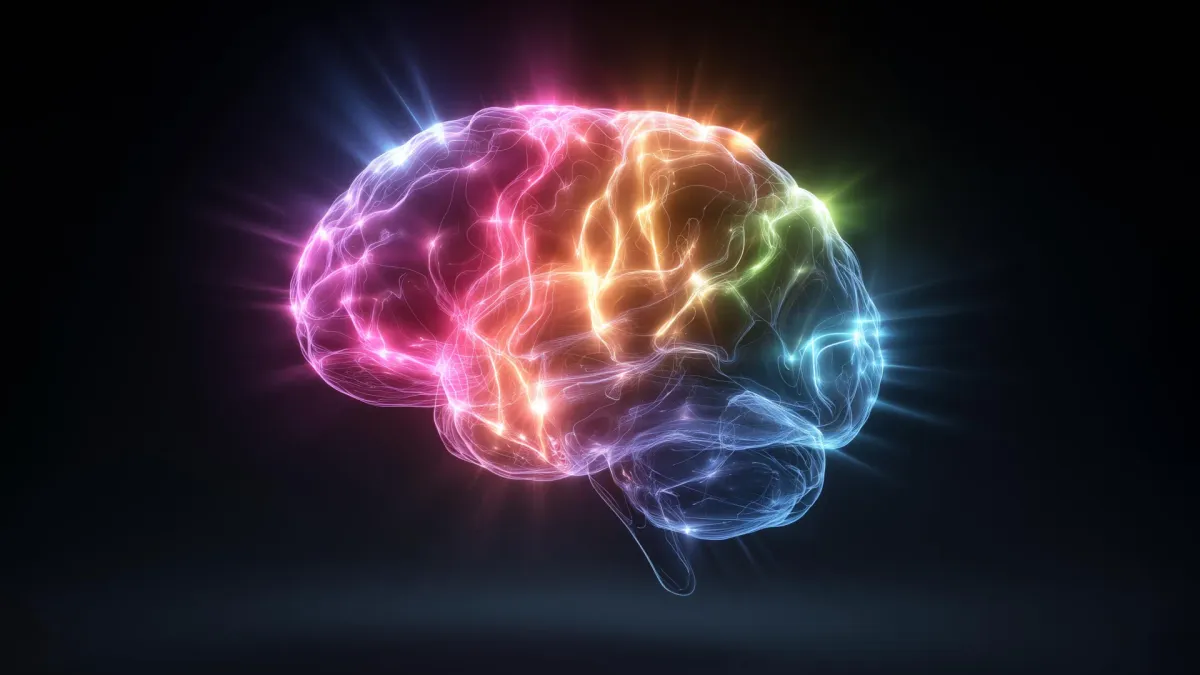
A protein associated with youth may help aging brain cells regain some of their lost abilities. Scientists at the Icahn School of Medicine at Mount Sinai have discovered that TIMP2 plays an important role in keeping the brain's immune cells healthy, offering new clues about how the brain changes with age.
In a study published in Nature Communications, researchers found that removing TIMP2 caused brain immune cells, known as microglia, to develop characteristics linked to aging and neurodegenerative disease. When the scientists restored TIMP2 in the bloodstream of older mice, these cells became better at removing cellular debris and showed fewer molecular signs of inflammation and other potentially harmful changes.
This article is an excerpt. To read the full content, visit the original source. Science Daily
Related articles
Lipoid Congenital Adrenal Hyperplasia Due to Steroidogenic Acute Regulatory Protein (StAR) Deficiency in a 46,XY Child With a Female Phenotype: A Case Report - Cureus
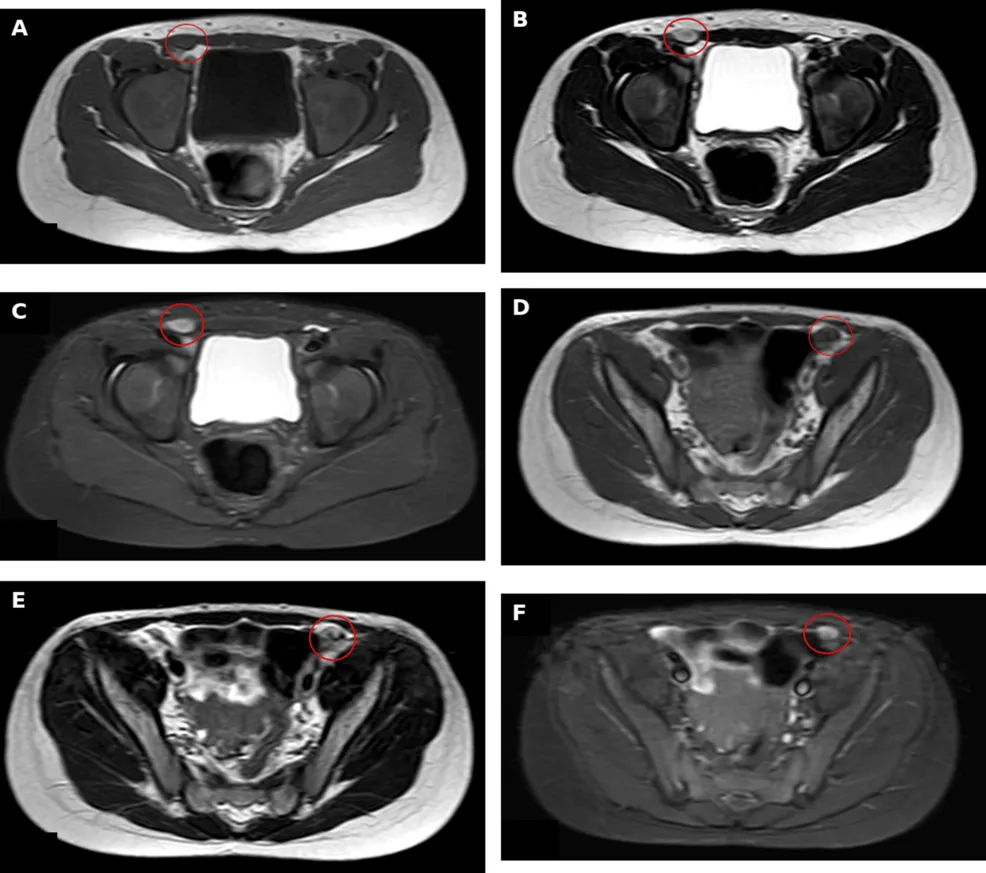
Primary adrenal insufficiency in childhood is frequently associated with inherited disorders. Lipoid congenital adrenal hyperplasia due to steroidogenic acute regulatory protein (StAR) deficiency is a rare disorder characterized by impaired mitochondrial cholesterol transfer and deficient adrenal and gonadal steroidogenesis. We report a five-year-old child raised as a girl who had been diagnosed with primary adrenal insufficiency at three months of age and was receiving hydrocortisone and fludrocortisone. Physical examination showed female-appearing external genitalia without virilization and Tanner stage I development. Biochemical evaluation demonstrated markedly elevated adrenocorticotropic hormone with profoundly low morning cortisol and globally reduced steroidogenesis, including low 17-hydroxyprogesterone, androstenedione, dehydroepiandrosterone sulfate, and free testosterone. Karyotyping revealed 46,XY. Anti-Müllerian hormone and inhibin B concentrations were compatible with preserved Sertoli cell secretory activity and supported the presence of testicular tissue despite severely impaired androgen production. A contrast-enhanced abdominal and pelvic magnetic resonance imaging
Acute Intrathyroidal Hematoma in a Multinodular Thyroid Presenting With Sudden Neck Swelling and Tracheal Deviation: A Case Report - Cureus
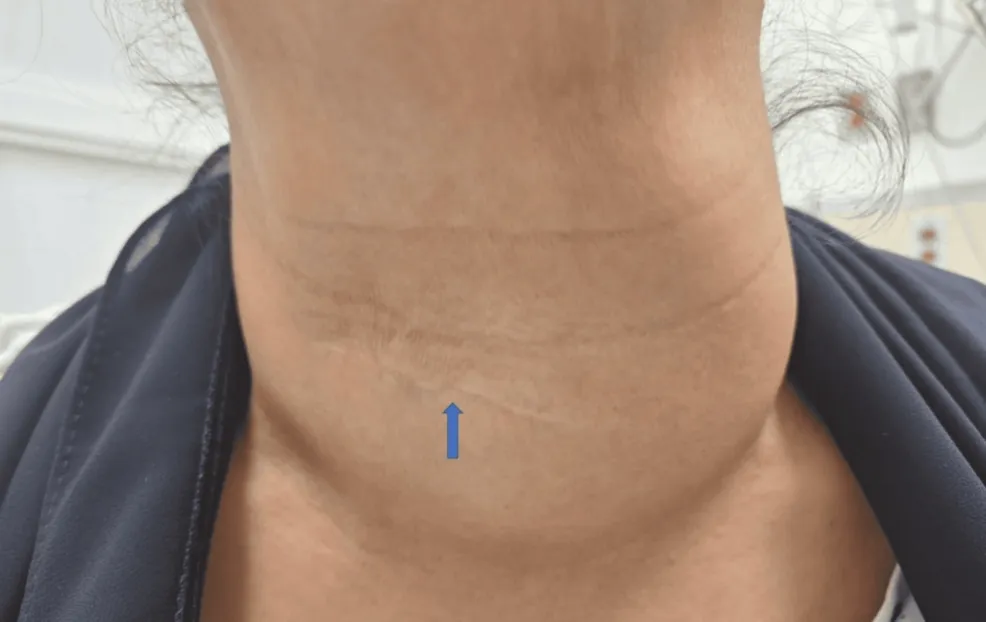
Acute hemorrhage within the thyroid gland is uncommon but can cause rapid neck swelling and, in severe cases, airway compromise. We report a 65-year-old woman with hypertension and a history of partial thyroidectomy performed more than 25 years earlier who presented with painful neck swelling that developed overnight. The swelling was associated with pain on swallowing, without shortness of breath, voice change, drooling, fever, or recent neck trauma. She was hemodynamically stable with an oxygen saturation of 99% on room air. Examination showed marked neck swelling, thyromegaly, thyroid tenderness, and left-sided neck induration. Contrast-enhanced computed tomography (CT) demonstrated a multinodular thyroid with a large heterogeneous mass in the left thyroid lobe causing mass effect and rightward tracheal deviation. Subsequent ultrasonography demonstrated a heterogeneous intrathyroidal collection consistent with hematoma. The patient remained clinically stable and was discharged after approximately five hours of observation. At otolaryngology follow-up 10 days later, repeat ultrasonography showed a progressively enlarging left thyroid nodule, and fine-needle aspiration cytology wa
Blocking the Sympathetic Storm: Adjunctive Left Stellate Ganglion Block for Refractory Ventricular Tachycardia After Inferolateral Myocardial Infarction - Cureus
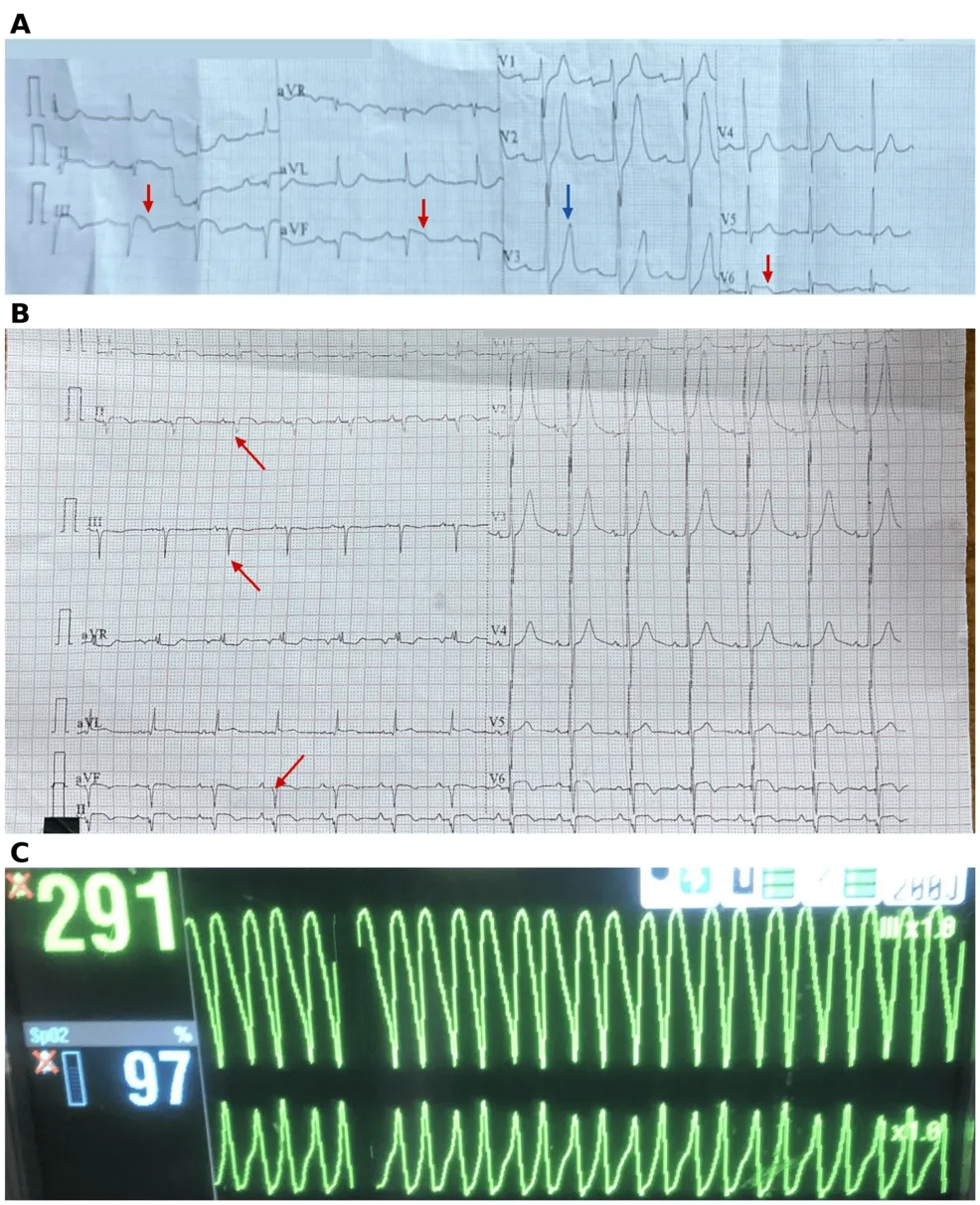
Electrical storm following myocardial infarction (MI) can be difficult to control when antiarrhythmic drugs and cardioversion fail. We describe a 53-year-old man with hypertension and previously undiagnosed diabetes who presented with an inferolateral ST-segment elevation MI caused by total occlusion of the proximal left circumflex artery, which was treated with primary percutaneous coronary intervention and drug-eluting stent placement. He then developed marked leukocytosis with a systemic inflammatory response and acute kidney injury (peak creatinine, 4.03 mg/dL), which resolved with empirical antibiotic therapy and supportive renal care. On day 6, he experienced recurrent syncope associated with sustained monomorphic ventricular tachycardia (VT) that persisted despite intravenous amiodarone and lidocaine, electrolyte correction, and repeated cardioversion, necessitating sedation and mechanical ventilation. Repeat coronary angiography demonstrated a patent stent. VT ceased following an ultrasound-guided left stellate ganglion block (SGB) using 1% lidocaine and dexamethasone, which resulted in Horner syndrome. Antiarrhythmic therapy was continued, and the patient was extubated wit
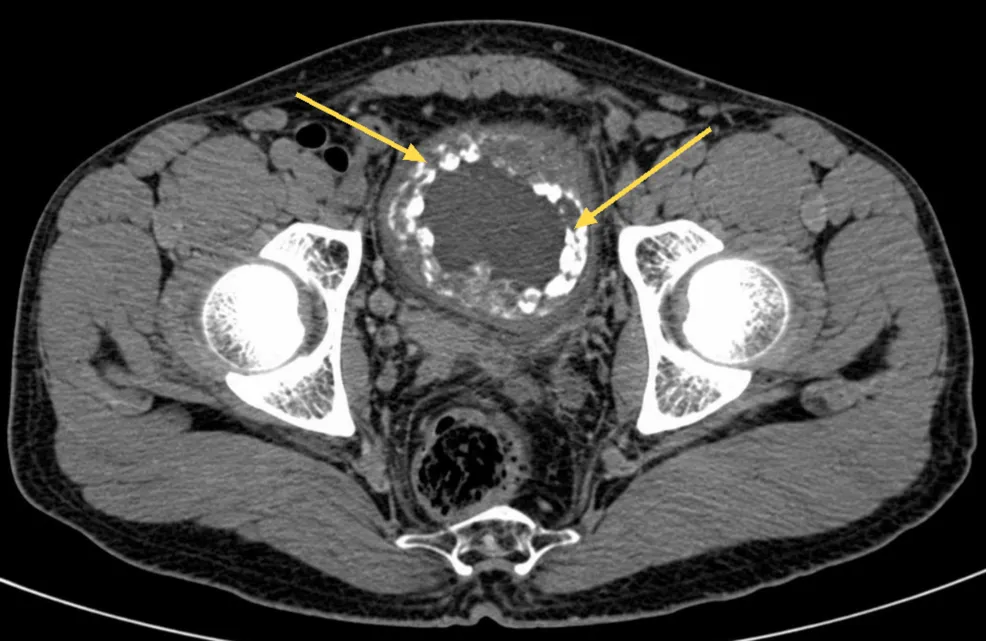
Postoperative Encrusted Cystitis After Robot-Assisted Simple Prostatectomy: A Case Report - Cureus
Encrusted cystitis is an uncommon disorder characterized by adherent mineral deposits on inflamed bladder mucosa. We report a 73-year-old man with persistent dysuria, hematuria, urinary frequency, weak stream, and fluctuating pyuria after robot-assisted simple prostatectomy. Day 1 denotes the first diagnostic cystoscopy. Cystoscopy showed extensive encrustation involving the prostatic surgical bed, bladder neck, and nearly all bladder walls; computed tomography demonstrated mural calcification and bladder-wall thickening. Urine pH reached 8.80 on day 15. Transurethral resection and debridement on day 16 removed more than 15 cm² of visibly involved mucosa. Histopathology showed inflammation and calcium deposition, and analysis of the removed encrustations identified calcium phosphate (apatite). A bladder aspirate grew Enterococcus faecalis at 100,000 colony-forming units/mL. Corynebacterium urealyticum was not isolated after 72-hour incubation on standard media or detected in the removed deposits; targeted molecular testing was unavailable. The cause of the encrustation therefore remained unconfirmed, with both an infectious mechanism and postoperative dystrophic calcification consi
Hybrid dual attentional-based pyramidal deep learning model for liver tumor detection - Nature
We’re sharing this article early to provide faster access to peer-reviewed, accepted research. It is citable and carries a permanent DOI. This version is subject to further edits and will be replaced automatically by the final Version of Record. All legal disclaimers apply. AbstractLiver tumors are life-threatening diseases that occur due to the rapid growth of liver cells and even result in a chronic condition. Nevertheless, conventional liver tumor detection struggled with the limitations of poor robustness, difficulties in identifying the complex boundaries, and inconsistent segmentation. Hence, the research introduced a hybrid dual attention-based pyramidal deep convolutional network and deep belief network (HDPCBN) for accurate liver tumor detection. Significantly, the HDPCBN approach deployed a pyramidal architecture to learn deep hierarchical features and intricate patterns of the tumor effectively. Moreover, the integration of the dual attention technique gathers the long-range relationships of both spatial and channel dimensions for accurate liver tumor detection.

20 Posts Not To Miss From ASCOQLTY26 - Oncodaily
The ASCO Quality Care Symposium 2026 (ASCOQLTY26) brought together oncologists, researchers, healthcare professionals, and patient advocates to discuss advances in cancer care quality, patient safety, and healthcare delivery. The meeting focused on improving patient outcomes, addressing disparities in cancer care, and sharing research aimed at strengthening oncology practice. Held on October 16–17, 2026, at the Hynes Convention Center in Boston, Massachusetts, and online, the symposium featured discussions on improving cancer care delivery, advancing patient-centered approaches, and ensuring equitable access to high-quality oncology services.
0 comments
No comments yet. Be the first to share your thoughts!