Researchers in Goa, India, have converted tin recovered from waste pri - Shanghai Metals Market
This story deserves to be shared
Send it to someone who'd care, or post it on your networks.
Des chercheurs indiens transforment la soudure de déchets de circuits imprimés en nanoparticules d'oxyde d'étain de 7,6 nm pour la dégradation des colorantsDes chercheurs à Goa, en Inde, ont converti de l'étain récupéré de soudures de cartes de circuits imprimés usagées en nanoparticules fonctionnelles de dioxyde d'étain, comme le rapporte le Journal of Nanoparticle Research. La lixiviation acide met l'étain en solution avant sa conversion en SnO2 nanostructuré. La diffraction des rayons X a confirmé une phase rutile tétragonale et la spectroscopie photoélectronique X a montré que l'étain se trouve presque entièrement sous forme Sn(IV). La microscopie électronique a révélé des particules quasi sphériques d'un diamètre moyen de 7,6 nm, offrant une grande fraction surfacique pour la photocatalyse. Sous lumière UV, le matériau a éliminé 100 % de la rhodamine B en 165 minutes et réduit la demande chimique en oxygène de 95,2 %, indiquant une quasi-minéralisation ; la cinétique était de pseudo-premier ordre avec une constante de vitesse de 0,0114 par minute. L'efficacité est restée à 91,96 % après cinq cycles.
This article is an excerpt. To read the full content, visit the original source. Shanghai Metals Market
Related articles
Researchers in Goa, India, have converted tin recovered from waste pri - Shanghai Metals Market
Des chercheurs indiens transforment la soudure de déchets de circuits imprimés en nanoparticules d'oxyde d'étain de 7,6 nm pour la dégradation des colorantsDes chercheurs à Goa, en Inde, ont converti de l'étain récupéré de soudures de cartes de circuits imprimés usagées en nanoparticules fonctionnelles de dioxyde d'étain, comme le rapporte le Journal of Nanoparticle Research. La lixiviation acide met l'étain en solution avant sa conversion en SnO2 nanostructuré. La diffraction des rayons X a confirmé une phase rutile tétragonale et la spectroscopie photoélectronique X a montré que l'étain se trouve presque entièrement sous forme Sn(IV). La microscopie électronique a révélé des particules quasi sphériques d'un diamètre moyen de 7,6 nm, offrant une grande fraction surfacique pour la photocatalyse. Sous lumière UV, le matériau a éliminé 100 % de la rhodamine B en 165 minutes et réduit la demande chimique en oxygène de 95,2 %, indiquant une quasi-minéralisation ; la cinétique était de pseudo-premier ordre avec une constante de vitesse de 0,0114 par minute. L'efficacité est restée à 91,96 % après cinq cycles.

Raptors convert Bittle’s deal to 2-way contract
TORONTO – The Toronto Raptors waived five players on Saturday and converted centre Nate Bittle’s deal to a two-way contract. The seven-foot native of Central Point, Ore., averaged a team-high 16.8 points and 6.9 rebounds over 25 games last season as a fifth-year senior at Oregon.
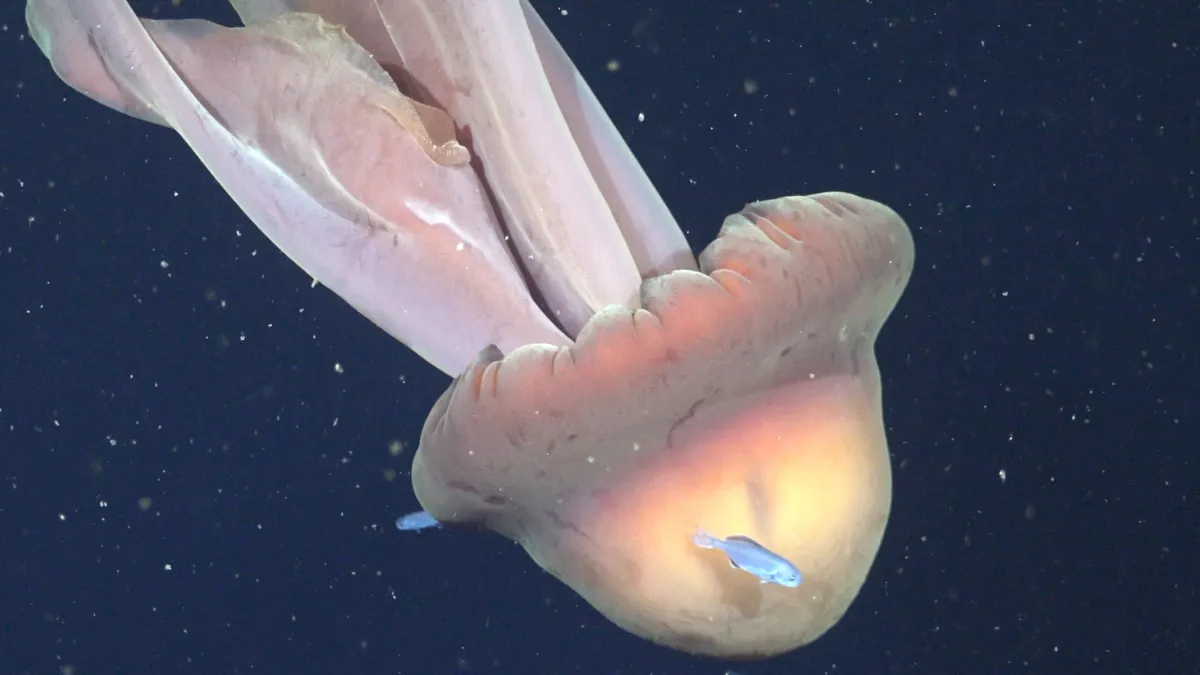
Giant 'Phantom' Jellyfish Found With Entourage of Fishy Passengers Hitching a Ride - ScienceAlert
If you're just a wee fish swimming around the big, scary ocean, it can help to have a bit of muscle on your side. For some fish, that's the protection offered by stinging coral. For others, it's adhering to the sandpaper skin of a deadly shark. And for one species of fish, it may be cozying up to one of the most enigmatic denizens of the deep – the giant phantom jellyfish (Stygiomedusa gigantea). During an ROV dive into mesopelagic waters off the coast of Argentina, marine researchers beheld a rare and stunning sight. They witnessed a majestic jelly languidly pulsing through the darkness, and with it, an entire entourage of juvenile rudderfish (Centrolophus niger), flitting beneath its bell and among its enormous, trailing arms. It's an interspecies relationship scientists have suspected for more than 50 years – and now, hundreds of meters below the waves off Patagonia, here it is. "Both are poorly known and rarely observed cosmopolitan mesopelagic species, representing the first documented observation of this association in the deep ocean," writes a team led by marine ecologist María Emilia Bravo of the University of Buenos Aires in Argentina.

'Birdman' copper plate: A 700-year-old depiction of a Native American warrior that may be a woman holding a weapon and a severed head - Live Science
Discovered in an Indigenous grave in Georgia nearly 150 years ago, the "Birdman" copper plate may actually depict a woman ceremonially dressed as a warrior.

Israeli startup’s satellite technology targets a costly blind spot in methane monitoring - CTech
Momentick’s results in a Nature study suggest that remote sensing can help identify relatively small leaks without equipment installed at each site. Better detection could help energy companies reduce lost gas and provide insurers with more information about environmental risks. CTech12:52, 19.10.26 An Israeli startup has demonstrated that satellite imagery can be used to detect a methane emission estimated at less than 10 kilograms per hour, in a large international experiment published in the scientific journal Nature. The result highlights the potential for satellite-based monitoring to identify leaks that might otherwise go undetected, although the study also found significant differences in performance between satellite systems and analytical methods. Momentick participated in the year-long study, led by researchers at Stanford University with colleagues from the University of Michigan and other institutions. The researchers conducted 746 test events in Arizona, including 481 controlled methane releases and 265 control cases with no emissions.
0 comments
No comments yet. Be the first to share your thoughts!