Reconstructing 16,000 years of summer temperature change in the Western Balkans - Phys.org
This story deserves to be shared
Send it to someone who'd care, or post it on your networks.
Researchers at Eötvös Loránd University (ELTE) have reconstructed approximately 16,000 years of summer temperature changes from sediments collected at Lake Prokoško in Bosnia and Herzegovina. The findings show how the Western Balkans responded to rapid climate changes at the end of the last glacial period, how warmer and cooler phases unfolded during the Holocene, and how the impact of human land use became increasingly pronounced.
This article is an excerpt. To read the full content, visit the original source. Phys.org
Related articles
Evidence of optical Aharonov-Bohm interference in spin-polarized moiré excitonic complexes - Nature
AcknowledgementsA. C. G. thanks Klaus Krambrock and Isabela Santos Silveira. L. M. M. thanks INCT de Nanocarbono e Materiais 2D (CNPq) e Rede Mineira de Materiais 2D (FAPEMIG). A. C., A. C. G., D. R. C., and M. D. T. acknowledge support from CNPq, via the PQ Program. A. C. and I. C. A., acknowledge financial support from CAPES/PROEX. L. F. D. A. and R. C. R. N. B. acknowledge financial support from CNPq (PIBIC). K. W. and T. T. acknowledge support from the CREST (JPMJCR24A5), JST and World Premier International Research Center Initiative (WPI), MEXT, Japan. R. R. R. L. thanks CAPES-PrInt program No. 88887.830556/2023-00. FundingThis work was supported by FAPESP - 2022/10340-2, number 2022/00209-6, 2025/02343-0 and 2024/01205-0, and FAPESP-FAPERJ numbers 2025/23224-9 and E-26/210.370/2026. Author informationAuthors and AffiliationsDepartamento de Física, Universidade Federal de São Carlos, São Carlos, São Paulo, BrazilAndreij C. Gadelha, André Pelais, Luciano F. D. Almeida, Frederico B. Sousa, Alessandra Ames, Gilmar E. Marques & Marcio D. TeodoroCentro Brasileiro de Pesquisas Físicas (CBPF), Rua Dr. Xavier Sigaud 150, Rio de Janeiro-RJ, BrazilAndreij C. Gadelha & Danian A.

Could you accidentally meet your future self without realizing it? Experts answer - Futura, le média qui explore le monde
Time Travel: Science Fiction or Science Fact? Could we one day build a real time machine, race back to ancient times, or even visit our great-great-grandchildren? To answer that, we first need to understand how time works—a question physicists are nowhere near settling. Still, there’s one thing we can state with confidence: traveling to the future is achievable, while going back is either wildly difficult, or simply impossible.
Paying for the past: Norway's finder's fees favor gold's weight over what it tells us - Phys.org
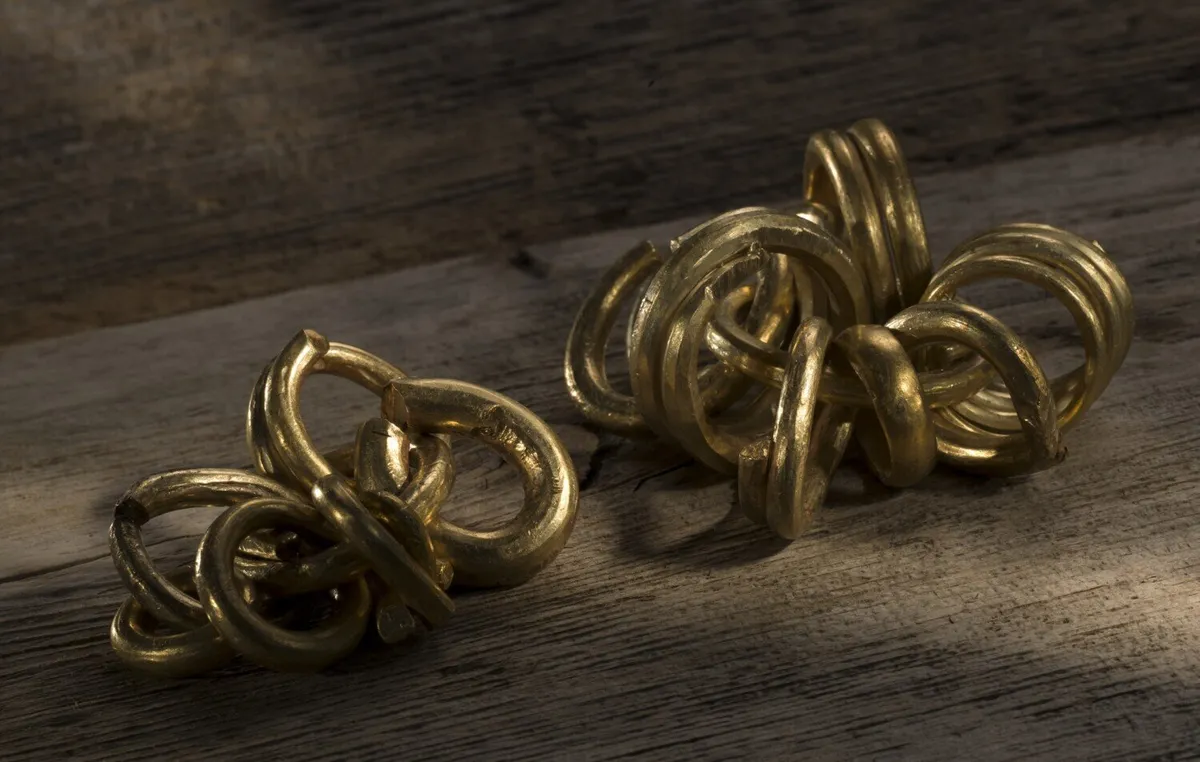
The Skaun hoard (T27224/1 and T27224/2), made up of "payment gold" dated to around A. D. 200–550. Credit: Åge Hojem; CC BY-SA 4.0 NTNU, University Museum in Axelsen and Skare 2026 Ten years ago, in 2016, a metal detectorist came upon a hoard of gold. It had been buried in the dirt for around 1,800 years and consisted of around 396 grams (14 ounces) of gold rings. The detectorist handed in his finds to a museum and received the largest finder's fee ever paid out in Norwegian history. He had been rewarded for the gold weight, not its rarity.
The snake that cartwheels at high speed to escape predators - Yahoo News Canada
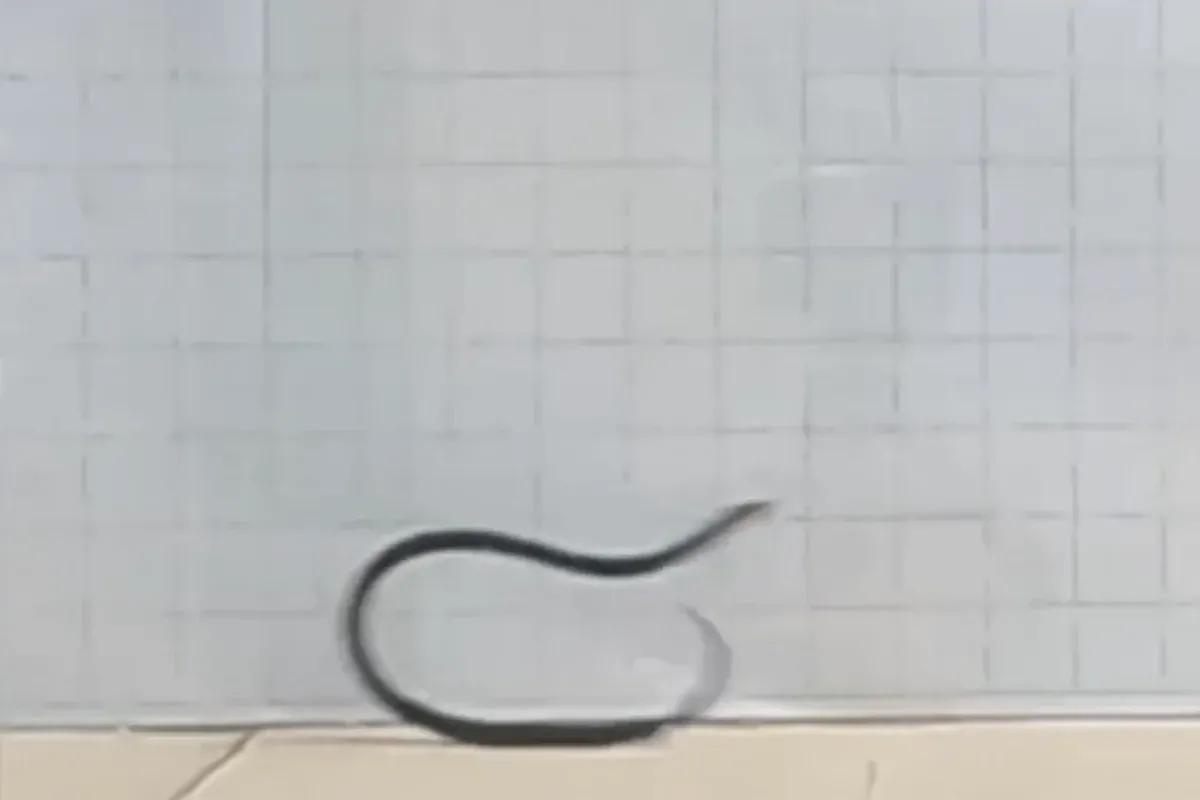
The dwarf reed snake curls its body into a loop and cartwheels at high speed to escape predators, a discovery that sheds more light on unusual animal locomotion. Rolling motion is rare in animals mainly because it requires precisely coordinated movements, crucially with the head and most of the sensory organs remaining stable. This is more challenging to achieve at speed, making rapid and controlled rolling inherently difficult. Researchers first documented the unusual cartwheeling motion of the reed snake in a study in 2023, but couldn't explain exactly how it achieved this feat. Now, using high-speed cameras, they discovered that the snake was able to keep its head stable while rapidly rotating much of its body rapidly. This shows how animals may sometimes perform innovative movements that are difficult to predict from their body shape alone, researchers say. Dwarf reed snake (Yosuke Kojima)In the latest study, researchers recorded dwarf reed snakes, which are native to Southeast Asia, from multiple angles and analysed their movements in detail.
Scientists discover dangerous water oscillations between Lake Varna and Black Sea - Phys.org
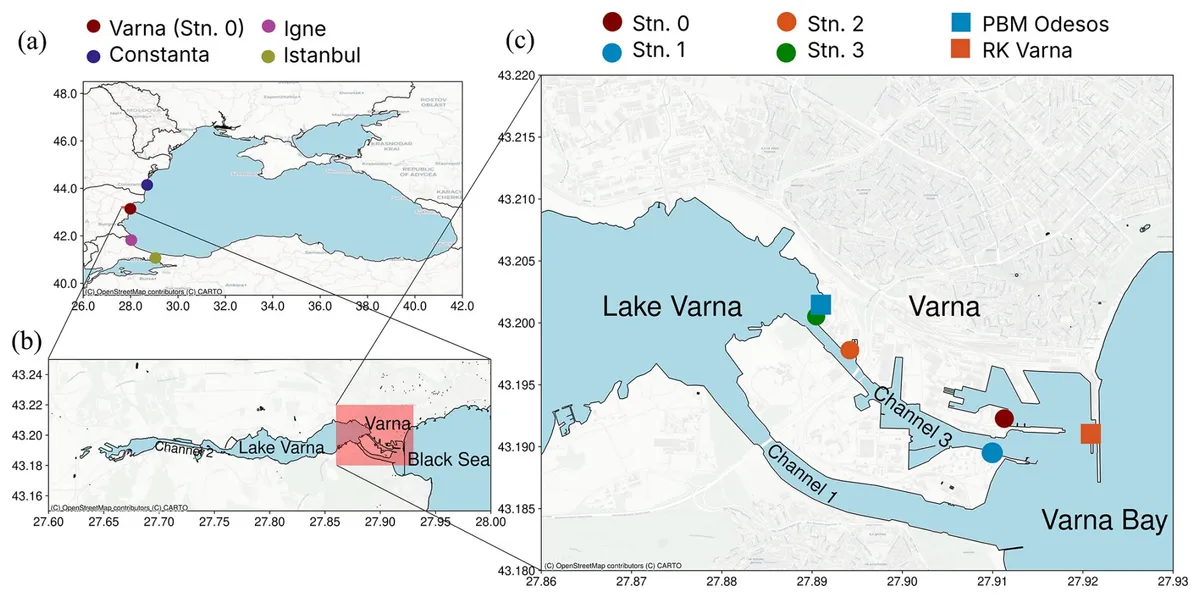
Location of the study areas. Credit: Ocean Science (2026). DOI: 10.5194/os-22-2471-2026 For years, pilots have observed strong and unusual currents in the 2.4-kilometer-long (1.5-mile-long), 300-meter-wide (984-foot-wide) canal connecting Lake Varna with the Black Sea. Maarja Kruusmaa, an academician and professor at Tallinn University of Technology, and researcher Laura Piho, working with the Port of Varna, undertook detailed measurements to determine the causes of the phenomenon.
0 comments
No comments yet. Be the first to share your thoughts!