Q&A | Rise in tuberculosis cases result of more detection efforts, Nunavut CPHO says - Yahoo News Canada
This story deserves to be shared
Send it to someone who'd care, or post it on your networks.

Nunavut officials say the territory's goal of eliminating tuberculosis by 2030 is still within reach, despite more cases this year than last. In an update in early October, the territory's Department of Health reported 32 active cases of TB in the first three quarters of 2026 across seven communities. That's higher than the 26 cases the territory reported last year but Nunavut's chief public health officer, Ekua Agyemang, said the disease is still trending downward with 36 cases in 2024 and 67 in 2023. Agyemang said there have been no tuberculosis-related deaths in recent years. She said that Iqaluit, Kinngait, Kugaaruk and Sanirajak now have TB clinics, in addition to teams on the ground in Arviat and Naujaat to help contain outbreaks in those communities. As Agyemang says in an interview with CBC News reporter Arty Sarkisian, a rise in TB numbers this year is partly because of more resources to detect cases and support recovery. This interview has been edited for length and clarity. You've said TB numbers are trending down, so why are the numbers slightly higher this year? There are several reasons.
This article is an excerpt. To read the full content, visit the original source. Yahoo News Canada
Related articles
Q&A | Rise in tuberculosis cases result of more detection efforts, Nunavut CPHO says – Eye on the Arctic - Radio-Canada
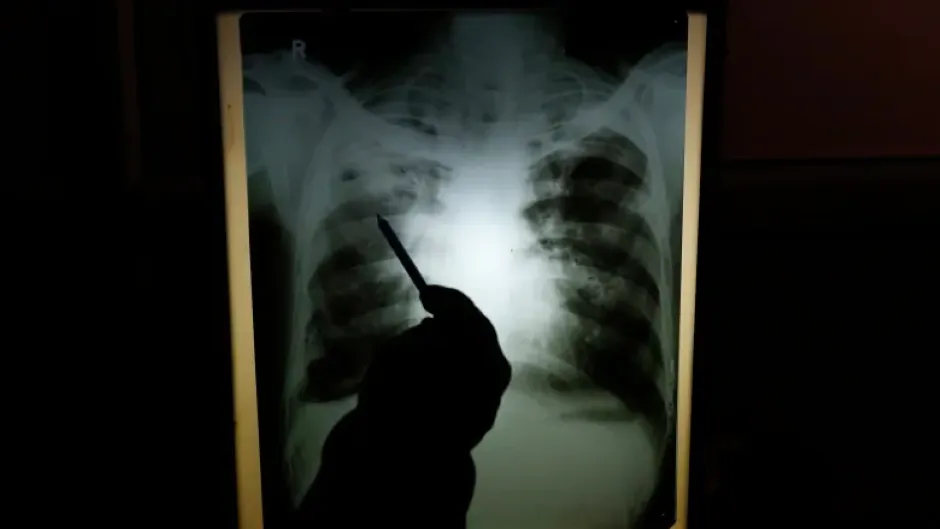
A file photo of an active tuberculosis case. (Rajesh Kumar Singh/Associated Press) ‘TB elimination by 2030 it is an ambitious goal, but it is also within our reach’

Q&A | Rise in tuberculosis cases result of more detection efforts, Nunavut CPHO says - CBC
NorthNunavut officials say the territory’s goal of eliminating tuberculosis by 2030 is still within reach, despite more cases this year than last.‘TB elimination by 2030 it is an ambitious goal, but it is also within our reach’CBC News · Posted: Oct 13, 2026 2:14 PM EDT | Last Updated: October 13Listen to this articleEstimated 8 minutesThe audio version of this article is generated by AI-based technology. Mispronunciations can occur. We are working with our partners to continually review and improve the results. Examining Nunavut's continuing fight against tuberculosisOctober 9|Duration 2:29Tuberculosis has played a huge role in the history of Nunavut. The disease has caused deaths, relocations and a lot of suffering. Though progress has been made to eradicate it, it's far from gone in the territory. Arty Sarkisian reports. Nunavut officials say the territory’s goal of eliminating tuberculosis by 2030 is still within reach, despite more cases this year than last. In an update in early October, the territory’s Department of Health reported 32 active cases of TB in the first three quarters of 2026 across seven communities.

Antibody patterns may predict inflammatory bowel disease years before diagnosis - News-Medical
A large-scale study, presented today at UEG Week 2026, has identified distinct antibody patterns up to 10 years before the diagnosis of inflammatory bowel disease (IBD), potentially opening new avenues for earlier risk detection and providing insights into future disease course. IBD is a group of chronic conditions, including Crohn's disease (CD) and ulcerative colitis (UC), in which abnormal immune responses contribute to ongoing inflammation and damage in the digestive system. Although IBD is increasingly recognized to develop over a prolonged period before diagnosis, relatively little is known about the immune changes that occur during this time.
Antibiotic exposure during childhood linked to higher risk of IBS in young adults - News-Medical
Antibiotic use from childhood through early adulthood was associated with higher odds of irritable bowel syndrome (IBS) at age 24, with the odds increasing as the number of antibiotic prescriptions rose, according to a new study presented today at UEG Week 2026. IBS is a common digestive disorder that affects more than 60 million people across Europe, causing symptoms such as abdominal pain and changes in bowel habits. Whilst previous research has suggested a link between antibiotic use and IBS, evidence on whether childhood exposure is associated with IBS in adulthood remains inconsistent. Much of the existing evidence relies on people recalling past antibiotic use, with a lack of population-based studies using objectively recorded antibiotic data across childhood.

E. coli Vaccine Fails to Prevent Invasive Infections - EMJ
AN EXPERIMENTAL vaccine designed to prevent invasive Escherichia coli infections in older adults has failed to demonstrate clinical efficacy in a large Phase III trial, despite generating robust and sustained immune responses. The E.mbrace trial, involving 17,701 participants across 20 countries, found no demonstrated protective benefit from the nine-valent ExPEC9V vaccine compared with placebo. Following a prespecified futility analysis, the study was terminated early, and development of the vaccine has been discontinued.
Corneal biometry changes with 0.01% atropine for myopia control: a randomised controlled trial and case of incidental keratoconus - Nature
We’re sharing this article early to provide faster access to peer-reviewed, accepted research. It is citable and carries a permanent DOI. This version is subject to further edits and will be replaced automatically by the final Version of Record. All legal disclaimers apply. AbstractChanges in corneal curvature have been reported with low-concentration atropine eyedrops for myopia treatment and have been suggested to play a role in the refractive changes observed during atropine therapy. A case of keratoconus was identified from the Western Australia atropine for the treatment of myopia (WA-ATOM) cohort. We tested the null hypothesis that 0.01% atropine eyedrops produce no change in corneal parameters or ectasia risk compared to placebo. Children with progressive myopia (6–16 years; n = 153) were randomly assigned to receive 0.01% atropine eyedrops or a placebo (2:1 ratio) for 2 years, followed by a 1-year washout. Scheimpflug imaging was performed at baseline, 24-months, and 36-months. Changes in corneal parameters were compared between the treatment and placebo groups using linear mixed models.
0 comments
No comments yet. Be the first to share your thoughts!