Physicists calculate exactly how long that last drop takes - Popular Science
This story deserves to be shared
Send it to someone who'd care, or post it on your networks.
This article is an excerpt. To read the full content, visit the original source. Popular Science
Related articles

'I won't trust AI': Readers share mixed reaction to AI tools that calculate people's biological ages - Live Science
Scientists have developed AI tools to measure a person's true "biological age." Live Science asked readers whether they would be comfortable using these tools.
Scientists calculate how much information exists in the observable universe - The Brighter Side of News
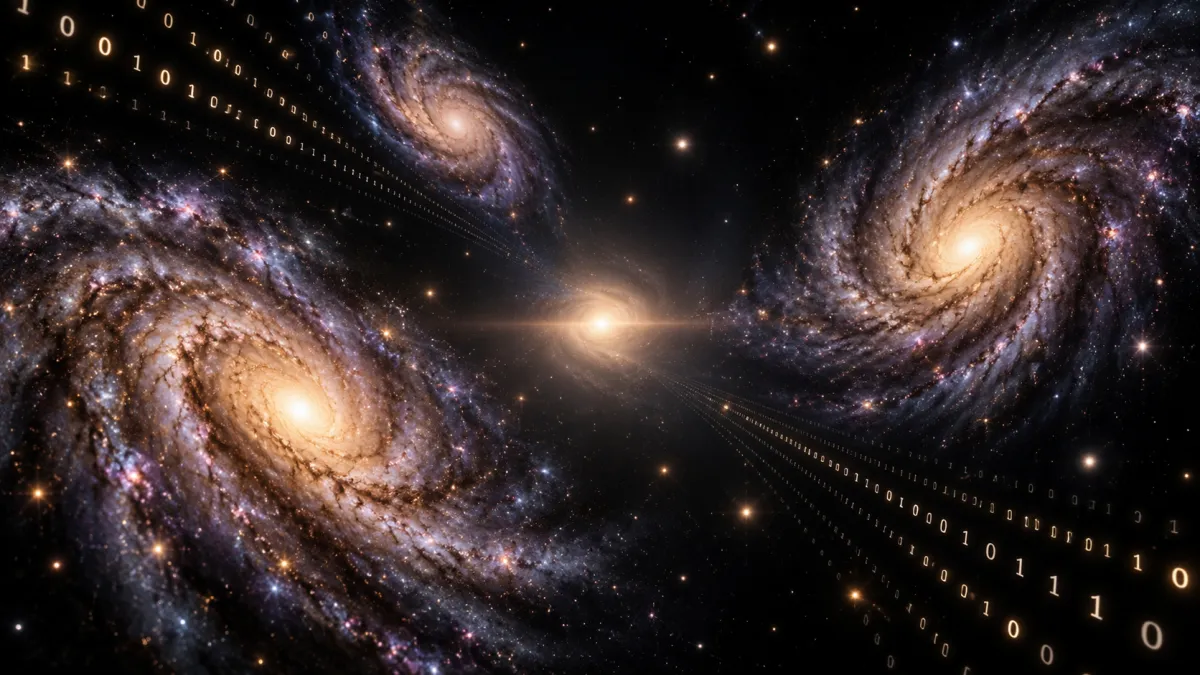
A theoretical calculation estimates roughly 6 × 10⁸⁰ bits of information in selected ordinary-matter particles across the observable universe. The model applies Shannon information theory, assigning an average of 1.509 bits to the particle categories it considers. The study excludes several components and does not establish that information is a new state of matter. An electron’s mass, charge and spin help distinguish it from other particles. Those identifying properties also raise a question: could matter itself be treated as a store of information, and could its information content be counted? The calculation offers one approach to a longstanding problem, rather than a measurement of everything the universe contains. Its result depends on how information is defined, which particles are counted and assumptions about where information can reside. Dr. Melvin Vopson of the University of Portsmouth's School of Mathematics and Physics. (CREDIT: University of Portsmouth) An information count built from particle identityMeasuring an electron’s characteristic properties allows an observer to identify it.

Would you trust AI to calculate your true 'biological age'? - Live Science
Scientists have developed various AI tools to measure people's biological ages. Would you use one?
Ancient Nubian temple faience workshop reveals links between craft production and royal power - Phys.org
Archaeologists have discovered a faience workshop at a major temple complex in the ancient Nubian capital of Napata, showing how the rulers of ancient Kush used specialized craft production to reinforce royal power.
The American Mountains With The Darkest Night Skies - WorldAtlas
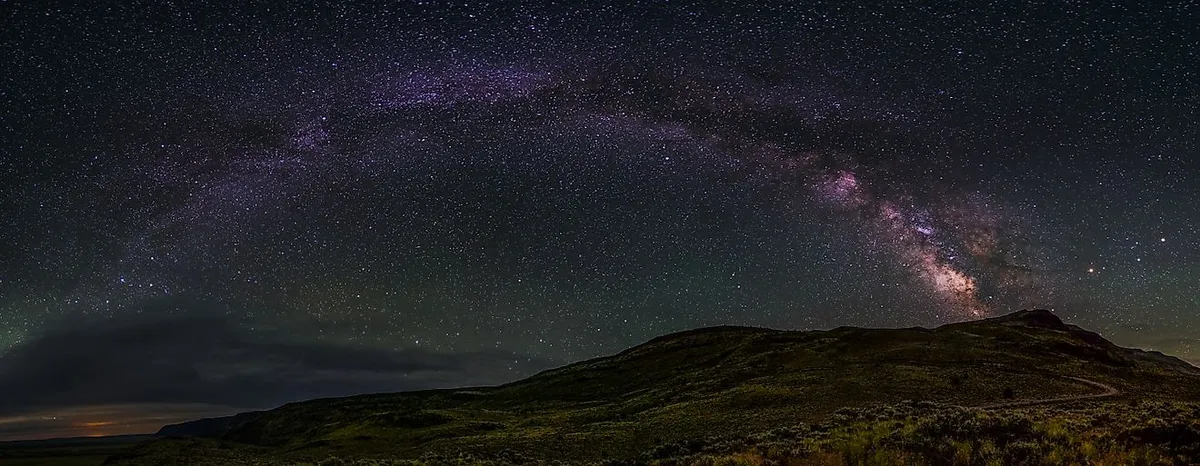
More than 99% of the US population lives under light-polluted skies, according to a 2016 study published in Science Advances. With streetlights, brightly lit parking lots, arenas, and passing headlights brightening the night, it can be easy to forget how dark the sky actually is and how many stars appear when you get away from populated areas. Seeing that many stars for the first time can make you pause and remember where you truly are. You are on a rock spinning through space, surrounded by a universe filled with stars, planets, and galaxies larger than anything you can imagine. A remote mountain excursion can combine a dark sky encounter with a day of hiking and sightseeing. After sunset, bright stars emerge above the slopes and ridgelines. These American mountains lie within officially designated dark sky locations that protect natural darkness and the views of the universe it reveals. In northeastern New Mexico, Capulin Volcano sits among volcanic cones, mesas, and buttes in one of the darker areas of the lower 48 states. These landforms help shield the night sky from distant lights, while the rugged terrain has discouraged development in the area.
0 comments
No comments yet. Be the first to share your thoughts!