Physical Review Research - Accepted Paper: Anderson noise avalanche and sudden coherence destruction in photonic Su-Schrieffer-Heeger chains with random off-diagonal disorder - APS Journals
This story deserves to be shared
Send it to someone who'd care, or post it on your networks.
Here we discuss manifestations of the photonic noise avalanche in Su-Schrieffer-Heeger chains with static off-diagonal stochastic disorder. We demonstrate that a photonic noise avalanche arises in both the short-time and the long-time regimes. We predict a topology-dependent effect of sudden coherence destruction and appearance of topology-dependent field statistics. We also show that for sufficiently strong noise, when the topological localization is replaced with the Anderson localization, the long-time avalanche might occur withing the field localization region. This gives rise to a possibility of creating strongly super-bunched states.
This article is an excerpt. To read the full content, visit the original source. APS Journals
Related articles
Physical Review Research - Accepted Paper: Atomic density optimization of quasi-one-dimensional diffuse laser cooling under a two-dimensional magnetic-field gradient - APS Journals
Diffuse laser cooling (DLC) provides a compact, robust, and scalable approach to generating cold-atom ensembles, offering significant potential for ground-based and spaceborne microwave atomic clocks. However, the performance of DLC systems remains limited by the weak atom-light interaction arising from their relatively low atomic density. This limitation is characterized by the optical density (OD), which quantifies the effective interaction strength between the atomic ensemble and the probe light and strongly influences the achievable signal-to-noise ratio (SNR). Although quasi-one-dimensional (quasi-1D) DLC extends the probe interaction length and improves atomic utilization, increasing the local atomic density within the interrogation region remains challenging. Here, we demonstrate a magnetically enhanced quasi-1D DLC system that simultaneously maintains the extended interaction length and increases the atomic density through a two-dimensional magnetic-field gradient.
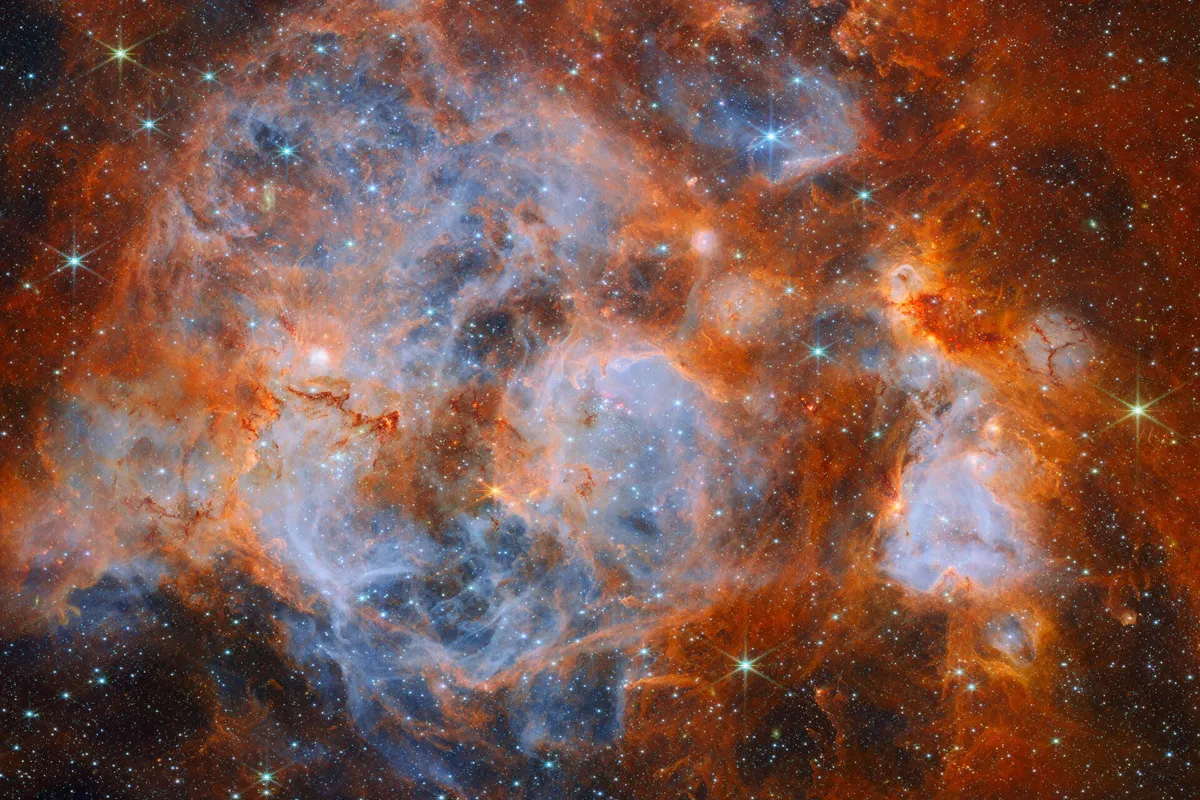
Webb image reveals young stars brewing in a nebulous cauldron - Phys.org
A nebula made of clouds of gas and dust with stars forming within. In the center and out to the left it is filled with thin, wispy blue gas that forms delicate layers. Around this are thicker orange clouds with dark ridges. Thin red filaments of gas cross the center of the nebula. Glowing bubbles in the gas contain dense, very bright clusters of stars. At the edges, distant stars are visible as bright points on a dark background. Credit: European Space Agency In this Picture of the Month from the NASA/ESA James Webb Space Telescope, we visit a turbulent cauldron of star formation to see what is brewing inside dense clumps of gas. This is a star-forming region named LHA 120-N 159, or simply N159, located 161,000 light-years away in the Large Magellanic Cloud (LMC), one of the satellite galaxies orbiting the Milky Way galaxy. This image spans about 230 light-years across.
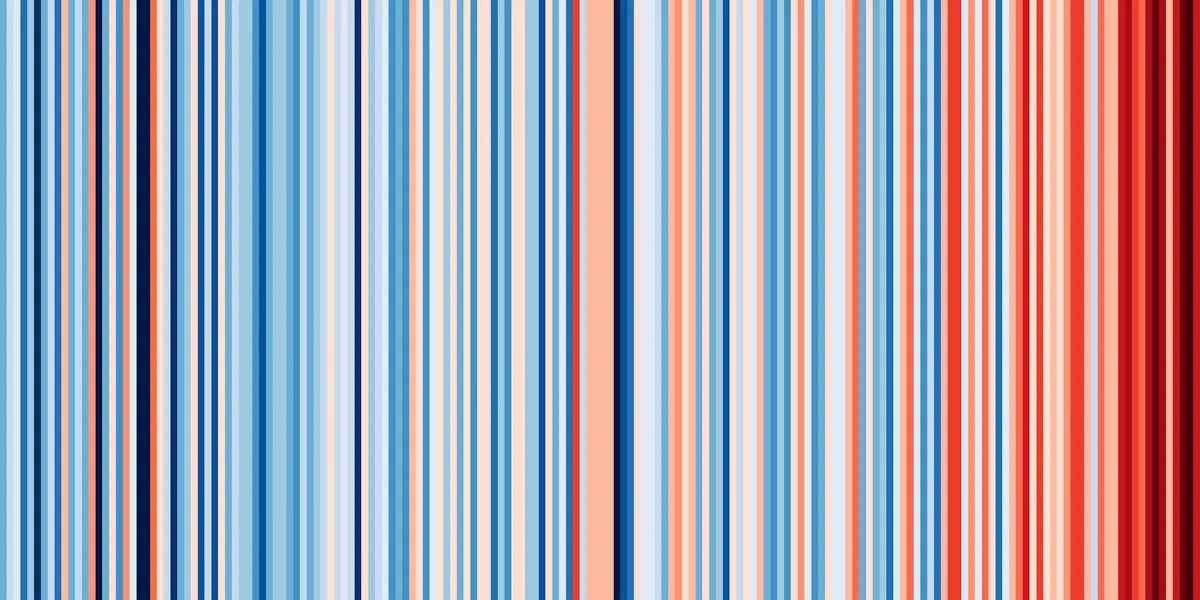
When climate data is transformed into visuals, some people and places get overlooked - Phys.org
When a climate disaster happens, people thousands of miles away may encounter it through numbers: how many people died, how many were displaced, how many homes were destroyed and how much infrastructure was damaged. But for the people living through it, the disaster is not a data set. It is a home, a family, a livelihood and a place. Billions of people around the world live in places and situations that are highly vulnerable to climate change, such as parts of Africa, Asia and small Pacific islands.
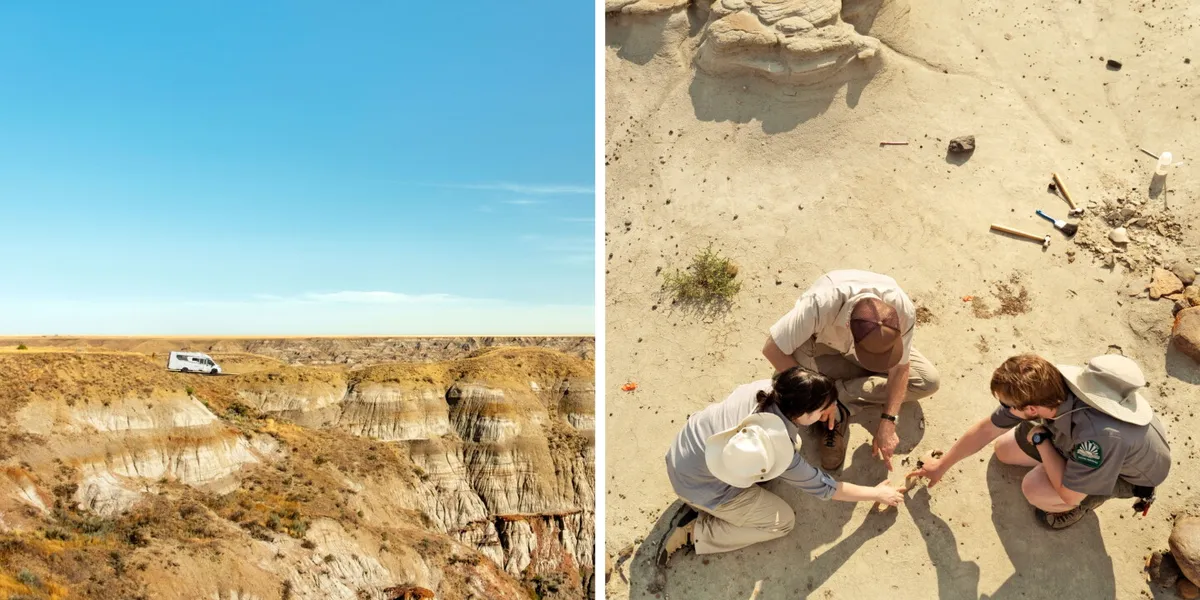
I’ve Gone Fossil Hunting Around the World, and This Is the Best Place to See Dinosaur Bones - AFAR Media
Millions of years of erosion of clay and sandstone have created the unique landscape of the Alberta badlands, where dinosaur bones can often be found poking right out of the ground. Photo by Cody Baker/Travel Alberta (L); photo by roth + ramberg/Travel Alberta (R) Dinosaur Provincial Park in Alberta, Canada, has the highest concentration of Late Cretaceous dinosaur fossils in the world. Researchers have discovered more than 44 dinosaur species here and unearthed more than 150 complete skeletons that are now on display at some of the world’s major natural history museums. These credentials earned the park a UNESCO World Heritage site designation. Given all of this, I knew I had to see it for myself. What is Dinosaur Provincial Park like? I stood on the rock-hard ground of Alberta’s badlands, the sun blazing down on the tall hills and hoodoos around me, looking at the striations in the layers of clay and sandstone that held the landscape’s geologic history. As starkly beautiful as the scenery was, I found my gaze locked on something right in front of me: a white bone protruding from a mound of tan sandstone, its exposed end split and weathered, its interior akin to concrete.
How a massive ice shelf buttressed the last ice age’s glaciers — and what it could mean for Antarctica today - CLAS News
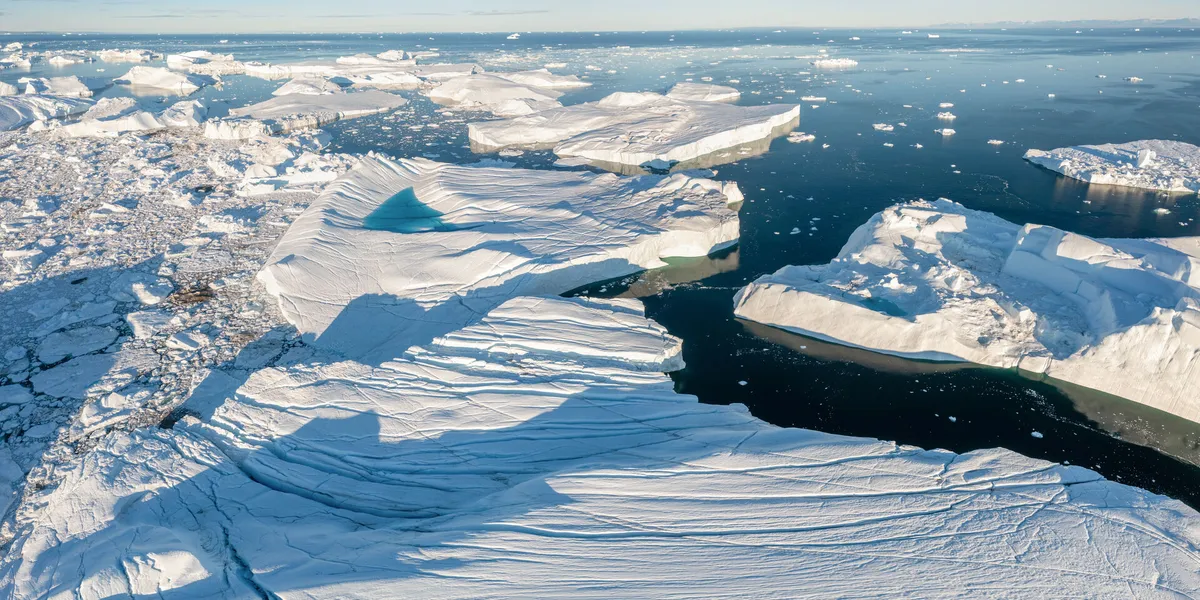
About 20,000 years ago, an enormous, floating ice shelf more than a mile thick helped lock in three of the largest ice sheets in northern Canada and Greenland. When that ice shelf disappeared, it helped unlock part of these ice sheets, which contributed to hundreds of feet of sea level rise, establishing modern coastlines as we know them. Those are the findings of a new study that uncovered evidence of an ancient ice shelf in Baffin Bay, west of Greenland. The size and scale of such a floating fortress of ice was not previously known, and it provides clues to the future of today’s massive ice sheets in Antarctica and the sea-level rise that could follow if they melt.
0 comments
No comments yet. Be the first to share your thoughts!