Paradigm shift: Is the world ready for a new model of collaborative R&I? - Science|Business
This story deserves to be shared
Send it to someone who'd care, or post it on your networks.
This article is an excerpt. To read the full content, visit the original source. Science|Business
Related articles
XPAR-Net: cross-paradigm alignment and reconstruction network for high-fidelity lens-free on-chip microscopy - Nature
Open Access This article is licensed under a Creative Commons Attribution 4.0 International License, which permits use, sharing, adaptation, distribution and reproduction in any medium or format, as long as you give appropriate credit to the original author(s) and the source, provide a link to the Creative Commons licence, and indicate if changes were made. The images or other third party material in this article are included in the article’s Creative Commons licence, unless indicated otherwise in a credit line to the material. If material is not included in the article’s Creative Commons licence and your intended use is not permitted by statutory regulation or exceeds the permitted use, you will need to obtain permission directly from the copyright holder. To view a copy of this licence, visit http://creativecommons.org/licenses/by/4.0/.

Textile wearable robotics: A new paradigm - Knitting Industry
Italian researchers are exploring knitted textiles and soft robotics to develop new wearable assistive technologies. Leonardo Cappello, Assistant Professor at the BioRobotics Institute of Scuola Superiore Sant'Anna in Pisa, presents on textile wearable robotics.
Knowledge-Guided Machine Learning: A Paradigm Shift in AI for Science - The Association for the Advancement of Artificial Intelligence
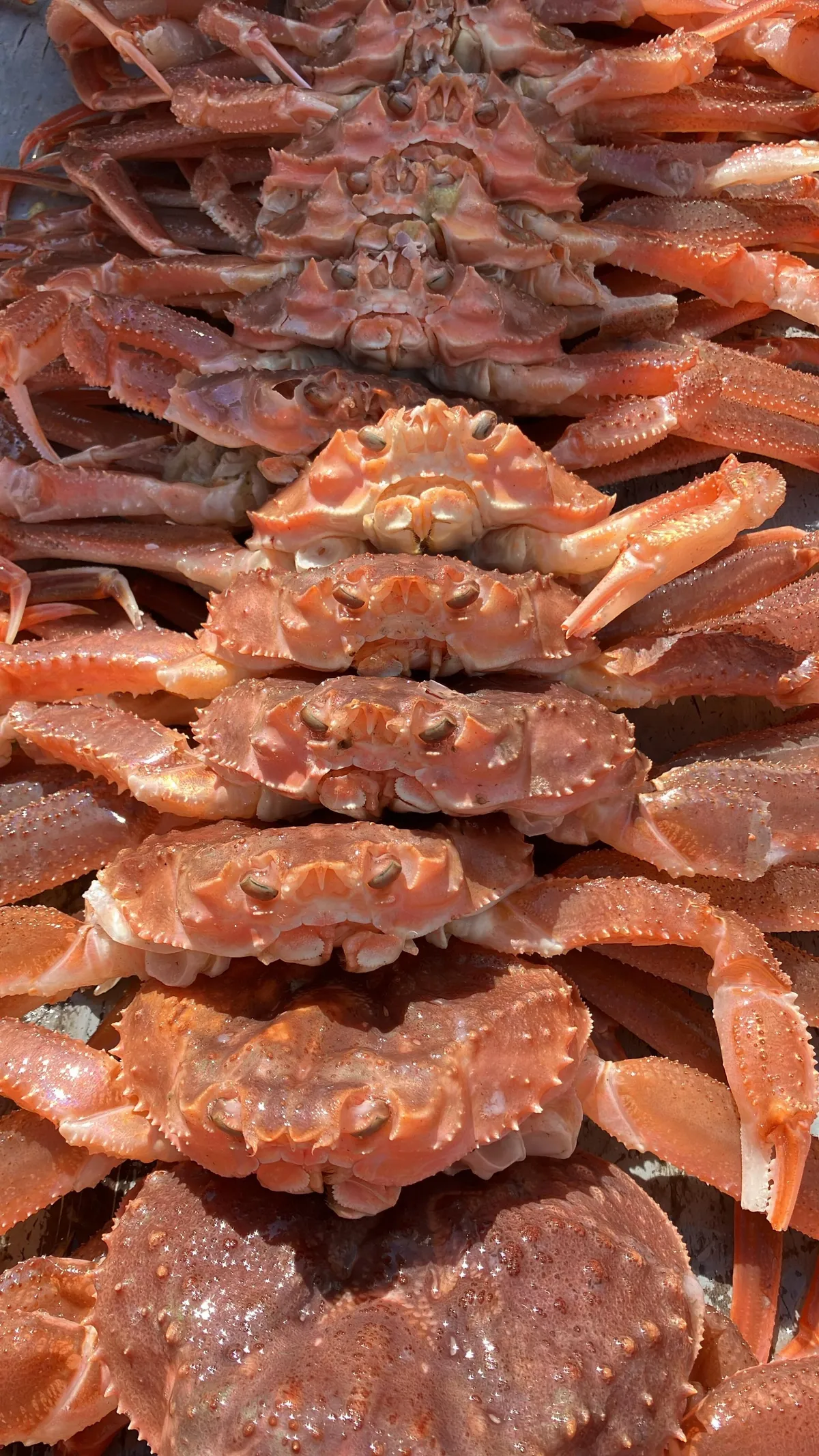
Bering Sea heat wave linked to a surprising boom in the number of hybrid crabs - Phys.org
Snow–Tanner hybrid crab collected during the 2026 eastern Bering Sea bottom trawl survey. Credit: Jon Richar Marine heat waves are usually seen as destructive events that can disrupt entire ocean ecosystems and trigger massive environmental damage. In 2018 and 2019, an extreme heat wave hit the Bering Sea, causing spring sea ice levels to plummet.
Giant Jurassic fossil sheds light on the evolution of a six-legged predator - Phys.org
Insects belong to a broader group of six-legged animals called hexapods. This group also includes other less well-known, small animals, including diplurans or two-pronged bristletails, wingless relatives of insects with two rear projections called cerci that resemble feelers or pincers.
0 comments
No comments yet. Be the first to share your thoughts!