PAHO/WHO partners with the Ministry of Health & Wellness to commemorate World No Tobacco Day 2026 under the theme, 'Unmasking the Appeal: Countering Nicotine and Tobacco Addiction.' - Pan American Health Organization (PAHO)
This story deserves to be shared
Send it to someone who'd care, or post it on your networks.
This article is an excerpt. To read the full content, visit the original source. Pan American Health Organization (PAHO)
Related articles
World No Tobacco Day 2026: unmasking the appeal – countering nicotine and tobacco addiction - World Health Organization (WHO)

Countering COVID-19 vaccine myths in pregnancy - Contemporary OB/GYN
News|Videos|October 16, 2026 Experts address COVID-19 vaccine myths, safety evidence, and how to frame the benefits of vaccination in pregnancy. Welcome to this Contemporary OB/GYN Special Report series on maternal immunization heading into the 2026-27 respiratory season. Across 5 episodes, our host and experts examine what the latest guidance means in practice for obstetric and pediatric clinicians and for the patients they counsel. Related to this articleOctober 16th, 2026Experts look ahead to new maternal vaccines and how to counsel patients on receiving several in one pregnancy. Read moreOctober 14th, 2026Experts discuss how obstetric and pediatric clinicians can coordinate to protect newborns. Read moreOctober 14th, 2026Experts review ACOG's 2026-27 guidance and the RSV window extension for pregnant and postpartum patients. Read moreOctober 15th, 2026Experts discuss common patient concerns about vaccination in pregnancy and strategies to improve uptake. Read moreOctober 13th, 2026On September 9, 2026, certolizumab pegol received FDA Breakthrough Therapy Designation for APS pregnancy; Jane E. Salmon, MD, reviews the IMPACT trial results behind it.
AI platform allows real-time conversation between patients and their medical devices - Medical Xpress
A new AI-driven platform could allow people to interact with their medical devices by sending messages using a smartphone application and receiving feedback in real time. Participants in a proof-of-concept study undergoing monitoring for seizures could ask questions about their brain activity, receive personalized alerts, report symptoms and behaviors and help train the system to better recognize seizure-related patterns.
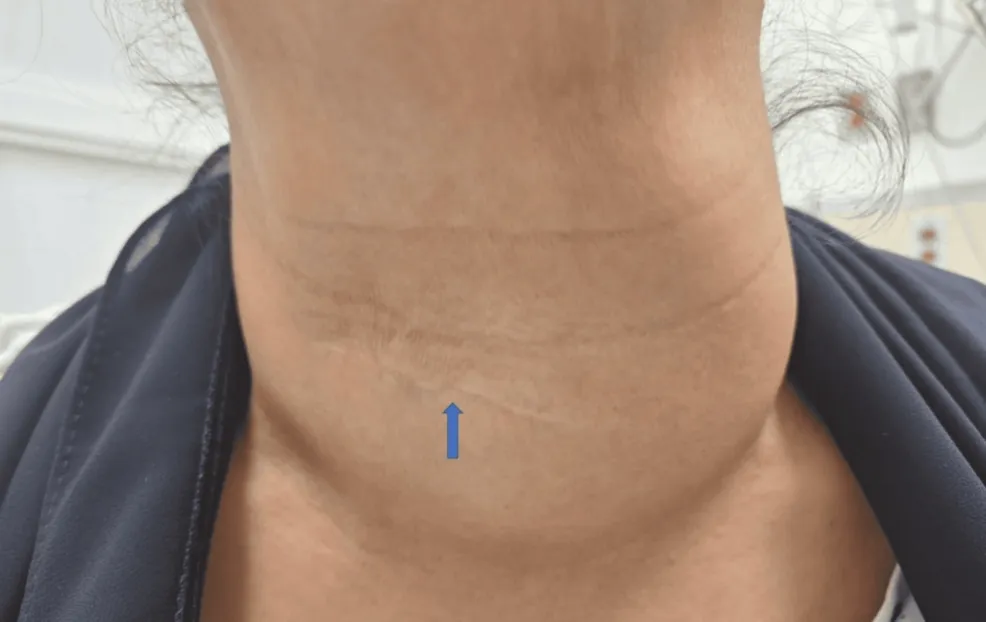
Acute Intrathyroidal Hematoma in a Multinodular Thyroid Presenting With Sudden Neck Swelling and Tracheal Deviation: A Case Report - Cureus
Acute hemorrhage within the thyroid gland is uncommon but can cause rapid neck swelling and, in severe cases, airway compromise. We report a 65-year-old woman with hypertension and a history of partial thyroidectomy performed more than 25 years earlier who presented with painful neck swelling that developed overnight. The swelling was associated with pain on swallowing, without shortness of breath, voice change, drooling, fever, or recent neck trauma. She was hemodynamically stable with an oxygen saturation of 99% on room air. Examination showed marked neck swelling, thyromegaly, thyroid tenderness, and left-sided neck induration. Contrast-enhanced computed tomography (CT) demonstrated a multinodular thyroid with a large heterogeneous mass in the left thyroid lobe causing mass effect and rightward tracheal deviation. Subsequent ultrasonography demonstrated a heterogeneous intrathyroidal collection consistent with hematoma. The patient remained clinically stable and was discharged after approximately five hours of observation. At otolaryngology follow-up 10 days later, repeat ultrasonography showed a progressively enlarging left thyroid nodule, and fine-needle aspiration cytology wa
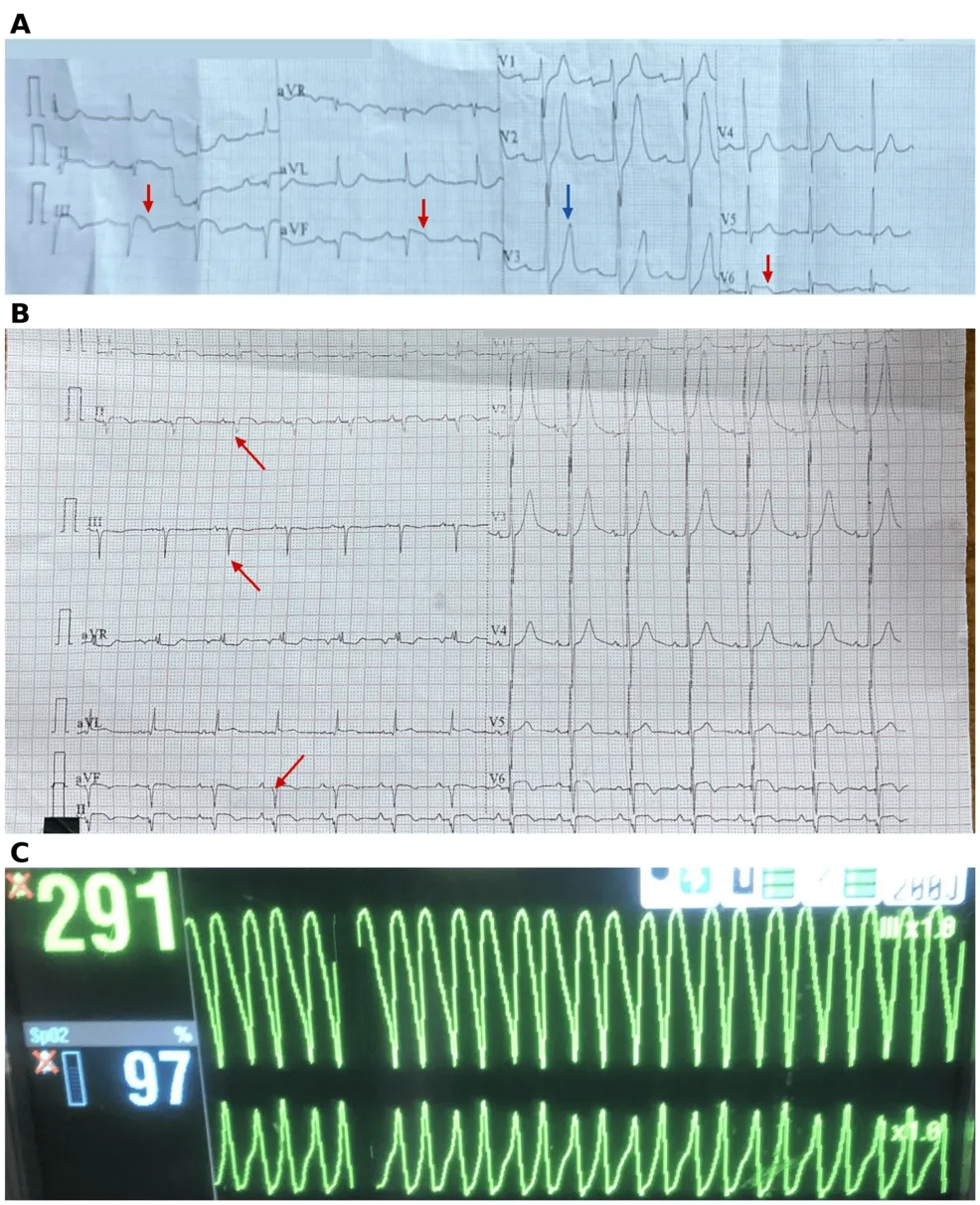
Blocking the Sympathetic Storm: Adjunctive Left Stellate Ganglion Block for Refractory Ventricular Tachycardia After Inferolateral Myocardial Infarction - Cureus
Electrical storm following myocardial infarction (MI) can be difficult to control when antiarrhythmic drugs and cardioversion fail. We describe a 53-year-old man with hypertension and previously undiagnosed diabetes who presented with an inferolateral ST-segment elevation MI caused by total occlusion of the proximal left circumflex artery, which was treated with primary percutaneous coronary intervention and drug-eluting stent placement. He then developed marked leukocytosis with a systemic inflammatory response and acute kidney injury (peak creatinine, 4.03 mg/dL), which resolved with empirical antibiotic therapy and supportive renal care. On day 6, he experienced recurrent syncope associated with sustained monomorphic ventricular tachycardia (VT) that persisted despite intravenous amiodarone and lidocaine, electrolyte correction, and repeated cardioversion, necessitating sedation and mechanical ventilation. Repeat coronary angiography demonstrated a patent stent. VT ceased following an ultrasound-guided left stellate ganglion block (SGB) using 1% lidocaine and dexamethasone, which resulted in Horner syndrome. Antiarrhythmic therapy was continued, and the patient was extubated wit
0 comments
No comments yet. Be the first to share your thoughts!